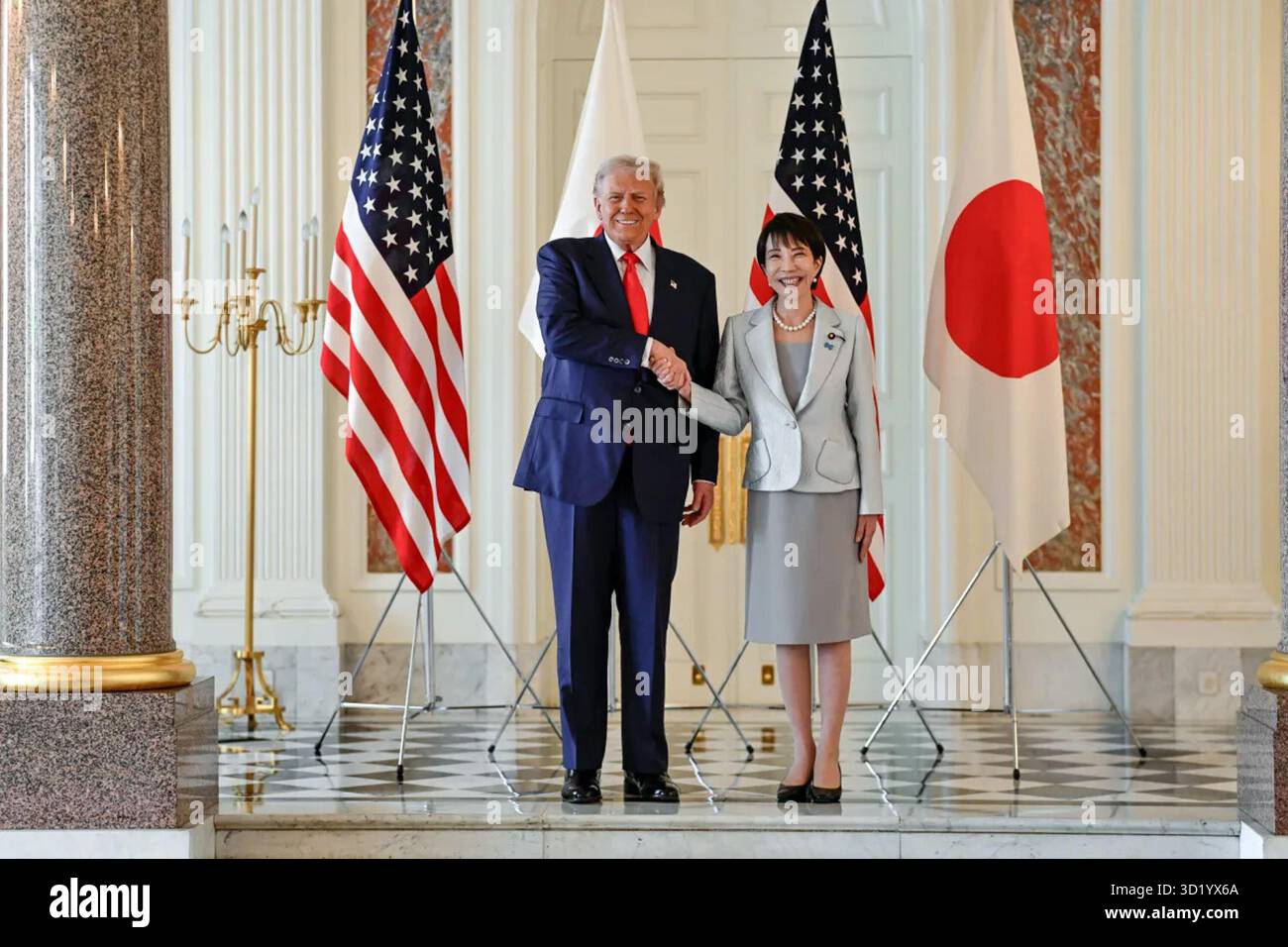
Donald Trump just wrapped up a high-stakes three-day state visit to Beijing, and he wants you to know it was an absolute win. Speaking to reporters aboard Air Force One, Trump claimed he and Chinese President Xi Jinping found rare common ground on the Middle East crisis. The big takeaway? Xi allegedly agreed that Iran can't have nuclear weapons and that the blockaded Strait of Hormuz must be reopened immediately.
On paper, this looks like a massive diplomatic breakthrough. The world's two biggest superpowers are teaming up to stare down Tehran. But if you look past the standard Mar-a-Lago style hyperbole, the reality on the ground is far messier. Trump claims the US completely controls the strait and that a naval blockade is starving Iran of 500 million dollars a day. Yet, the war drags on, gas prices are hurting families back home, and China's official state media is singing a completely different tune.
Here is what really happened behind closed doors in Beijing, and why this "agreement" might not be the silver bullet Trump claims it is.
The Mirage of US-China Alignment on Iran
Trump loves a good narrative where he walks into a room, uses his business instincts, and walks out with a monumental deal. He told the press that Xi feels incredibly strongly about stopping Iran's nuclear ambitions. According to Trump, Xi even offered to help end the conflict and promised not to supply military hardware to Tehran.
But let's look at what the Chinese government actually said. China’s state-run Xinhua News Agency released a summary of the meeting that was incredibly dry. It merely noted that the two leaders "exchanged views on major international and regional issues, including the Middle East situation."
No mention of Iranian nukes. No mention of the Strait of Hormuz. No mention of a blockade.
This isn't just a minor oversight. It is a calculated diplomatic strategy. Beijing needs to keep Washington happy because a chaotic global energy market hurts Chinese factories. At the same time, China has spent the last decade building deep economic ties with Tehran. Xi isn't about to trash his relationship with Iran just to give Trump a PR victory before the US midterm elections this November.
The 500 Million Dollar Financial Squeeze
During his Air Force One press gaggle, Trump leaned heavily on the economic pain the US is inflicting. He noted that because of the US naval pressure, Iran has been unable to do business for the past two and a half weeks. He pinned the loss at roughly 500 million dollars a day for the Iranian regime.
"We control the strait, and they have done no business in the last two and a half weeks," Trump told reporters. "They have no deck of cards to negotiate with."
The numbers show that Iran is hurting. The Strait of Hormuz is a vital economic artery, responsible for one-fifth of the world's oil and liquefied natural gas shipments. When Iran restricted shipping traffic through the narrow passage earlier this year, it triggered a massive economic crisis.
But thinking this financial squeeze means Iran is ready to surrender is a major miscalculation. History shows theocratic regimes don't make standard corporate cost-benefit choices. They are perfectly willing to let their populations suffer financial ruin if it means maintaining ideological purity or geopolitical leverage. Trump claims he had the "confines of a deal" worked out via backchannel talks in Pakistan, only for Iranian officials to walk away five different times.
The Oil Deal and the Taiwan Trade-off
If China isn't going to aggressively pressure Iran, why did Xi tell Trump he wants the strait open? The answer is simple energy security. China is the world’s largest oil importer. A blocked Strait of Hormuz means rising shipping costs and manufacturing delays in Shenzhen and Shanghai.
To hedge against this, the White House revealed that China is looking to buy more American oil. By purchasing directly from US producers, Beijing can slowly reduce its long-term dependence on the volatile Persian Gulf route. It's a pragmatic business move for Xi, not a favor to Washington. In fact, Secretary of State Marco Rubio explicitly told reporters that the US didn't even ask China to mediate.
"We're not asking for China's help. We don't need their help," Rubio stated.
Then there is the elephant in the room: Taiwan. Trump admitted that Xi spent a significant amount of time talking about Taiwan's independence movement, warning that it would lead to a "very strong confrontation." Xi brought up 1982 historical assurances regarding US arms sales to Taiwan. Trump listened but kept his mouth shut.
It doesn't take a genius to see the unspoken trade-off here. Xi gives Trump some verbal compliance on Iran and promises to buy American crude oil. In exchange, China expects the US to tone down its military support for Taiwan.
What This Means for Global Energy Markets
Don't expect gas prices to drop tomorrow just because of this Beijing summit. The geopolitical risk premium is cooked into the market for the foreseeable future. While Trump claims the US has total control over Gulf shipping, the underlying conflict involving Iran, Israel, and the US remains a powder keg.
If you are trying to read the tea leaves on where this crisis goes next, keep your eyes on these specific indicators rather than political speeches:
- US Crude Export Volumes: Watch if US oil shipments to China actually spike over the next quarter. If Beijing starts hoarding American energy, it means they expect the Hormuz crisis to last a long time.
- Chinese Military Diplomacy: Keep tabs on whether Beijing quietly maintains its intelligence-sharing and economic support for Tehran through third-party banks.
- Domestic Fuel Prices and Mortgage Rates: The war's pressure on global markets has pushed US Treasury yields higher, which is directly hammering the domestic housing market. True resolution will only be visible when these macroeconomic indicators stabilize.
Trump got his headlines, and Xi protected his energy supply lines. But until the underlying regional war is settled, the Strait of Hormuz remains one of the most dangerous chokepoints on the planet.