Brussels broke before the dawn. After months of high-stakes stalling and frantic backroom posturing, European Union negotiators emerged early Wednesday morning from an all-night session in Strasbourg with a deal to fully implement the Agreement on Reciprocal, Fair, and Balanced Trade with the United States.
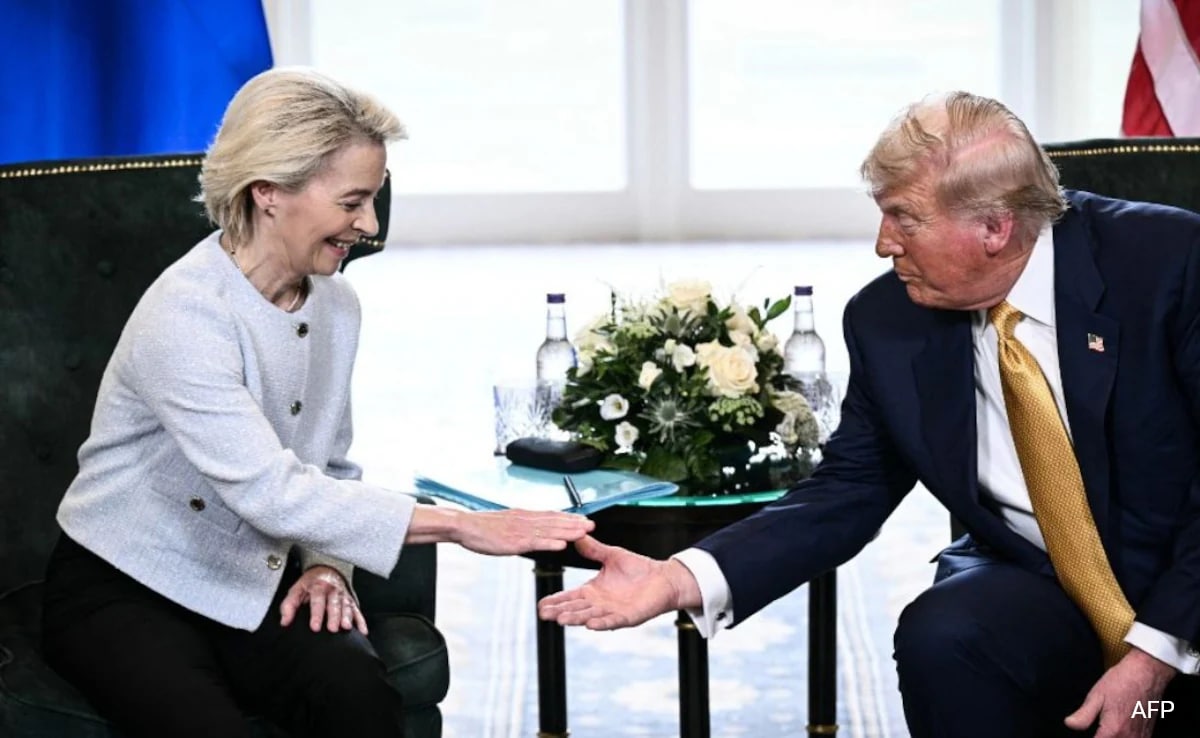
By capitulating to Washington, the EU has finally codified the framework struck last summer between European Commission President Ursula von der Leyen and US President Donald Trump at his Turnberry golf resort. The core mechanism is stark. Europe will drop its duties on American industrial goods and hand over preferential market access to US agricultural and seafood products. In return, the United States locks in a permanent 15% blanket tariff on the vast majority of European exports. Discover more on a similar subject: this related article.
The immediate catalyst for this sudden legislative breakthrough was a blunt, public ultimatum issued by the White House. Trump gave Brussels until July 4 to eliminate its import duties or face an immediate escalation of automotive tariffs to 25%. Facing the prospect of an outright collapse in transatlantic shipping, the European Parliament and member states scrambled to assemble a legislative package before the deadline. It is a truce bought at an immense structural cost.
While EU Trade Commissioner Maroš Šefčovič spun the agreement as a victory for transatlantic stability, the reality inside the European Parliament tells a far more volatile story. The text is thick with complex defense mechanisms, most notably a suspension clause championed by the Socialist and Green factions. This legal tripwire technically empowers the European Commission to freeze tariff reductions if American imports inflict severe, measurable injury on domestic European industries. More analysis by Al Jazeera explores comparable views on this issue.
But these mechanisms are largely an exercise in political theater. To actually trigger the suspension clause, the European Commission must initiate a lengthy, highly formalized political assessment. This requires consensus among member states that have historically been paralyzed by divergent economic interests.
The fatal flaw of the European strategy lies in the structural asymmetries of the deal itself.
Consider the plight of the automotive sector. Under the newly solidified terms, German carmakers must absorb a 15% tax on every vehicle entering the lucrative American market. Simultaneously, they must prepare for a wave of American industrial imports entering the European market entirely duty-free. The math does not work in Europe's favor.
+--------------------------+-----------------------+-----------------------+
| Trade Sector             | US Tariff on EU Goods | EU Tariff on US Goods |
+--------------------------+-----------------------+-----------------------+
| General Industrial       | 15%                   | 0%                    |
| Automotive & Trucks      | 15% (Averted 25%)     | 0%                    |
| Steel & Aluminum         | 50% (Above Quotas)    | 0%                    |
| Seafood & Agriculture    | Standard MFN Rates    | Preferential / 0%     |
+--------------------------+-----------------------+-----------------------+
The underlying friction stretches far beyond basic tariff percentages. The treaty quietly binds the EU to massive, multi-year procurement commitments for American liquefied natural gas, crude oil, and defense technology, a concession intended to aggressively chip away at Washington’s $200 billion goods trade deficit with the bloc.
For months, European lawmakers attempted to leverage these energy commitments to force a "sunrise clause" that would make European concessions conditional on the US lifting its aggressive 50% tariff surcharges on European steel and aluminum derivatives. Washington refused to yield. The US Ambassador to the EU, Andrew Puzder, made it clear that any attempt by Brussels to alter the energy purchasing mandates would void the entire framework.
Ultimately, the sunrise clause was abandoned. European negotiators were forced to settle for a toothless compromise. The US has until the end of the year to address the metal tariffs; if it fails to do so, the EU can theoretically introduce future legislation to claw back certain trade preferences. It is an unforced error. By giving up their primary point of leverage before Washington cleared its metals penalties, European negotiators left their domestic manufacturing base exposed.
The domestic fallout from this agreement will likely redefine European industrial policy for the remainder of the decade. The center-right European People’s Party pushed hard for ratification, operating under the assumption that a deeply flawed, predictable trade environment is superior to an erratic, uncontainable trade war.
Yet, opposition lawmakers are already labeling the text an unprecedented surrender of economic sovereignty. Left-wing and Green MEPs point directly to the text's sunset clause, which dictates that the entire trade regulation will expire on December 31, 2029, unless explicitly renewed. This timeline ensures that European industry will exist in a state of perpetual anxiety, forced to operate under a temporary framework while permanently restructuring its supply chains to accommodate American energy and defense imports.
Brussels chose survival over sovereignty. By clearing the path for a final parliamentary ratification vote in mid-June, the EU will almost certainly meet the July 4 ultimatum and avoid an immediate macroeconomic shock. The broader question is what remains of the bloc's independent trade architecture. By institutionalizing a system where Washington dictates tariff floors while face-saving clauses camouflage systemic concessions, Europe has not avoided a trade war. It has simply signed the terms of its management.