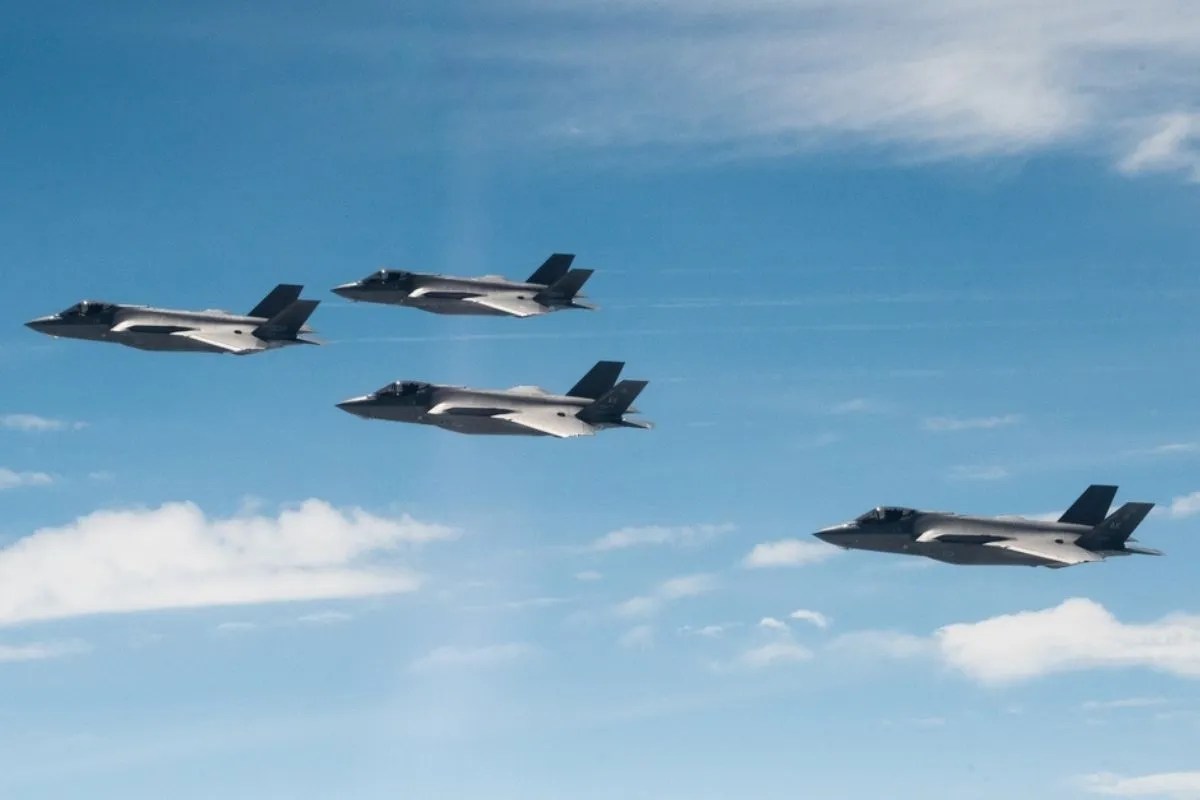
Rain doesn’t fall in the desert often, but when the metal starts falling, the sky feels just as heavy. Somewhere in the vast, arid stretch of the Middle East, a pilot stares at a flickering screen. This isn’t a video game. It’s a $100 million piece of engineering screaming a warning that it can’t outrun a drone made of lawnmower parts and plywood.
The numbers coming out of the recent friction between the United States and Iran aren’t just statistics. They are scars on a balance sheet that no one knows how to heal.
We talk about war in terms of "projections" and "strategic objectives." But the reality is much more tactile. It’s the smell of burnt aviation fuel. It’s the silence in a hangar where a fighter jet used to sit. The latest reports suggest that the U.S. has seen 42 aircraft destroyed or severely damaged in the theater of operations surrounding the Iranian conflict. The price tag for this specific friction? A staggering $29 billion.
That is not just a number. It is the annual GDP of a small nation. It is enough money to rebuild crumbling infrastructure across entire American states. Yet, it vanished into the heat haze of the Persian Gulf.
The Asymmetric Trap
Imagine standing in a ring against a shadow. You are wearing $5,000 armor. You have been trained by the best masters in the world. Your opponent is wearing a t-shirt and holding a $10 rock. Every time you swing your expensive sword, you tire out. Every time he throws a rock, he barely breaks a sweat.
This is the nightmare of asymmetric warfare.
The U.S. military is built on the philosophy of dominance through superior technology. We built the F-35 and the Reaper drone to be the apex predators of the sky. They are marvels. They are also incredibly fragile when faced with the "suicide drone" swarms and sophisticated electronic jamming that Iran has mastered.
When a $20,000 Shahed-style drone strikes a billion-dollar command center or causes a high-tier interceptor to crash, the math of war breaks. You cannot win a fight where you spend a million dollars to stop a thousand dollars. The $29 billion cost isn't just about the planes that fell. It’s about the massive, lumbering logistical tail required to keep the survivors in the air.
Maintenance crews work 20-hour shifts in 110-degree heat. They are trying to keep stealth coatings from peeling in the sand. Every hour an F-22 spends in that environment costs roughly $85,000. Think about that. While you sit in traffic for an hour, the government has spent more than the median American annual salary just to keep one engine spinning over a desert.
The Invisible Stakes of the Strait
Why are we even there?
If you look at a map of the Strait of Hormuz, it looks like a choke point. Because it is. One-fifth of the world’s oil passes through that narrow needle's eye. If the "ghost fleet"—those 42 lost or sidelined aircraft—couldn't hold the line, your life changes instantly.
The human element here isn't just the pilots. It’s the father in Ohio who suddenly can't afford the gas to get to work because a drone strike 7,000 miles away spiked the global market. It’s the mother in Shiraz who watches the horizon, wondering if the next sound is thunder or a sonic boom.
The $29 billion is a phantom. It represents the "cost of doing business" in a world where peace is just the absence of an active explosion. We have become comfortable with these astronomical figures, but we’ve forgotten what they represent: a massive diversion of human ingenuity toward the art of breaking things.
The Tech That Failed the Test
We were told that modern sensors made the sky transparent. We believed that no one could hide.
But the desert is big, and the shadows are deep. Iranian-backed forces have utilized low-tech solutions to baffle high-tech sensors. They use the curvature of the earth. They use the thermal noise of the desert floor. They use "dumb" rockets that don't emit a signal for a billion-dollar radar to track.
Consider a hypothetical technician named Elias. Elias is 22. He grew up playing flight simulators. Now, he’s on the deck of a carrier, looking at a hole in a fuselage where a piece of shrapnel from a low-cost projectile tore through a sensitive navigation array. He has to tell his commanding officer that the jet is grounded. That’s a "loss" in the ledger, even if the plane didn't explode.
When 42 aircraft are taken out of the rotation, the remaining fleet has to work twice as hard. Metal fatigues. Stress fractures appear in the airframes. The pilots grow weary. The $29 billion figure includes this "wear and tear" that acts like a slow-motion crash.
The Weight of the Ledger
Logic dictates that if you lose 42 aircraft and spend $29 billion, you should have a clear "win" to show for it. But in the modern geopolitical landscape, there are no wins. There is only "de-escalation" and "containment."
We are paying a premium for a stalemate.
The American public often hears these numbers and shrugs. Billions and trillions have lost their meaning. To ground the concept, try this: $29 billion could have provided a full four-year college education to nearly 300,000 students. It could have funded the entire National Cancer Institute for four years.
Instead, it bought a series of craters and a lot of tension.
The Iranian side of the ledger is different. They aren't spending billions. They are spending lives and cheap components. They are betting that they can outlast the American checkbook. They are betting that the American taxpayer will eventually look at that $29 billion and ask, "For what?"
It is a grueling, psychological game of chicken played with hypersonic missiles and drones that look like they were built in a garage.
The Silent Hangar
There is a specific kind of silence in a military hangar when the fleet is depleted. It isn't peaceful. It’s expectant. It’s the sound of missing potential.
Every one of those 42 aircraft represented a peak of human achievement. Thousands of engineers, scientists, and laborers spent years perfecting the curves of their wings and the logic of their software. To see that neutralized by asymmetric tactics is a humbling lesson in the limits of power.
We are witnessing the end of an era where "more expensive" meant "more safe." The $29 billion bill is the first invoice for a new kind of world. A world where the giant is not killed by another giant, but by a thousand stings he cannot see coming.
The pilots come home, their eyes bloodshot from the strain of looking for ghosts on a radar screen. The politicians argue over the budget. The contractors bill for the repairs.
But the desert remains. The sand eventually covers the wreckage of the 42 aircraft, turning them into expensive artificial reefs in a sea of dunes. The money is gone. The tension remains. And somewhere, another drone is being fueled up, costing less than the tires on a Humvee, ready to test the strength of a billion-dollar shield once more.
The true cost isn't just the money or the metal. It’s the realization that in this game, the house doesn't always win. Sometimes, the house just burns down slowly, one expensive shingle at a time.