The glow of a smartphone screen at 3:14 AM does strange things to the human face. It catches the grease on the bridge of the nose, turns the irises an unnatural, ghostly blue, and reflects a tiny, pixelated rectangle of absolute chaos.
Marcus didn't mean to be awake. He has a middle-management job at a logistics firm in Ohio, a mortgage that keeps him up for entirely different reasons, and a knee that predicts the rain with terrifying accuracy. He is thirty-six. He is, by all conventional metrics, a fully realized adult who should be dreaming about tax brackets or lawn aeration.
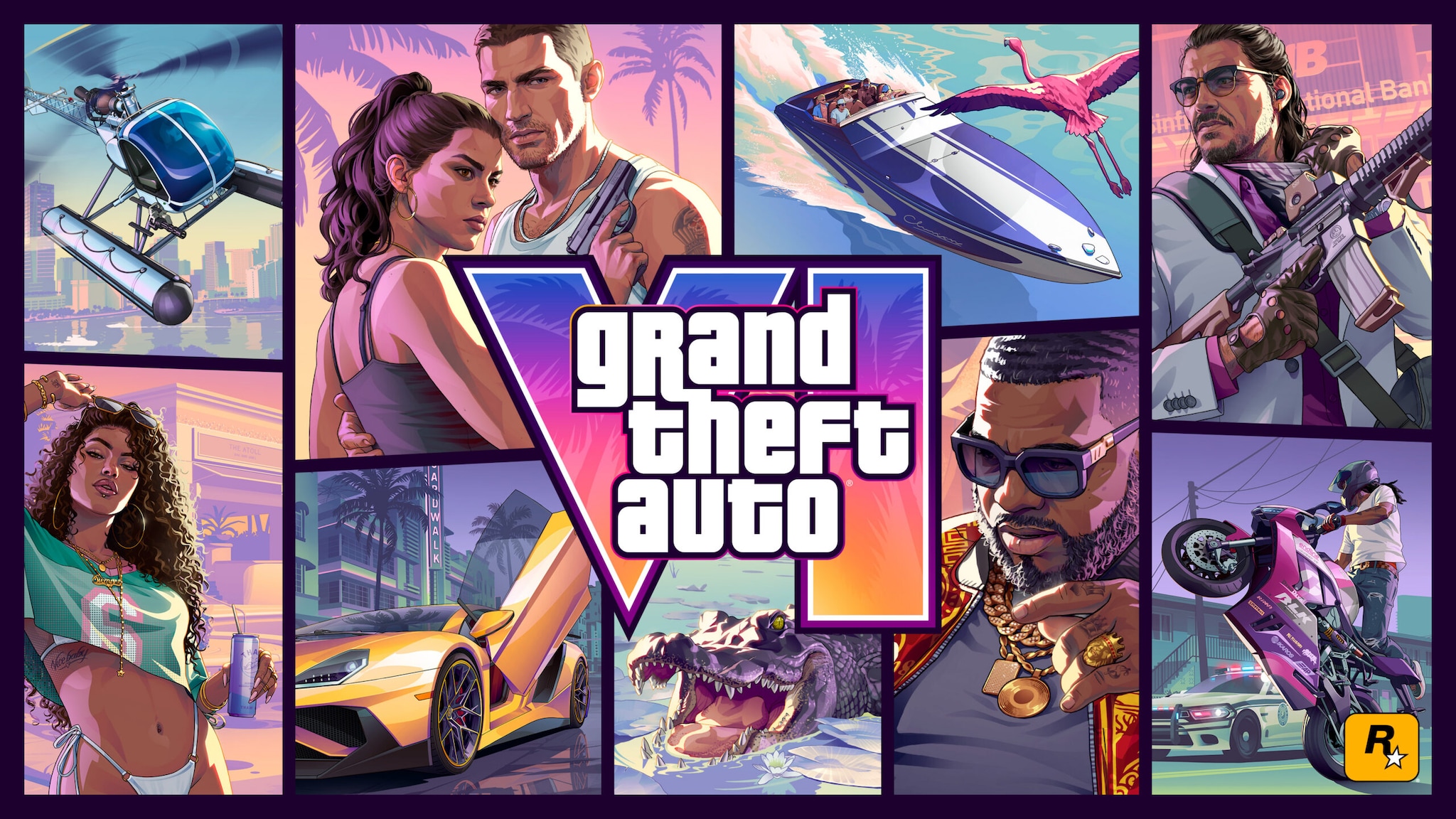
Instead, he was staring at a digital image of a woman leaning against a sports car, a neon pink sky bleeding into indigo behind her, and a bold, white number six.
He felt a sudden, ridiculous lump in his throat.
We do not talk enough about the strange, heavy weight of cultural anticipation. To the uninitiated, the announcement that Rockstar Games has finally unveiled the official cover art for Grand Theft Auto 6—alongside a concrete pre-order date of November 17—is a corporate press release. It is a line item on a marketing spreadsheet. It is a data point for investors who care about microtransactions and quarterly projections.
But to the people who grew up with a controller molded into their palms, it feels like a confrontation with time itself.
The Art of the Slow Bleed
The industry used to move fast. You would buy a game, play it until the disc was scratched, and eighteen months later, a sequel would materialize on the shelf of a dimly lit store that smelled like stale carpet and plastic sleeves.
Then, the world slowed down. Or rather, the machinery grew so massive that it began to warp the passage of time.
Consider the math of a modern cultural monolith. Grand Theft Auto 5 launched in September of 2013. To put that in perspective, Barack Obama was at the start of his second term. The iPhone 5s was the pinnacle of mobile technology. Marcus was twenty-three, living in a cramped apartment with two roommates, surviving on frozen burritos and a shared dream of never working a corporate job.
More than a decade has evaporated since then. Empires fell. A global pandemic rewrote the rules of human interaction. Marcus got married, bought a house, lost a parent, and gained a daughter.
Through every single shift in his life, that one digital world remained a constant, static fixture. It became a background hum. So when a company drops a single piece of artwork on a random Tuesday, it isn't just marketing. It is a seismic shift. It is the realization that the longest-running intermission in entertainment history is finally coming to an end.
The artwork itself is an exercise in deliberate nostalgia mixed with contemporary exhaustion. It features Lucia, the series’ first female protagonist since the turn of the millennium, alongside her partner Jason. They aren't smiling. They look tired, dangerous, and deeply human. They are framed against the backdrop of a fictionalized Vice City that looks less like a neon playground and more like a beautifully toxic paradise.
It looks like the world we live in right now, just turned up to eleven.
The Economics of a Digital Sunrise
There is an inherent cynicism in the modern gaming landscape. We have been burned before. We have watched hyper-polished cinematic trailers that bear no resemblance to the final product. We have clicked the pre-order button on titles that arrived broken, fragmented, and hollow.
Yet, when the clock struck midnight and the digital storefronts updated to show that pre-orders for the most anticipated piece of software in human history would officially open on November 17, the internet didn't just react. It buckled.
The baseline edition is priced at seventy dollars, a number that has become the standard tax for modern escapism. But the real story isn't the price tag. It is the psychological contract being signed. When a player hands over their money months in advance for a product they haven't touched, they aren't purchasing code. They are buying an insurance policy on their own excitement. They are securing a spot in a cultural moment that everyone will be talking about, regardless of whether it succeeds or fails.
Let’s look at the mechanics of this specific rollout. Rockstar isn't offering the usual bloated array of digital trinkets for early buyers. There are no exclusive golden guns or day-one cosmetic outfits that break the immersion of the story. Instead, the pre-order bonus is deceptively simple: guaranteed access to the pre-load window forty-eight hours before launch, and a physical, high-quality print of the newly revealed cover art for those who still value the weight of paper in their hands.
It is a brilliant, calculated move. It treats the audience not as consumers to be milked for an extra five dollars, but as collectors participating in a historical event.
But beneath the corporate strategy lies a deeper, more complicated truth. The industry has changed since 2013. The budget for this single game is estimated to have crossed the billion-dollar mark, making it the most expensive piece of media ever created. The stakes are no longer just about whether a game is fun. It is about whether an entire ecosystem can support the weight of its own ambition.
The Ghost in the Machine
To understand why a simple image of two fictional criminals matters, you have to understand what these virtual spaces actually represent to the people who inhabit them.
For a generation that grew up alongside the rise of the internet, these worlds were the first places where we experienced a strange kind of freedom. They weren't just games; they were digital towns where we met friends after school. We didn't just finish missions. We drove down virtual highways listening to fictional radio stations while the sun went down in real life outside our bedroom windows.
Marcus remembers the exact night he realized he was old. It was three years ago. He had logged into the online mode of the previous game to clear his head after a particularly brutal week at work. He found himself sitting on the hood of a digital car on a virtual beach, watching a simulated sunset with a stranger from halfway across the world. They didn't speak through headsets. They just sat there, two real people, using digital avatars to escape the crushing weight of their actual lives for twenty minutes.
That is the invisible currency of this franchise. It isn't the violence, the satire, or the car chases. It is the texture of reality it provides when reality itself feels too heavy to carry.
When the new cover art was revealed, Marcus didn't see a product. He saw the next decade of his life taking shape. He saw the late nights he would spend exploring these new streets when his daughter was asleep. He saw the conversations he would have with coworkers at the water cooler, breaking down the tiny details of a world designed to mimic our own flaws.
The pre-order date of November 17 isn't just a deadline for wallets. It is a marker on the calendar of a community that has spent twelve years waiting in the dark.
The screen of Marcus's phone finally timed out, plunging the bedroom back into darkness. He didn't lock it. He laid it face down on the nightstand, the image of the pink sky and the white number six burned into his retinas. He closed his eyes, listening to the rhythmic breathing of his wife beside him and the soft rustle of the wind against the window pane.
The world outside was still complicated, loud, and uncertain. But for the first time in a very long time, he felt a familiar, youthful spark of impatience. November was coming. And with it, a chance to start over in a brand new city.