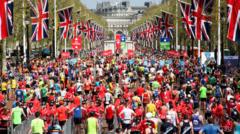
The organizers of the London Marathon think they have pulled off a masterstroke. By expanding the race into a two-day weekend event, they claim they are democratization personified—doubling capacity, lowering the entry barrier, and generating millions more for charity.
They are wrong. They are trading a crown jewel of global athletics for a bloated corporate festival.
Having spent fifteen years working within the logistics and commercial strategy of elite mass-participation events, I know exactly what happens when you dilute a premium product. You do not double the magic. You halve the prestige.
The move to split the field across Saturday and Sunday erodes the fundamental tension that makes the London Marathon a cultural phenomenon. It turns a cut-throat, elite-to-amateur singular spectacle into a highly commercialized theme park ride. Here is why the spreadsheet logic behind this decision is completely broken, and what it actually means for the sport.
The Myth of the Democratized Mass Field
The core argument for a two-day format is always inclusivity. "More spots mean more dreams fulfilled." It sounds beautiful in a press release. In reality, it kills the meritocracy of timing.
When you split 100,000 runners across 48 hours, you are no longer staging a singular race. You are staging two separate events under a shared banner. Ask any serious club runner what matters most about London, and they will tell you it is the dense, high-performance crucible of the "Good For Age" and championship starts.
When thousands of runners are packed together on a single Sunday morning, a physiological phenomenon occurs: pacing drafting. Running in a dense pack of athletes moving at a precise 6-minute mile pace reduces wind resistance and provides a psychological engine. By splitting fields or staggering starts wildly across two days to accommodate logistics, you thin out these performance clusters.
Furthermore, you introduce an undeniable variable: environmental disparity.
Imagine a scenario where Saturday's field runs in 11°C with light drizzle—ideal marathon conditions—while Sunday's field battles a 22°C heatwave or 25 mph headwinds.
- The Result: The integrity of the timing data is completely compromised.
- The Fallout: Rankings, personal bests, and qualifying times for other Majors become completely incomparable.
You cannot claim a race is fair when the podium of the mass field is determined by which day you drew in a lottery.
The Volunteer and Community Collapse
The lazy consensus assumes that because London has a massive pool of willing volunteers, they will simply work double shifts. They won't.
Major marathons rely on a fragile ecosystem of local running clubs, St John Ambulance staff, and community groups who manage everything from water stations to baggage handling. Asking these groups to commit to a 36-hour operational window instead of a 12-hour window is a massive ask.
I have watched smaller events try to scale their timelines, and the result is always volunteer fatigue. By Sunday afternoon of a two-day event, water stations are undermanned, medical tents are stretched to their limits, and the vibrant crowd energy that London is famous for becomes patchy and exhausted. Residents along the highway or in Bermondsey are not going to stand outside cheering for two straight days. The wall of sound that carries runners through the final miles will inevitably have massive dead zones.
The Logistics Nightmare Nobody is Talking About
Let's look at the actual mechanics of closing central London for an entire weekend.
The economic cost of shutting down major arterial roads, disrupting the London Underground network, and blocking commerce in Tower Hamlets, Westminster, and the City of London for two consecutive days is astronomical. Transport for London (TfL) operates on razor-thin margins for weekend maintenance windows. A full-weekend shutdown forces local businesses to lose millions in foot traffic and deliveries.
The inevitable compromise? The organizers will be forced to use a modified, less disruptive route for one of the days, or compress the time limits drastically. If Saturday's race has a strict six-hour cutoff to allow roads to reopen for evening commerce, you haven't made the race more inclusive. You have made it a high-stress sprint for the very back-of-the-pack runners you claimed you wanted to help.
The Real Winner is the Balance Sheet, Not the Sport
This is a commercial land grab masquerading as progressive sports management. Doubling the field allows the event to double its ballot fee revenue, double its merchandise sales, and command massive premiums from title sponsors who want access to a broader demographic dataset.
But it commoditizes the experience. The London Marathon is a World Marathon Major precisely because it is elusive. The difficulty of getting a ballot place is what makes the medal mean something. When you turn the event into an assembly line designed to process as many human bodies as possible through the streets of London, the prestige evaporates. It becomes a standard charity fun run on a massive scale.
What Event Organizers Should Do Instead
If the goal is genuinely to grow the sport and provide more opportunities for runners, expanding London into a two-day behemoth is the wrong lever to pull.
Instead of cannibalizing the capital's flagship race, the governing bodies should pivot their resources toward elevating regional marathons. The UK running calendar is top-heavy. Manchester, Edinburgh, and Brighton are fantastic events that desperately need the broadcast infrastructure, elite fields, and corporate sponsorship that currently suffocates London.
Distributing the demand across the country builds a sustainable national running culture. Forcing 100,000 people into the tube stations of south-east London over a single weekend just builds a corporate monopoly that starves the rest of the British athletic infrastructure.
Stop trying to maximize the capacity of a single weekend. The value of the London Marathon is not found in how many thousands of people can cross the finish line, but in the singular, unmatched lightning-in-a-bottle moment of the entire city stopping for one Sunday morning. Break that Sunday, and you break the race.