The Kennedy Center for the Performing Arts sits on the edge of the Potomac like a marble fortress of high culture. It is a place where the edges of American life are supposed to be sanded down into something smooth, prestigious, and, above all, polite. Each year, the Mark Twain Prize for American Humor is handed out there. It is the highest honor a comedian can receive, a secular canonization that says, "You have reflected us back to ourselves, and we are better for it."
But humor is rarely polite. Mark Twain certainly wasn't. He was a man who famously remarked that "censorship is telling a man he can't have a steak just because a baby can't chew it."
In the spring of 2024, the steak was removed from the menu.
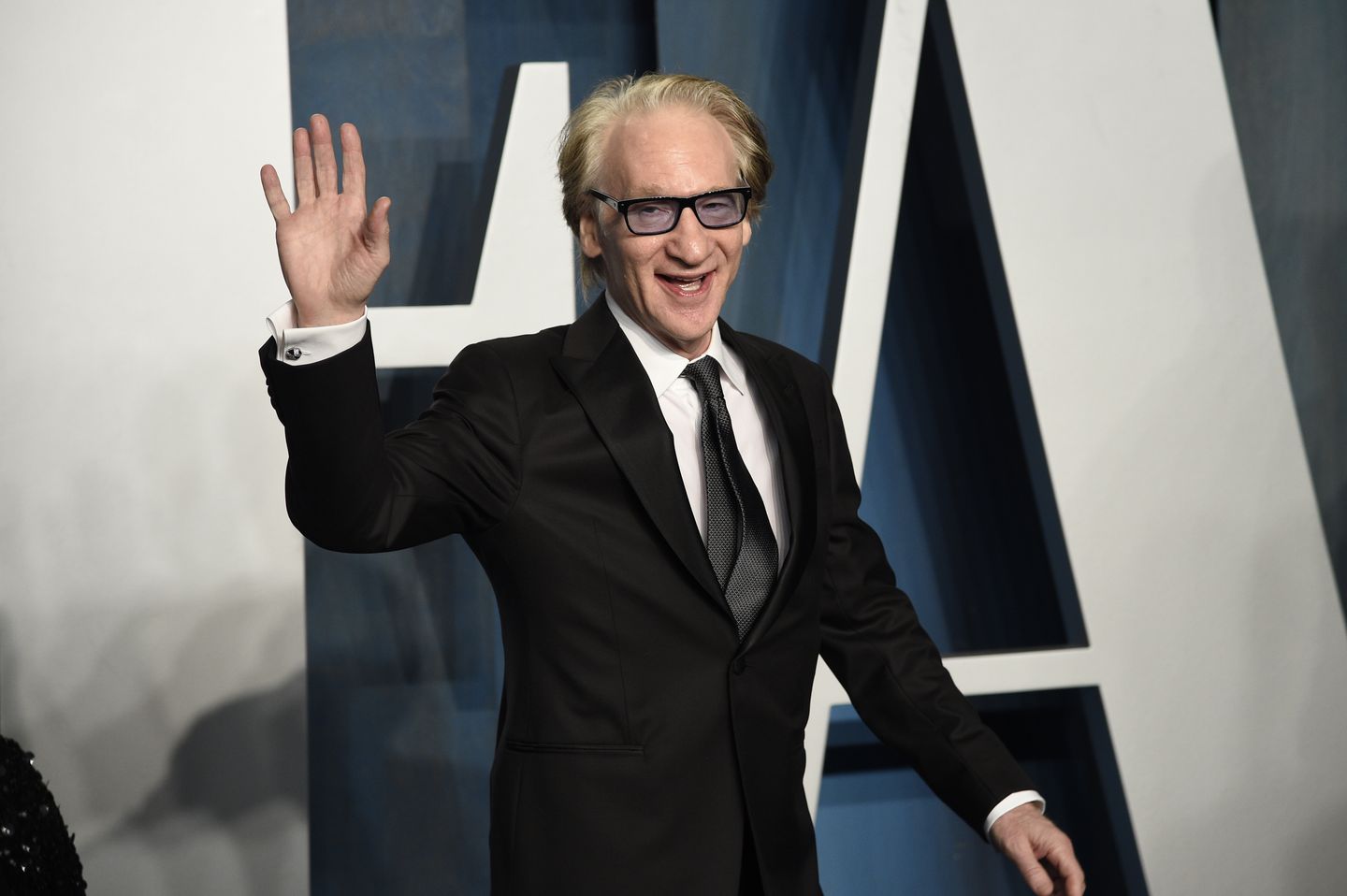
Bill Maher, a man who has spent three decades making a career out of being the thorn in the side of whoever happens to be sitting in the Oval Office, was reportedly the choice for the prize. The committee had leaned toward him. The momentum was there. Then, according to those close to the process, a quiet signal drifted over from 1600 Pennsylvania Avenue. The White House, it seemed, wasn't interested in seeing Maher hoisted onto that particular pedestal.
The prize went elsewhere. The conversation stopped. The marble remained smooth.
The Architecture of the Shunning
To understand why this matters, you have to look past the partisan bickering. This isn't about whether you find Bill Maher’s monologues insightful or infuriating. It’s about the invisible mechanism of the "soft veto."
Imagine a hypothetical junior staffer in the East Wing—let’s call her Sarah. Sarah’s job is "brand management" for the administration. To Sarah, Bill Maher isn't a comedian; he is a liability. He is a man who, despite leaning left on most social issues, has spent the last few years relentlessly poking at the Democratic establishment’s sensitivities regarding "woke" culture, age, and institutional incompetence.
When Maher’s name comes up for a prestigious national award, Sarah doesn't see a celebration of the First Amendment. She sees a potential PR nightmare. She sees a televised ceremony where the recipient might use his five minutes at the podium to crack a joke about the President’s gait or the Vice President’s word salads.
So, a phone call is made. A "concern" is expressed. No one issues a formal decree. No laws are broken. But the board members of the Kennedy Center, many of whom are political appointees or wealthy donors who value their proximity to power, hear the subtext loud and clear.
The invitation is never sent.
The Ghost in the Room
There is a profound irony in using the name of Samuel Clemens—Mark Twain—to gatekeep who is "appropriate" for an award. Twain was a man who took great joy in eviscerating the pieties of his day. He was a vocal critic of American imperialism, a skeptic of organized religion, and a man who delighted in the "offensive."
If Mark Twain were alive today, he wouldn't be sitting in the honors box at the Kennedy Center. He would likely be banned from it.
By blocking Maher, or any comedian who makes the sitting power structure uncomfortable, the institutions involved are performing a strange kind of taxidermy. They want the prestige of the rebel without the inconvenience of the rebellion. They want the Mark Twain Prize to represent "humor," provided that humor remains a harmless tickle rather than a surgical incision.
Maher’s brand of comedy is built on a specific, fading premise: that you can be on someone’s side politically while still thinking they are being ridiculous. He operates in the messy middle of the "New Liberalism" versus "Old Liberalism" war. In the eyes of a modern White House—any modern White House, regardless of party—that independence is a bug, not a feature.
The Cost of Professional Politeness
When the government or its adjacent institutions start curating art based on "comfort," the art itself begins to atrophy. We see it in the way late-night television has shifted from satirical observation to a form of nightly pep rally for the "correct" team.
The stakes here aren't just about a trophy on Maher’s mantle. He has plenty of money and a massive platform; he will survive the snub. The real stakes are for the next generation of satirists.
Consider a young comic starting out in a basement club in Chicago. They see that the path to the "top"—the path to the Kennedy Center, the honors, the legacy—requires a certain level of ideological compliance. They learn that you can bite the hand that feeds you, but only if you don't bite too hard, and only if you bite the "right" people.
The result is a thinning of the cultural blood.
We are living in an era where "safety" has become the primary metric for public discourse. But comedy isn't supposed to be safe. It is the safety valve of a democracy. When you plug the valve because the steam smells unpleasant to those in power, the pressure doesn't go away. It just builds up somewhere else.
The Dinner Party Silence
There is a specific kind of silence that happens at a high-end dinner party when someone says something "inappropriate." It’s not a loud silence. It’s a soft, suffocating blanket of redirected eye contact and sudden interest in the appetizer tray.
That is what happened with the Mark Twain Prize.
The White House didn't have to send out a press release denouncing Maher. They just had to let it be known that he wasn't "their kind of people." This is the hallmark of modern censorship. It doesn't look like a book burning; it looks like a calendar conflict. It looks like a "different direction." It looks like a polite "no, thank you."
But the public isn't stupid. They can sense when the deck has been scrubbed too clean.
The Kennedy Center is funded, in part, by federal dollars—which is to say, by the people. When the executive branch exerts influence over who is "worthy" of being celebrated by such an institution, it creates a feedback loop of sycophancy. The artist praises the state, and the state prizes the artist.
The Irony of the Un-Honored
In a strange way, being blocked by the White House is the greatest tribute Bill Maher could have ever received. It validates his entire persona. It proves that, despite the critics who claim he has become a "grumpy old man" or a "conservative lite," he still possesses the one thing a satirist needs: the ability to actually annoy the people in charge.
If he had walked onto that stage, accepted the bust of Twain, and received a standing ovation from the very people he is supposed to be skewering, it would have been a sign of his irrelevance. It would have meant he was "safe."
Instead, he was left out in the cold.
And in the cold is where the truth usually lives.
The Potomac continues to flow past the marble walls. The ceremonies will continue. The speeches will be written, the tuxedos will be rented, and the jokes will be vetted until they are as smooth and harmless as a river stone.
But somewhere in the back of the room, the ghost of Mark Twain is likely leaning against a pillar, lighting a cigar, and laughing at the absurdity of a prize that bears his name but fears his spirit. He knows what the people in the front row have forgotten: that the moment you become "acceptable" to the White House, you have probably stopped telling the truth.