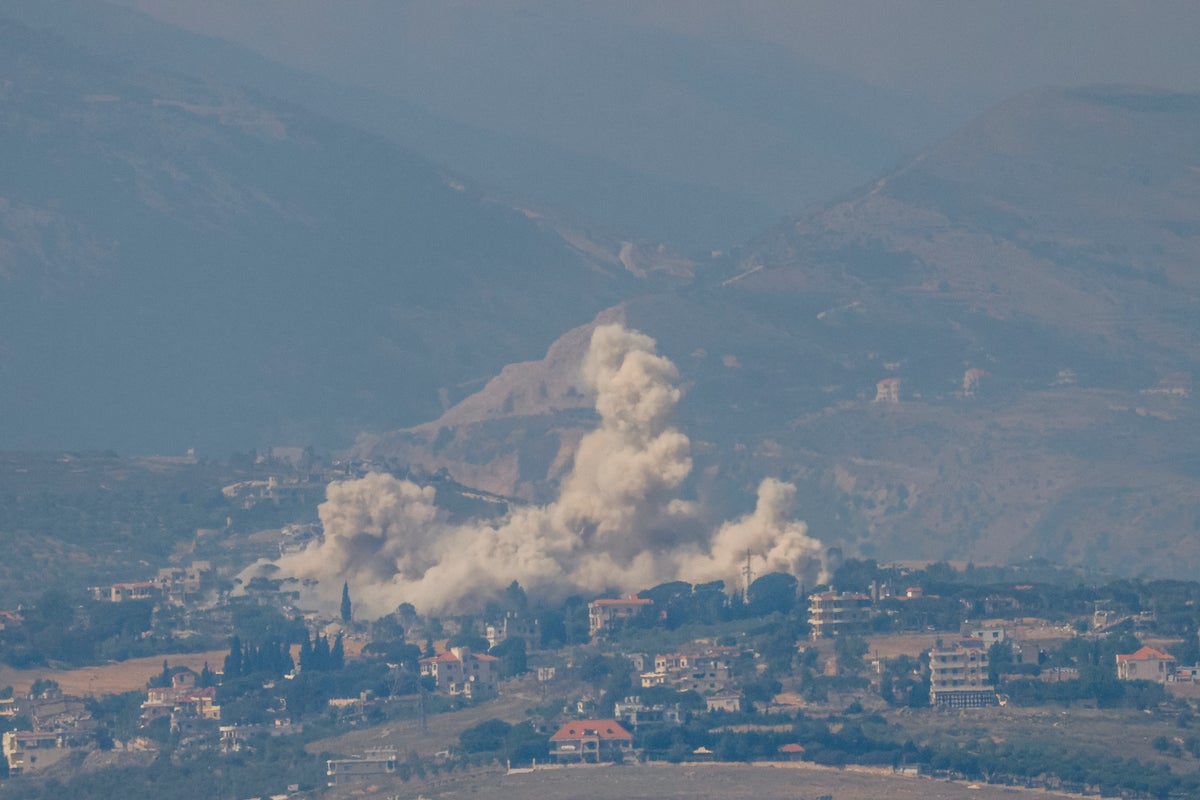
The diplomatic backchannel between Washington and Tehran just shattered. On Monday, Iran officially walked away from indirect peace talks with the US, pointing directly to Israel's escalating ground invasion of Lebanon. The fragile ceasefire brokered in April is effectively dead, and the consequences will hit global energy markets and regional security immediately.
If you're trying to understand why a conflict in Lebanon just derailed a massive diplomatic effort between the US and Iran, the answer lies in a single, unyielding reality. Tehran views the region as a unified battleground.
Iranian Foreign Minister Abbas Araghchi made the regime’s stance clear on social media, stating that a violation on one front is a violation on all fronts. In short, Iran will not negotiate a separate peace with Washington while US-backed Israeli forces push deeper into Lebanon to dismantle Hezbollah.
The Trigger Event in Beirut
The immediate catalyst for the breakdown was Israeli Prime Minister Benjamin Netanyahu’s order for troops to push further into Lebanon, marking the broadest incursion into the country in a quarter of a century. Over the weekend, Israeli forces captured the historic Beaufort Castle, situated deep in southern Lebanon, while unleashing heavy airstrikes on Beirut’s southern suburbs of Dahieh, a prominent Hezbollah stronghold.
The escalation didn't happen in a vacuum. It follows a chaotic weekend of direct military exchanges between the US and Iran:
- The US military launched airstrikes targeting Iranian radar installations, a ground control station, and drone sites, claiming these assets threatened maritime shipping.
- Iran retaliated by launching drone and missile strikes against a military airbase in Kuwait, which Tehran claims was used to facilitate the American operation.
- Hezbollah fired over 300 projectiles into northern Israel, directly targeting military positions and advancing troops.
This rapid-fire exchange exposed the complete failure of the April ceasefire agreement.
Inside the Collapsed Deal
Before the walkout, negotiators in Oman had been hammering out a 14-point memorandum of understanding. The centerpiece of the deal was a proposed 60-day window to halt hostilities. During this time, the US and Iran were supposed to negotiate long-term curbs on Iran's nuclear program and the disposal of its enriched uranium stockpile in exchange for sanctions relief.
The diplomacy was already on life support before Monday. US President Donald Trump had recently pulled back from an outline agreement reached on Friday, demanding stricter revisions to Iran's nuclear commitments.
Iranian officials accused Washington of shifting the goalposts. Foreign Ministry spokesperson Esmaeil Baghaei noted that the talks began under an atmosphere of severe suspicion and mistrust, accusing the US of constantly changing its demands.
Trump, for his part, shrugged off the Iranian walkout. Speaking to NBC News, he expressed indifference to the halt in communication.
"I think we've been talking too much, if you want to know the truth," Trump said. "I think going silent would be very good, and that could be for a long time."
Trump emphasized that the US would not immediately launch a new bombing campaign but would rigidly enforce its naval blockade on Iranian ports, describing the blockade as a "piece of steel."
Moving Beyond the Strait of Hormuz
The collapse of these negotiations will carry immediate economic penalties. Iran has already used its leverage to disrupt global shipping through the Strait of Hormuz, a choke point responsible for a fifth of the world's petroleum supply. Following the news of the suspended talks, global crude futures surged by more than 5%.
The threat is expanding. Mainstream media often focuses exclusively on the Persian Gulf, but Tehran's strategy is shifting toward a wider maritime blockade. State media outlets linked to the Islamic Revolutionary Guard Corps (IRGC) announced that the regime and its regional allies are actively planning the complete closure of the Strait of Hormuz alongside the activation of other fronts.
Specifically, Iran is eyeing the Bab el-Mandeb Strait at the southern mouth of the Red Sea. By leveraging Yemen's Houthi rebels to choke off the Red Sea while keeping the Persian Gulf locked down, Iran can effectively strangle a massive portion of international trade.
Domestically, Iranian President Masoud Pezeshkian is already warning his citizens to prepare for severe economic hardship. Iran’s annualized inflation rate has reached a staggering 53.9%. The regime is calculatedly gambling that the economic pain it inflicts on the West through energy price spikes will outpace the domestic pressure caused by tighter US blockades.
The Next Phase of Regional Escalation
With diplomacy shelved, the conflict is shifting entirely back to the military arena. Kuwait has already ordered its citizens to stay indoors following the Iranian strike on its territory, signaling that Gulf states can no longer easily insulate themselves from the fallout.
Meanwhile, Iran’s central command has issued a direct warning to Israeli civilians, stating that any sustained bombardment of central Beirut will trigger immediate, heavy rocket fire against northern Israeli towns and key military hubs deep inside the country.
For global markets, shipping companies, and regional security analysts, the immediate steps are clear:
- Expect sustained energy volatility. The 5% spike in crude oil is a baseline reaction; any concrete moves by the IRGC to fortify positions near the Bab el-Mandeb Strait will drive insurance premiums and oil prices higher.
- Anticipate a protracted diplomatic freeze. With Trump favoring a policy of strategic silence and tightening naval blockades, don't look for a quick return to the negotiating table.
- Monitor the Lebanon-Israel border. Israel's advance past historic markers like Beaufort Castle indicates that Tel Aviv is pursuing a deep buffer zone, ensuring that Hezbollah and its Iranian backers will keep the northern front active for the foreseeable future.