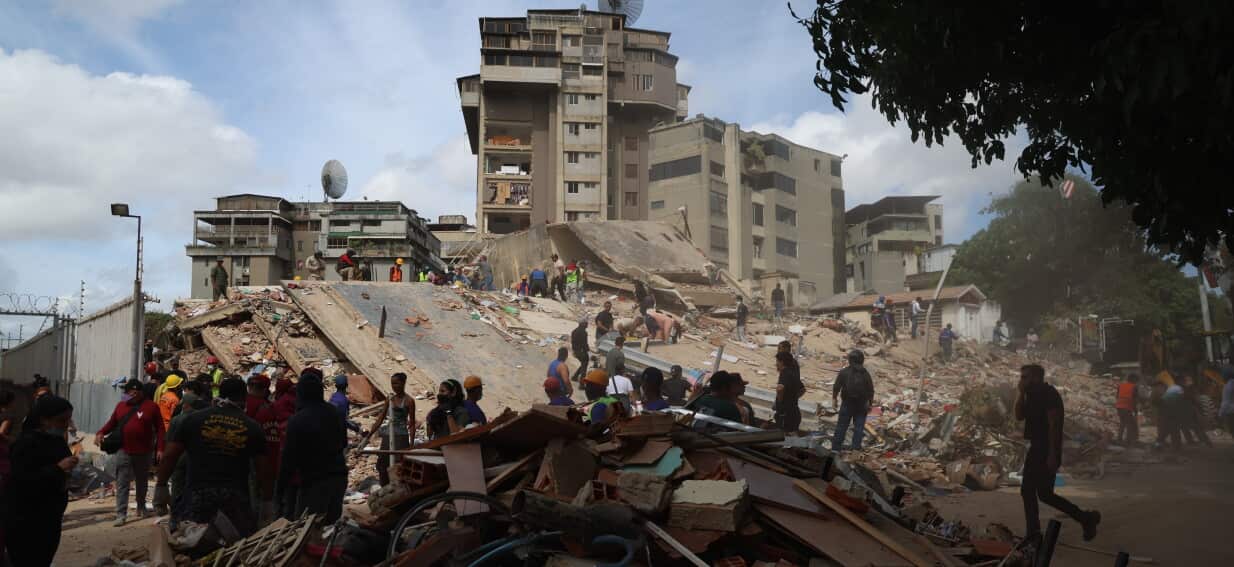
When the ground starts shaking, you run. But when it stops, you don't expect it to violently rip open again just 39 seconds later.
That is the nightmare northern Venezuela faced when a rare phenomenon known as a seismic doublet shattered the region. A massive 7.2 magnitude earthquake struck first. Before anyone could process the panic, a second, even more powerful 7.5 magnitude quake slammed the exact same area. It was a brutal one-two punch that caught the nation completely off guard, toppling buildings, flattening entire streets, and forcing ordinary citizens to act as first responders.
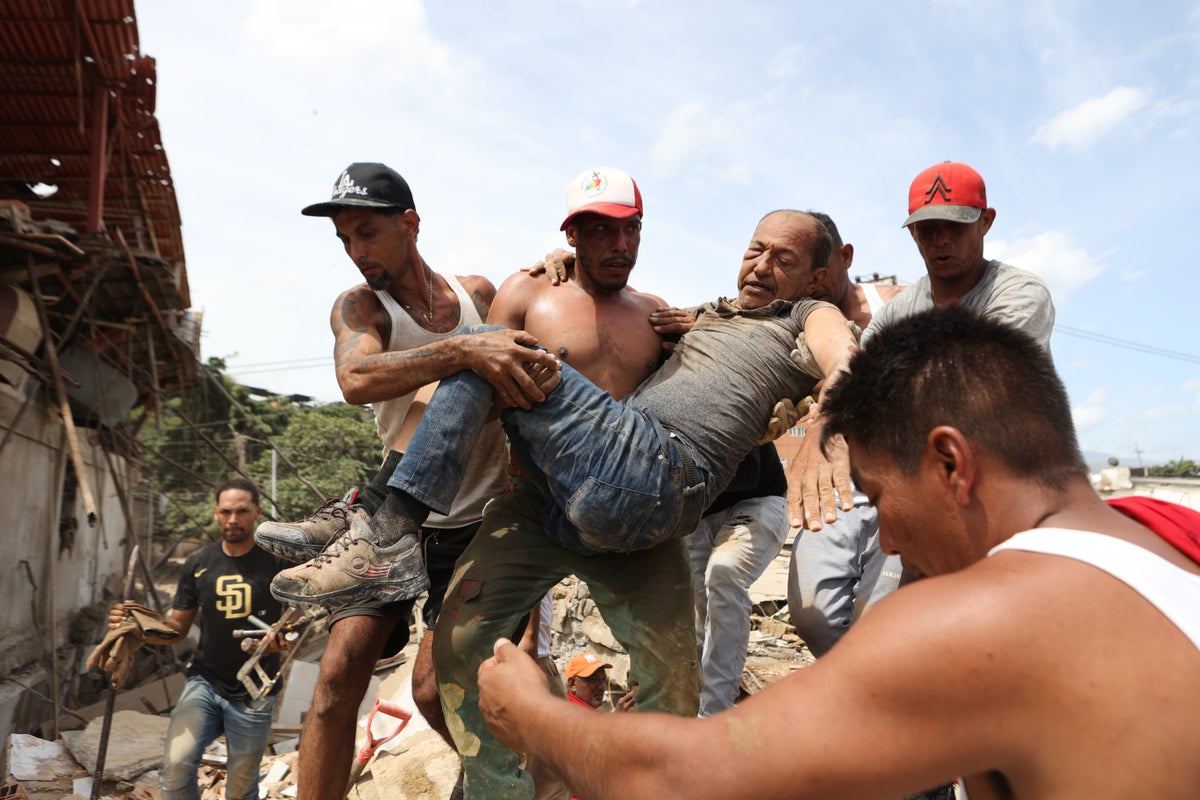
The numbers are grim and rising fast. At least 235 people are confirmed dead, over 4,300 are injured, and thousands remain missing. While the government scrambled to manage the fallout in the capital of Caracas, residents in harder-hit coastal towns had no choice but to dig through shattered concrete with their bare hands to find their families.
The Physics Behind A Deadly Doublet
Most people think of earthquakes as a single big shock followed by smaller aftershocks. A seismic doublet defies that logic. It happens when two major, similar-sized earthquakes hit almost the exact same location in a very short window of time.
The science comes down to intense tectonic friction. The Caribbean plate, situated just north of the Venezuelan coastline, slides eastward past the South American plate at roughly two centimeters a year. That might sound slow, but geophysicists note it is a massive displacement on par with California's San Andreas fault. The initial 7.2 quake occurred along a shallow strike-slip fault. Instead of relieving all the built-up tectonic stress, it immediately triggered a second rupture on a connected fault line just 39 seconds later.
This rapid succession meant that structures weakened by the first shake instantly collapsed under the weight of the second. Compounding the issue is the fact that Venezuela does not have an early earthquake warning system. Unlike nations with advanced sensor networks that detect initial seismic waves and blast alerts to cell phones, Venezuelans received zero warning.
Infrastructure Collapse Outside The Capital
While state media broadcast dramatic rescue footage from Caracas, the reality on the ground looked starkly different just a few miles away. The coastal region of La Guaira suffered the brunt of the destruction.
La Guaira's main airport closed immediately due to severe runway and terminal damage, crippled infrastructure that ground vital international aid flights to a halt. In the streets, apartment buildings tilted precariously. Some completely compressed into concrete skeletons.
The public healthcare network folded under the sudden strain. According to reports from the Pan-American Health Organization, up to 91 emergency hospitals were located in zones experiencing severe shaking. Critical facilities failed almost immediately.
- Hospital Domingo Luciani in El Llanito had to be entirely evacuated as a preventative measure due to suspected structural issues.
- Hospital Dr. Francisco A. Rísquez in Cotiza suffered a catastrophic lower-floor wing collapse, forcing medical staff to move patients into the streets.
- Hospital Magallanes de Catia dealt with ruptured internal pipelines and extensive masonry damage, rendering multiple floors completely unusable.
Emergency triage areas at Hospital José María Vargas and Hospital Vargas de La Guaira experienced total functional collapse, not from physical damage, but from the overwhelming influx of thousands of bleeding, dust-covered patients.
Neighbors As First Responders
With official rescue teams heavily concentrated in Caracas, everyday citizens in the provinces became the only hope for those trapped underneath the debris.
In downtown areas, families spent sleepless nights huddled in open parking lots and public parks, terrified of aftershocks. Neighbors formed human chains, tossing chunks of broken brick and twisted rebar out of the way. Frustration quickly boiled over. Many residents openly questioned why promised heavy construction machinery had not arrived hours after the disaster.
The emotional toll is devastating. Parents stood in silent shock or collapsed in grief as the bodies of young children were pulled from collapsed homes. For those watching from afar, the situation is equally torturous. Phone services and internet infrastructure across Venezuela flickered out during the quakes, leaving millions of Venezuelan migrants abroad completely unable to verify if their families survived the night.
The Reality Of Recovery
Acting President Delcy Rodríguez declared a national state of emergency and announced a $200 million reconstruction fund aimed at rebuilding homes and shattered hospitals. She also issued an urgent public appeal to private businesses, begging them to supply heavy excavators and cranes to help clear the heaviest concrete slabs.
International help is slowly trickling in. Specialized rescue crews from Mexico, El Salvador, and the Dominican Republic arrived to assist, alongside emergency supplies. However, independent geophysicists from organizations like the U.S. Geological Survey warn that the danger is far from over. Experts state there is a 99% chance of a magnitude 4 aftershock hitting the region within the week, and a highly concerning 24% chance of a magnitude 6 quake striking the already compromised infrastructure.
For a country already battered by years of economic instability, recovering from a rare seismic doublet will take years. The immediate focus remains on the golden window for saving lives, a window that is rapidly closing as citizens continue to dig through the ruins of their own neighborhoods.