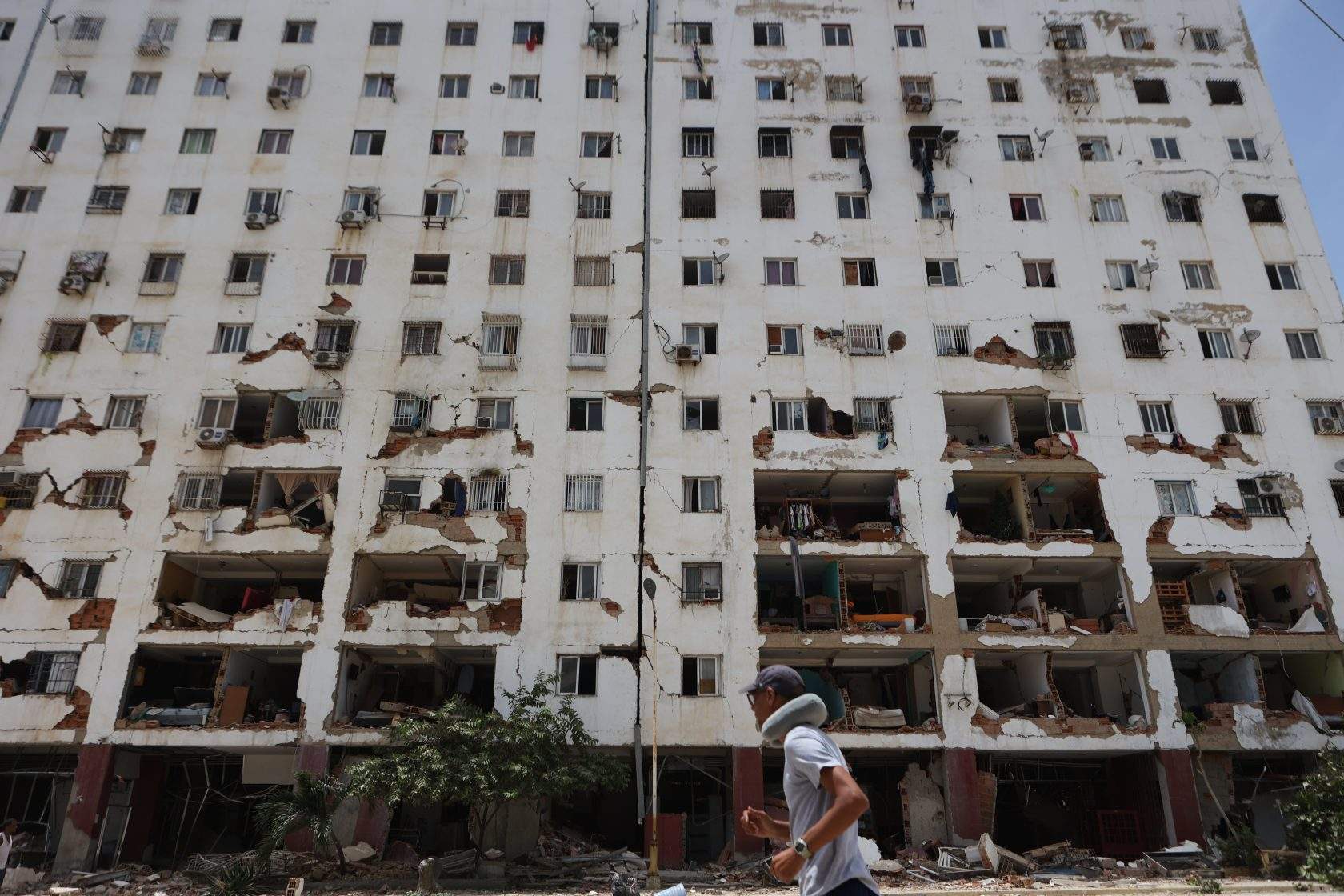
Two massive earthquakes just shattered northern Venezuela. The twin tremors measured 7.2 and 7.5 in magnitude. They hit just seconds apart during a national holiday. The ground shook violently, and within minutes, entire neighborhoods turned to rubble. The latest reports from acting president Delcy Rodríguez indicate the death toll has climbed to 589 people, with nearly 3,000 others injured. Thousands remain missing. Rescue workers are digging through collapsed concrete with their bare hands.
If you have family in Caracas or the hard-hit coastal state of La Guaira, you're probably living in a state of sheer panic right now. Phone lines are down. The internet is spotty at best. The local infrastructure basically collapsed under the weight of the twin shocks.
Global Affairs Canada came out with an update to ease some immediate fears. Right now, there are no reports of Canadian casualties. GAC confirms that 740 Canadians are officially registered as being inside Venezuela. None of them are currently known to be injured or killed. But that number only tells part of the story. The official registry doesn't account for the thousands of dual citizens, unregistered travelers, or the deep anxiety gripping the Venezuelan-Canadian diaspora.
The Reality on the Ground in La Guaira and Caracas
The scale of this disaster is staggering. The International Organization for Migration estimates that up to 6.76 million people could be affected by these quakes. Two million of those people are in Caracas alone. The state of La Guaira has been completely militarized to handle the chaos. Rescue crews from across the globe are arriving, but the logistics are a nightmare.
Imagine a country already facing immense economic and social strain. Now add a catastrophic natural disaster. Hospitals are treating patients outside on mattresses because the buildings themselves aren't safe. People are terrified to step back inside whatever is left of their homes. Tremors are still shaking the area, keeping everyone on edge.
Local business owners in Canada are feeling the shockwaves across the ocean. Look at Daniela Manrique, a restaurant owner in Ottawa. When the news broke, she couldn't reach her parents or cousins. The telecommunications blackout left her in the dark for agonizing hours. Thankfully, her family is safe now, but others aren't as lucky. Isaac Nahon-Serfaty, a university professor in Ottawa, is still waiting for news about a family of four missing on the coast. The silence is deafening.
Why the Official Canadian Registry Number is Misleading
Global Affairs Canada keeps track of citizens through the Registration of Canadians Abroad system. The current count stands at 740 people in Venezuela. But let's be real about how these registries work.
Many people don't register when they travel. Dual citizens often travel on their local passports. Families visiting relatives might skip the paperwork entirely. When GAC says "no reports of casualties," it means their phone lines haven't received confirmation yet. It doesn't mean every Canadian is completely out of the woods.
If you have a loved one over there right now, don't rely solely on automated government statements. The situation is moving too fast. Flights out of the country are cancelled. People are stranded. Luis Hernandez, who runs a Venezuelan café in Toronto, has ten relatives in Caracas. While they're physically safe, they can't leave. Roads are cracked open and airports are jammed or shut down.
Canada Response and the Foreign Aid Battle
Prime Minister Mark Carney announced an initial $5 million in humanitarian assistance for Venezuela. The money is meant for immediate survival needs like food, clean water, hygiene kits, and solar lights. The Canadian Red Cross is coordinating with teams on the ground to deploy these emergency essentials.
But money alone won't solve this immediately. The Venezuelan diaspora is deeply worried about where that money actually goes. Political corruption and broken infrastructure mean getting aid to the actual victims is an uphill battle.
Kelsey Lemon from the Canadian Red Cross pointed out that the first 48 hours are purely about search and rescue. After that, the focus shifts to preventing disease and starvation. The road to recovery will take years, not weeks. The local government wasn't prepared for a disaster of this magnitude. It's the strongest seismic event to hit the country in over a century.
How to Track Down Missing Relatives Right Now
Waiting for a text message that won't send is a special kind of torture. If you're trying to reach someone in the affected zones, stop staring at your blank WhatsApp screen and try these direct steps.
First, use alternative social media platforms. Often, light data versions of Facebook or X will load when standard text messages fail. Local community groups on Facebook are rapidly turning into crowdsourced missing persons boards.
Second, reach out to the Canadian diaspora networks here at home. Organizations like Latinos en Quebec and local Venezuelan community groups in Toronto and Ottawa are actively exchanging real-time updates. They have direct lines to people on the ground who are bypassing traditional telecom networks.
Third, get in touch with Global Affairs Canada directly if you know a Canadian citizen is missing. You can reach the Emergency Watch and Response Centre in Ottawa by phone or email. Don't wait for them to call you. Give them specific details, including the last known coordinates of your relative.
What to Do If You Are Stranded in Venezuela
For the Canadians currently sitting in Caracas or surrounding areas, your priority is structural safety. Do not stay inside buildings with visible cracks, even if the shaking has stopped. Aftershocks can easily bring down weakened concrete.
Keep your phone on battery-saver mode. Turn off mobile data unless you are actively checking for a safety signal. Conserve your water supply immediately. Local water systems are likely contaminated due to ruptured pipes.
Get your paperwork together. Keep your Canadian passport and any identification on your person at all times in a waterproof bag. Since commercial flights are grounded, any potential evacuation or emergency transport will require immediate proof of citizenship. Stay put in a clear, open area like a park or designated emergency zone until local authorities or international aid workers clear the transport routes.


