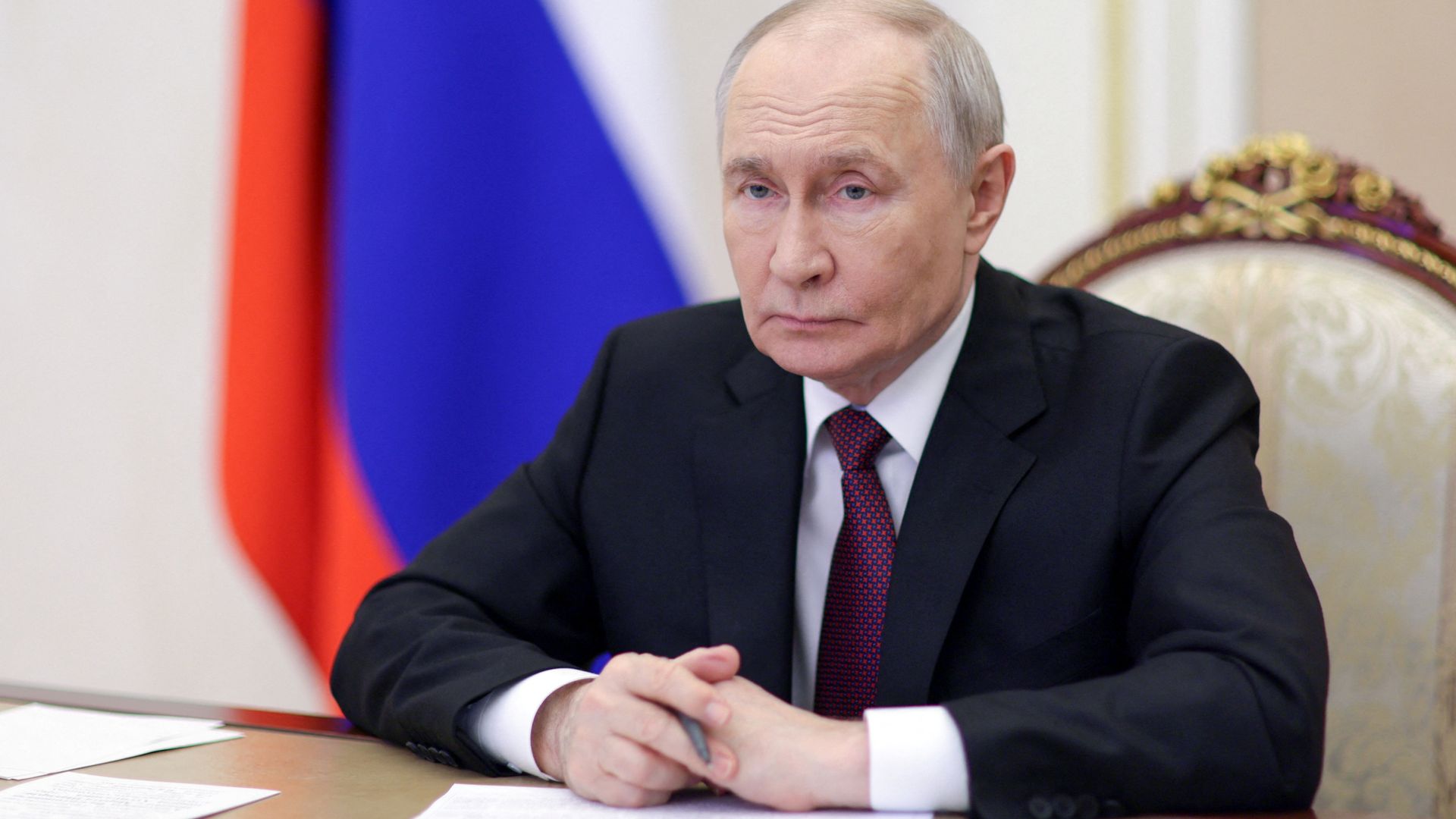
Vladimir Putin wants a ceasefire, but he doesn't want you to know how badly he needs it.
During a government video conference, the Russian president claimed Moscow is ready to resume negotiations with Ukraine. He explicitly revived the 2022 Istanbul framework as a baseline. The timing of this diplomatic pivot isn't a coincidence. It comes exactly as Ukrainian long-range drones are systematically dismantling Russia's domestic energy infrastructure, knocking out over 30% of the country's refining capacity and triggering a full-blown domestic fuel crisis.
When a dictator offers peace while his state media boasts of battlefield wins, you have to look at what's burning behind him. Right now, it's Russian oil.
The Smoke Over Moscow and the Fuel Crisis
Putin framed the latest Ukrainian drone strikes as acts of desperation by a retreating enemy. He told his cabinet that Kyiv is targeting civilian facilities because the situation on the front line is deteriorating. But the reality on the ground inside Russia tells a completely different story.
Back-to-back drone strikes hammered the Moscow Oil Refinery, marking the largest aerial assaults on the Russian capital since the full-scale invasion began. Ukraine's General Staff confirmed its mid- and long-range strike campaign has successfully hit 16 major Russian oil refineries and fuel terminals.
This campaign has crippled Russia's ability to process its own crude. The Russian state has been forced to impose strict restrictions on domestic fuel sales across major regions, including Saratov, Tver, Omsk, Voronezh, Tatarstan, and occupied Crimea. Things have deteriorated so quickly that Deputy Prime Minister Alexander Novak admitted Moscow is weighing an outright export ban on diesel products. Imagine the world's third-largest oil producer scrambling to secure basic gasoline for its own citizens. It's a logistical nightmare that has driven Putin’s public approval ratings to a wartime low.
What Putin Actually Wants From the Istanbul Framework
By dragging the ghost of the 2022 Istanbul talks back to the table, Putin is trying to lock in massive geopolitical concessions before his domestic economy completely plateaus. The Kremlin knows its military industry has maxed out its current capacity. According to Western intelligence, Russian factories cannot step up production further without years of fresh capital investment that they simply don't have.
Putin's insistence on the Istanbul agreements is a demand for total Ukrainian capitulation disguised as diplomacy. The original 2022 draft framework required hefty sacrifices from Kyiv:
- Enshrining permanent neutrality and completely abandoning NATO ambitions.
- Renouncing the possession or development of nuclear weapons.
- Strict caps on foreign troops and hardware allowed on Ukrainian soil.
- Drastically downsizing the Ukrainian armed forces to just 85,000 personnel.
In return, Ukraine would receive vague security guarantees from a handful of global powers, including Russia itself. Offering these terms today is a calculated move. Putin gets to project a reasonable, diplomatic image to international observers while demanding that Ukraine unilaterally disarm while Russian troops occupy its eastern territories.
The Trump Factor and Broken Mediators
The Kremlin's sudden diplomatic urge is also a direct reaction to shifting winds in Washington. Russian Foreign Minister Sergey Lavrov openly complained that all hopes of the US acting as an honest mediator have collapsed.
This frustration stems from the G7 summit, where US President Donald Trump reportedly showed deep enthusiasm for Ukraine's deep-strike drone campaign. Instead of pressuring Kyiv into an immediate ceasefire on Moscow's terms, Trump backed tougher sanctions on Russian energy and signaled plans to help US defense firms set up licensed air-defense missile production directly inside Europe and Ukraine.
With Washington leaning into stronger support for Kyiv, Putin is running out of time to freeze the front lines. He is using back-channel communications to test European resolve instead, hoping to exploit cracks in the EU. European Council President António Costa faced immediate pushback from leaders like German Chancellor Friedrich Merz after laying basic groundwork for potential communication channels with Moscow.
The Friction in the Kremlin
Putin's war machine is struggling to adapt to the drone age. During a national broadcast, Russian servicemen openly pressed Putin on when Russia would field a viable counter to the Starlink satellite networks that guide Ukrainian strike drones. Putin insisted an alternative was running, only for Defense Minister Andrei Belousov to reveal that a meager 16 units had actually been launched.
This public friction highlights a growing rift among the political elite. Ultraconservative figures are publicly demanding harsher retaliation, with some openly asking why Russia isn't using its tactical nuclear stockpile.
The Kremlin's sudden talk of peace isn't an act of statecraft. It's a strategic pause to stop the bleeding. For Ukraine and its allies, the lesson is obvious. The economic and infrastructural pressure from deep-theater strikes is working, and pushing Putin to the negotiating table requires doubling down on the very vulnerabilities that forced him to speak up in the first place.