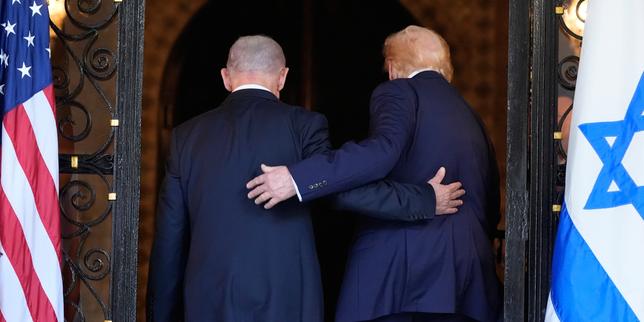
Benjamin Netanyahu built his entire political career on a single, powerful premise. He convinced Israeli voters that he alone understood how to manage the United States. For decades, he navigated the corridors of American power with a level of confidence that no other Israeli politician could match. He bypassed American presidents, delivered speeches directly to joint sessions of Congress, and maintained a tight grip on Israel’s most vital strategic relationship.
That script is completely broken.
The security architecture that preserved Netanyahu's political survival for a generation has cracked under the weight of prolonged conflict, shifting regional dynamics, and changing American domestic politics. What used to be his greatest asset is now a massive political anchor. The relationship with Washington has transformed into a strategic vulnerability, exposing the limits of Israeli leverage and reshaping the future of the Middle East.
The erosion of the ultimate diplomatic shield
For decades, the alliance between Washington and Jerusalem operated on predictable rules. Israel received unconditional diplomatic cover at the United Nations, massive military aid packages, and an implicit guarantee that the US would protect it from international isolation. In return, Israeli leaders were expected to show some alignment with broader American regional strategies.
Netanyahu broke those rules. He frequently gambled on American domestic partisan politics, explicitly aligning himself with the Republican Party and treating Democratic administrations with open hostility. His public campaign against the 2015 Iran nuclear deal, culminating in a speech to a divided US Congress behind President Barack Obama’s back, marked a sharp turning point. It turned Israel into a wedge issue in American politics.
That gamble backfired. The current prolonged multi-front conflict has forced Washington to weigh its global credibility against its unconditional support for Netanyahu’s government. American policymakers face immense pressure from their own electorate, regional allies, and international bodies like the International Criminal Court. The diplomatic shield is no longer automatic. It comes with a steep price tag, and Washington is increasingly willing to publicly air its frustrations.
Shifting ground in American domestic politics
The strategic shift isn't just about personalities in the White House. It reflects a deeper, structural change within the United States. Recent polling from organizations like the Pew Research Center highlights a widening generational and partisan divide regarding American foreign policy in the Middle East.
Younger Americans view the alliance through a completely different lens than their parents did. They didn't grow up during Israel’s foundational wars or the Cold War era. Instead, they see a highly sophisticated military power operating in densely populated civilian areas. This demographic shift is directly influencing the Democratic Party's base, making it politically costly for any administration to offer blank checks to Jerusalem.
Netanyahu’s strategy relied on the idea that Congress would always override a hesitant president. That assumption failed. The intense scrutiny over weapon transfers, conditionality of aid, and public rebukes from high-ranking Washington officials show that the political consensus supporting Israel has frayed. Netanyahu can no longer claim he knows how to handle America when his actions actively alienate the very people holding the purse strings.
The regional isolation trap
The friction with Washington directly undermines Israel's broader regional goals. For years, Netanyahu championed the Abraham Accords, arguing that Israel could normalize relations with Arab nations without addressing the Palestinian issue. He promised a new Middle East built on shared economic and security interests, particularly regarding Iran.
That vision required heavy American diplomatic lifting and security guarantees. Now, regional partners like Saudi Arabia, the United Arab Emirates, and Jordan are forced to navigate intense domestic anger over the ongoing conflict. They cannot move forward with deeper integration while Netanyahu openly clashes with the US administration over post-war planning and humanitarian assistance.
Washington wants a clear, viable plan for governance that involves regional partners and a pathway toward Palestinian self-determination. Netanyahu's refusal to offer one, driven by his need to appease far-right coalition partners like Itamar Ben-Gvir and Bezalel Smotrich, stalls any progress. By prioritizing his immediate political survival at home, Netanyahu is actively blocking the regional integration that Israel needs for long-term security.
The military dependence contradiction
There is a glaring contradiction at the heart of Netanyahu's current political stance. He frequently projects an image of total independence, telling audiences that Israel will stand alone if necessary. Yet, the reality of modern warfare tells a completely different story.
Israel’s defense doctrine relies on deep integration with the American defense industrial base. From precision-guided munitions to Iron Dome interceptors, the military cannot sustain a high-intensity, multi-front campaign over months or years without continuous American logistics and resupply.
Israeli Military Dependence on the US:
- Critical ammunition resupply lines
- Billions in annual foreign military financing
- Joint intelligence sharing on regional threats
- Direct US military intervention against long-range missiles
When Netanyahu publicly attacks American officials over the pace of weapons deliveries, it doesn't look like strength to the Israeli public. It looks like a reckless gamble with national security. The security establishment knows that a public rift with Washington emboldens adversaries like Iran and Hezbollah, who watch the alliance closely for signs of weakness.
How to read the changing alliance
Understanding where the US-Israel relationship goes next requires looking past the daily headlines and political theater. The core strategic partnership remains intact, but the terms of engagement have permanently changed.
If you are tracking this geopolitical shift, watch these specific indicators rather than public political posturing:
- The conditionality of weapon transfers: Pay attention to the specific types of military hardware delayed or scrutinized by Washington, as this reveals where the US is drawing its red lines.
- UN Security Council voting patterns: Watch whether the US chooses to veto or abstain on resolutions concerning ceasefire terms and humanitarian access.
- Saudi normalization talks: Track the specific demands Riyadh makes regarding the Palestinian authority, which closely align with Washington’s regional framework.
- Israeli defense budget restructuring: Look for moves by the Israeli military to reduce reliance on foreign supply chains, an expensive and long-term effort that signals deep anxiety about future American reliability.
The myth of Netanyahu as the master diplomat who could manipulate Washington to his advantage is dead. His current reliance on the US for survival, combined with his inability to manage the political fallout of that reliance, has turned his greatest strength into his most visible weakness.