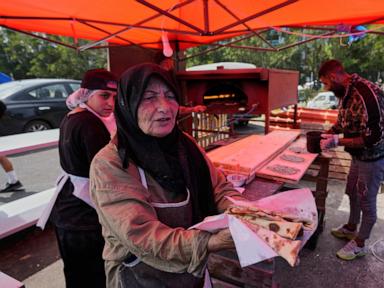
Civilian infrastructure during conflict usually brings to mind power grids, water treatment plants, and hospitals. Yet the most critical vulnerability in a displacement crisis is the supply chain of basic nutrition. In Lebanon, where cross-border hostilities have displaced hundreds of thousands of people, the official humanitarian response has repeatedly lagged behind the immediate needs of the population. Into this vacuum step informal networks, frequently anchored by displaced individuals themselves who transform domestic skills into industrial-scale relief efforts. A displaced grandmother managing a kitchen that feeds thousands is not merely a heartwarming vignette of resilience. It is an indictment of a multi-billion-dollar international aid apparatus that moves too slowly to meet a fast-moving catastrophe.
The reality of warfare in urban and semi-urban environments is that hunger escalates faster than logistics networks can deploy. When families flee their homes with nothing but the clothes on their backs, they enter a secondary crisis of survival. Institutional aid, bound by bureaucratic protocol, compliance checks, and procurement delays, often takes weeks to establish functioning distribution points. Local grassroots operations, funded by diaspora remittances and managed by community elders, can materialize in hours. For a closer look into this area, we suggest: this related article.
Understanding this dynamic requires looking past the surface-level narrative of charity to examine the operational mechanics of grassroots survival.
The Mechanics of the Grassroots Kitchen
When state institutions collapse or prove inadequate, the kitchen becomes a tactical asset. Operating a makeshift culinary hub capable of producing thousands of hot meals daily under conditions of economic strangulation requires sophisticated logistics, even if managed on a clipboard rather than a spreadsheet. To get more details on the matter, comprehensive coverage can be read at TIME.
To scale production from a family dinner to a municipal lifeline, several operational hurdles must be cleared simultaneously.
Decentralized Supply Procurement
Large aid organizations rely on bulk contracts that require stable supply lines and predictable security corridors. When roads are bombed or under constant threat of surveillance, these centralized networks fail. Informal kitchens bypass this by utilizing hyper-local, fragmented supply chains.
- Wholesale markets operating in the gray economy are tapped early in the morning before regular retail hours.
- Cash transactions replace bureaucratic purchase orders, allowing for instant adaptation to fluctuating prices.
- Local farmers who cannot transport their goods to major cities divert their produce directly to these community hubs, minimizing transit risk.
Spatial Adaptation
An industrial kitchen requires specialized plumbing, ventilation, and high-capacity power. In a displacement zone, these luxuries do not exist. Grassroots organizers frequently repurpose abandoned restaurants, school cafeterias, or even residential backyards.
Converting these spaces involves a rapid assessment of thermal efficiency and hygiene. Large gas canisters replace piped infrastructure. Massive aluminum pots, often borrowed from municipal event spaces or religious institutions, are balanced over open flames or heavy-duty burners. The labor structure relies on a division of tasks that mirrors a military assembly line, with volunteers assigned exclusively to peeling, chopping, stirring, or packaging.
Caloric Optimization
Menu planning in a crisis zone is a mathematical equation balancing shelf life, cost, and caloric density. High-protein grains like lentils and chickpeas form the baseline. Rice acts as the primary vehicle for calories, while whatever seasonal vegetables are available provide essential micronutrients. Meat is largely excluded due to cold-chain storage limitations and prohibitive costs. The goal is a meal that remains stable in transit and provides sustained energy to individuals facing intense psychological and physical stress.
Why Institutional Humanitarianism Fails the Immediate Crisis
The reliance on local actors highlights a structural flaw in how the international community approaches modern conflict zones. The United Nations and major international non-governmental organizations (INGOs) operate under a risk-averse model that favors compliance over speed.
Consider the process required for an international agency to distribute hot meals. It demands formal needs assessments, security clearances, localized vetting of partners, and strict adherence to specific procurement guidelines. By the time the assessment phase concludes, the demographics of the displaced population have shifted, or local actors have already stepped in to prevent mass starvation.
Institutional Path: Assessment -> Vetting -> Procurement -> Delivery (Weeks)
Grassroots Path: Immediate Need -> Local Sourcing -> Production -> Delivery (Hours)
Furthermore, international aid is notoriously top-heavy. A significant percentage of every dollar allocated to a crisis is absorbed by administrative overhead, international staff salaries, armored transport, and regional headquarters operations. In contrast, the informal kitchen run by a displaced matriarch directs nearly 100 percent of its resources into raw ingredients. The labor is free, the real estate is donated, and the distribution is carried out by local youths who know the alleyways and shelters better than any satellite map could dictate.
This creates an uncomfortable paradox for policy makers. The very organizations funded to handle global emergencies are structurally unsuited for the acute, initial phases of those emergencies. They require the stability of an established crisis to function, whereas informal networks thrive on the agility needed during active chaos.
The Unsustainable Burden of Local Resilience
Romancing the concept of local resilience is a dangerous trap. It allows governments and international bodies to shirk their fundamental obligations under the guise of celebrating community spirit.
The individual running a kitchen to feed thousands of fellow displaced citizens is operating under a state of severe duress. This is not a sustainable long-term model for food security. It relies on a finite pool of local goodwill, dwindling diaspora funds, and the physical endurance of volunteers who are themselves victims of the same conflict.
The Exhaustion of Capital
Grassroots initiatives operate without capital reserves. They exist hand-to-mouth, dependent on daily transfers from relatives abroad or local businessmen who are rapidly burning through their own savings. As a conflict drags on, these financial wells inevitably dry up. Inflation, a persistent plague in Lebanon's fractured economy, compounds the issue. A sack of rice that costs a certain amount on Monday may cost 20 percent more by Thursday, rendering fixed budgets useless.
Intellectual and Physical Burnout
The human toll of managing a high-output relief operation while living in a state of displacement is immense. Organizers face secondary trauma daily, listening to the stories of those who arrive at their gates. The physical demands of lifting massive pots and working over open flames in poorly ventilated spaces for fifteen hours a day lead to rapid physical deterioration. When the primary coordinator collapses from exhaustion, the entire supply chain collapses with them because the operation lacks the institutional redundancy of an established agency.
The Selectivity of Informal Distribution
While highly effective, informal networks lack the universal mandate of international bodies. They tend to operate along familial, sectarian, or geographic lines. A kitchen established by a displaced group from a specific village will naturally prioritize families from that same village or faction. This is not necessarily due to malice, but rather a reflection of trust networks in a fragmented society. This leaves marginalized groups, such as migrant workers or refugees from other nations living within the conflict zone, completely excluded from the informal safety net.
Redefining the Aid Model through Direct Localization
To fix this broken dynamic, the international aid architecture must move away from the model of direct implementation and toward a model of radical financial decentralization. Instead of deploying international staff to set up parallel distribution networks, INGOs should act as financial clearinghouses for existing local initiatives.
This requires a fundamental shift in how risk is managed.
International donors must accept that in an active war zone, rigid accounting cannot take precedence over immediate survival. Trust must be placed in local leadership. Providing direct cash grants to a trusted community figure running a kitchen avoids the logistical bottleneck of importing aid and directly stimulates the local economy by purchasing goods from nearby farmers and wholesalers.
The current system rewards compliance over efficacy. A beautifully formatted report detailing a delayed aid delivery is treated as a success, while an undocumented kitchen that fed ten thousand people through sheer willpower is ignored by official metrics. This approach ensures that the burden of survival will always fall on the most vulnerable, forcing those who have lost everything to become the sole protectors of their communities. The displaced grandmother stirring a massive pot of stew in a makeshift kitchen is not a symbol of a functioning humanitarian ecosystem. She is proof that the system has failed.