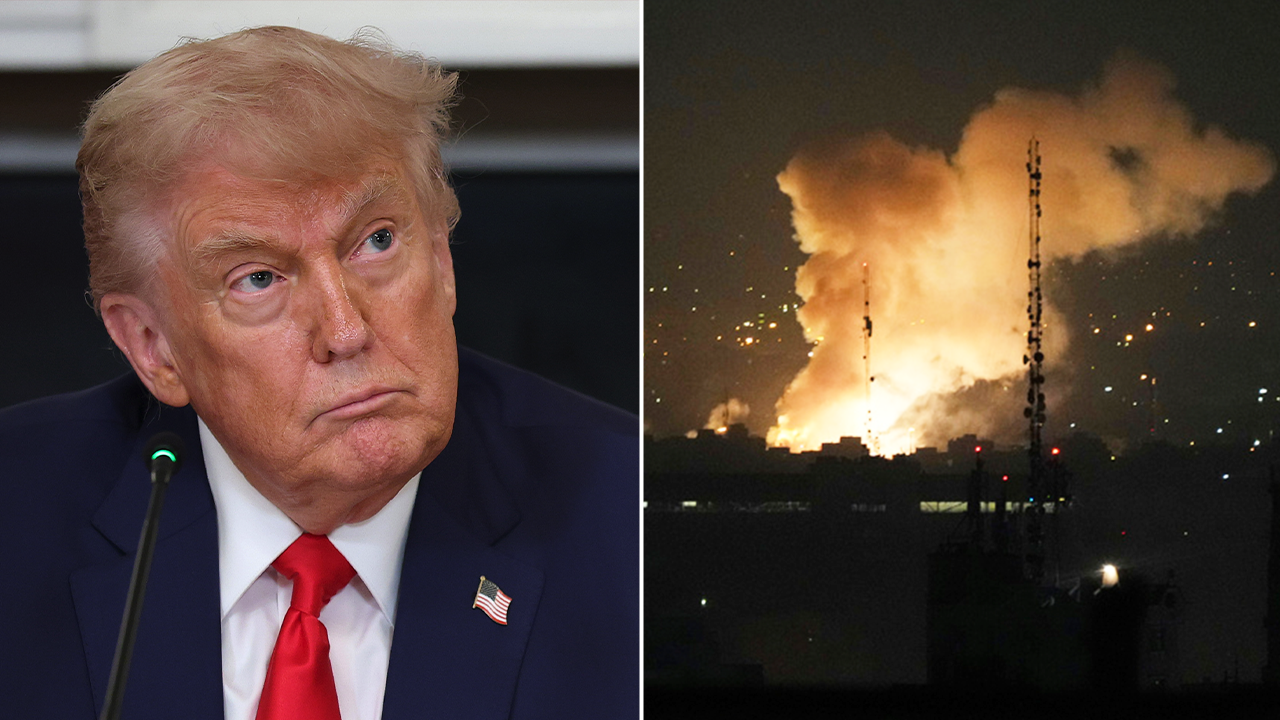
The air in the Pentagon's windowless briefing rooms doesn't circulate so much as it stagnates, heavy with the scent of floor wax and burnt coffee. Somewhere in those halls, a pen hovered over a map of the Middle East. It wasn't just a mark on a page. It was a mathematical calculation of human lives. The number being weighed was ten thousand.
Ten thousand lives packed into transport planes. Ten thousand sets of dog tags. Ten thousand phone calls home that start with a long, heavy silence.
Reports began to filter out of the West Wing that the administration was considering a massive surge of troops to counter "Iranian threats." In the dry language of geopolitical strategy, this is called a deterrent. In the reality of the desert, it is a spark sitting inches away from a powder keg. We have been here before. We have seen how a "temporary" deployment turns into a decade-long footprint, and how a gesture meant to prevent a war can be the very thing that starts one.
The Invisible Gravity of the Gulf
To understand why ten thousand soldiers might suddenly find themselves on a flight to Riyadh or Al Udeid, you have to look at the water. Specifically, the Strait of Hormuz. Imagine a narrow throat of ocean where a third of the world's liquefied natural gas and a fifth of its oil passes every single day.
If that throat closes, the global economy gasps for air. Gas prices in Ohio don't just go up; they skyrocket. Supply chains in Berlin snap. This isn't about ideology; it’s about the terrifyingly fragile plumbing of the modern world. When the administration talks about "escalation," they are talking about the fear that someone—be it a stray drone or a calculated naval blockade—is about to put a hand around that throat.
But there is a secondary tension, one that is harder to map. It is the ego of nations. Iran feels the walls closing in due to crippling sanctions. Washington feels the pressure to look "strong" after years of rhetoric. When two giants stand chest-to-chest in a narrow hallway, neither wants to be the first to step back. Adding ten thousand more soldiers to that hallway doesn't make it wider. It just makes it more crowded.
The Human Geometry of a Deployment
Numbers like 10,000 are abstractions. They are easy to digest on a news ticker. To make sense of them, you have to look at someone like "Sarah," a hypothetical but entirely representative intelligence analyst I’ve seen a hundred times over in my years following these cycles.
Sarah is thirty-two. She has a toddler who just started walking and a husband who works in IT. When the news breaks that ten thousand troops are being "mulled," Sarah doesn't think about regional hegemony. She thinks about the duffel bag in her closet. She thinks about the specific, metallic taste of the dust in Kuwait. She thinks about the three years she spent watching grainy drone feeds, trying to distinguish between a shepherd and a threat, knowing that a single mistake could change the course of a family’s history—or her country's foreign policy.
When we talk about "escalation fears," we are talking about Sarah’s pulse. We are talking about the ripple effect that travels from a boardroom in D.C. to a kitchen table in Fayetteville.
The strategy currently on the table involves more than just infantry. It’s about Patriot missile batteries. It’s about fighter jets. It’s about "defensive" capabilities. But in the Middle East, the word "defensive" is a matter of perspective. One man’s shield is another man’s preparation for a sword strike. By moving these pieces across the board, the U.S. is betting that Iran will see the buildup and retreat. It is a high-stakes game of chicken played with people who have very little left to lose.
The Ghost of 2003
There is a phantom in the room whenever these discussions happen. It’s the memory of "Mission Accomplished" and the long, bloody crawl through the streets of Fallujah and Baghdad. The American public is tired. The military is frayed. Yet, the logic of the "forever war" has a strange, gravitational pull.
Critics of the move argue that adding more boots to the ground is like trying to put out a fire with a cup of gasoline. They point to the fact that every time the U.S. increases its presence, the opposing side feels the need to match that energy. It is a feedback loop of anxiety. Proponents, however, argue that weakness is an invitation to chaos. They claim that if the U.S. doesn't show its teeth, the Strait of Hormuz will become a graveyard for international trade.
The truth is likely found in the uncomfortable middle. We are stuck in a cycle where we use the military to solve problems that are fundamentally diplomatic. We send soldiers because we don't know how to send a message that resonates in any other way.
Consider the cost of a single Patriot missile. It’s roughly $4 million. In a single volley, a battery can fire off the equivalent of a small town’s entire annual school budget. When we talk about "10,000 troops," we are also talking about a massive redirection of national wealth. We are choosing to invest in the machinery of "what if" rather than the reality of "what is."
The Quiet Room and the Loud World
Behind the headlines of troop movements and carrier strike groups, there is a profound silence. It is the silence of the diplomacy that isn't happening. While the cameras focus on the hardware—the grey hulls of ships and the camouflage of the 82nd Airborne—the real tragedy is the empty chairs at the negotiating tables.
We have reached a point where we find it easier to mobilize ten thousand humans than to find ten humans who can talk to each other without a weapon on the table.
I remember standing on the tarmac at an airbase during a similar buildup years ago. The heat was a physical weight, a shimmering curtain that made everything look distorted. You could hear the whine of the engines, a sound that gets inside your teeth and stays there. I watched a group of young men and women, barely out of their teens, boarding a C-17. They weren't talking about geopolitics. They were talking about the movies they’d miss and the burgers they’d crave.
They were the "10,000."
They were the currency being spent by people who would never have to breathe that dust.
The Choice of the Horizon
As the decision hangs in the air, the world waits. A 10,000-troop deployment isn't just a military maneuver; it is a confession. It is a confession that we have run out of ideas. It is an admission that our only way to maintain "stability" is through the constant threat of overwhelming force.
But force is a brittle thing. It can hold a line, but it cannot build a bridge.
The tension in the Middle East right now isn't just about Iran or drones or oil. It is about the fundamental question of what kind of superpower the United States wants to be in the 21st century. Are we the nation that endlessly recalibrates its footprint in the sand, or are we the nation that finds a way to stop the sand from shifting?
The boots are ready. The planes are fueled. Somewhere, a commander is looking at a spreadsheet, checking boxes for logistics, fuel, and ammunition. But no one has a box for the "invisible stakes." No one has a column for the cumulative trauma of a generation that has known nothing but "escalation."
The sun sets over the Persian Gulf, turning the water the color of bruised fruit. On the decks of the ships already there, sailors keep watch, staring into the dark, waiting for a signal that may never come, or one that changes everything. They are waiting to see if the weight of those ten thousand extra boots will finally be enough to crack the ice—or if it will be the weight that finally breaks it.
A single set of boots makes a sound on the pavement. Ten thousand make a roar. And once that roar begins, it is very hard to hear anything else.