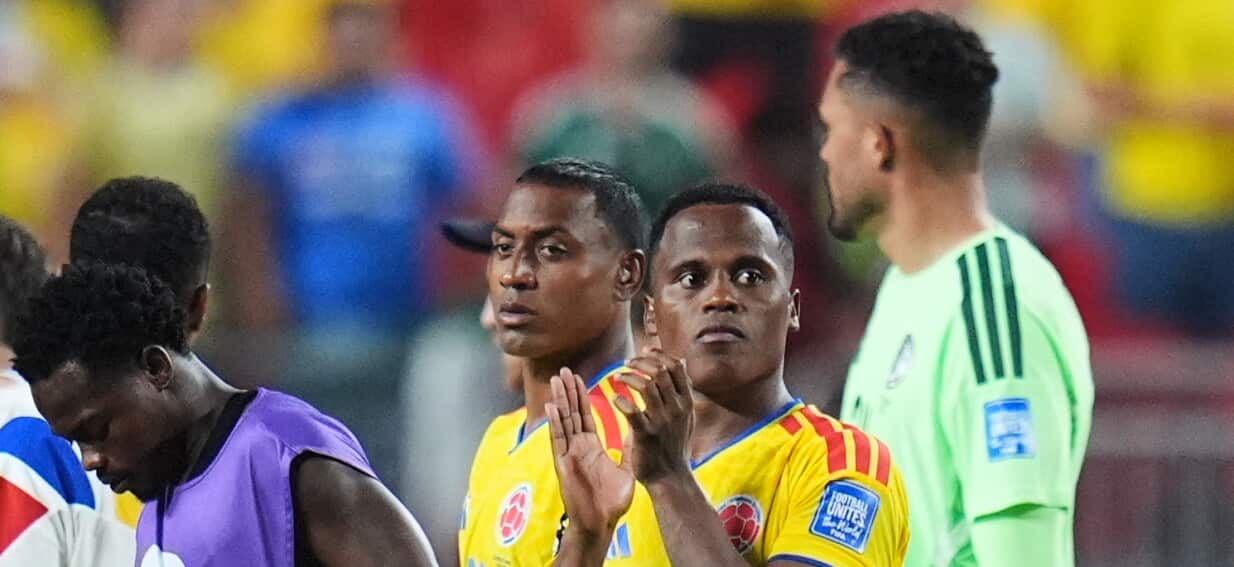
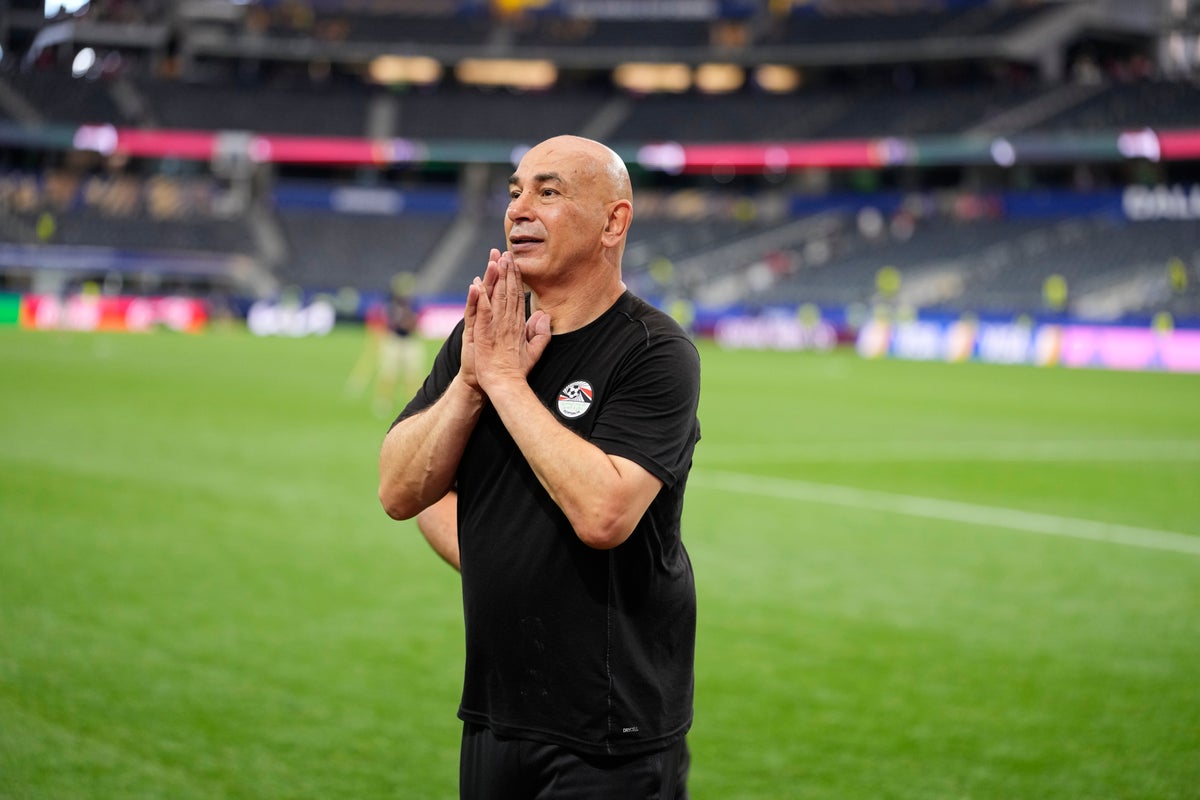
The air inside the stadium doesn't move. It trapped the heat of ninety minutes, then thirty more, and now it just sits there, heavy with the sweat of twenty-two men who can barely stand. Silence in a stadium of eighty thousand people is not actually quiet. It is a vibrating, terrifying pressure. It presses against your eardrums. It makes your knees feel loose.
If you look at the scoreboard, it tells a rigid, clinical story. Egypt versus Australia. A stalemate. A blank sheet of paper after two hours of brutal, bruising football at the World Cup. But football is never about the scoreboard. The scoreboard is just the ledger. The real story is written in the widening eyes of a twenty-two-year-old goalkeeper and the agonizing calculation running through the mind of a global icon sitting thousands of miles away, watching a television screen in the dark.
Twelve yards. That is the distance between a hero and a scapegoat.
To the casual observer, a penalty shootout is a lottery. It is a coin toss disguised as athleticism. But ask anyone who has ever stood on that center stripe, waiting for the referee’s whistle to cut through the humidity, and they will tell you the truth. It is psychological warfare. It is an execution where the condemned man is also the hangman.
The Long Walk
Consider the distance from the halfway line to the penalty spot. It is roughly fifty meters. Under normal circumstances, an elite athlete crosses that distance in a handful of effortless strides.
Not tonight. Tonight, the grass feels like wet cement.
Every step takes an eternity. As the Egyptian forward steps forward, his boots leave deep imprints in the torn turf. The weight of ninety-million expectations rests squarely on his clavicles. In Cairo, Alexandria, and Luxor, entire coffee shops have emptied into the streets, thousands of eyes glued to flickering screens, breath held in a collective, suffocating pause.
Across from him stands the Australian goalkeeper. He looks massive. He is jumping, bouncing, licking his lips, banging his cleats against the white-painted aluminum posts. He is trying to shrink the goal. He is trying to expand his own presence until he fills the entire frame.
The referee blows the whistle. The sound is sharp. Final.
The run-up is a blur of calculated steps. The strike is clean, a heavy thud that echoes in the lower tier of the stands. The net bulges. For a split second, the tension snaps like a rubber band, replaced by a deafening roar from the north stand where the Egyptian ultras have gathered. But the relief is momentary. It is a temporary stay of execution. Because now, Australia walks forward.
This is the brutal rhythm of the shootout. Joy is rationed. Agony is deferred. One by one, men step up to the spot. Some look at the ball. Some look at the sky. None look at the keeper. To meet the eyes of the man trying to ruin your life is to invite doubt, and doubt is a terminal diagnosis from twelve yards out.
The penalties trade back and forth, a cruel game of mirrors. Egypt scores. Australia matches. Egypt finds the top corner. Australia sneaks one under the diving goalkeeper's ribs. The tension doesn't dissipate; it accumulates, compounding like bad debt until the air itself feels combustible.
Then comes the miss.
It isn't a dramatic save. It is worse. A scuffed shot, a fraction of a second of hesitation in the hips, and the ball rattles against the outside of the post, skittering away into the advertising boards with a hollow clack. The Australian shooter drops to his knees, burying his face in the grass. He wants the earth to swallow him. It won't. He has to make that fifty-meter walk back to his teammates, entirely alone, under the glare of a hundred cameras.
Egypt capitalizes. The final Egyptian penalty taker doesn't hesitate. He doesn't look for nuance. He drives the ball with pure, unadulterated fury straight down the middle. The stadium explodes.
The Shadow in the North
But as the Egyptian players sprint toward their goalkeeper, piling into a chaotic, weeping pyramid of red jerseys on the edge of the eighteen-yard box, the narrative instantly shifts. The celebration is real, but it is already being consumed by what comes next.
The victory is not an end. It is a prologue.
Deep in the catacombs of the stadium, in the media mix zone where journalists scramble for quotes, the questions aren't about the tactical discipline that held Australia at bay. They aren't about the saves or the substitutions. The questions are all directed toward a looming collision that feels almost mythological in scale.
Egypt has advanced. And waiting for them in the next realm of this tournament is Argentina.
More specifically, waiting for them is Lionel Messi.
The narrative is almost too neat, too cinematic for the messy reality of international football. To understand what this means, you have to look outside the stadium. You have to look toward Liverpool, where Mohamed Salah is recovering from the hamstring injury that kept him off this pitch but could not keep him out of the ecosystem of this tournament.
Salah is the spiritual anchor of this Egyptian side. Even when he is not wearing the armband on the field, his shadow dictates how this team moves, how they defend, and how they believe. For years, the footballing world has debated the hierarchy of global icons. Messi. Ronaldo. Salah. It is a modern pantheon, discussed in abstract terms on social media and debated by pundits in expensive suits.
Now, it is real. It is concrete. It is a knockout match on the grandest stage available to mankind.
The Geometry of Fear
People often ask how an underdog prepares for a team possessing the greatest player to ever lace up a pair of boots. They expect talk of formations. They want to hear about low blocks, zonal marking, and double-teaming the half-spaces.
But tactics are a luxury for teams that aren't exhausted.
When you have just played one hundred and twenty minutes of attritional football, your legs don't care about tactical geometry. Your lungs don't care about pressing triggers. The preparation for Argentina isn't physical; it is an exercise in emotional survival.
Messi operates in a way that defies conventional athletic scouting. He doesn't run; he walks. He strolls through midfield like a man looking for his car keys in a parking lot. It is a deceptive, predatory laziness. He is calculating the exact distance between your central defender and your left back. He is waiting for the precise moment your concentration wavers—just for a heartbeat—because you are tired from playing an extra half-hour against Australia.
That is the invisible tax of a penalty shootout. It robs you of your freshness. It leaves a residual fatigue in the muscle fibers that no ice bath can truly wash away. Egypt didn't just win a football match tonight; they survived a car crash, and now they are being asked to run a marathon against a rested apex predator.
The Egyptian dressing room after the match is a study in contrasts. There is music playing, a thumping Arabic beat that bounces off the tiled walls. There are hugs and tears. But if you look closely at the veterans, the guys who have been here before, they are already drinking electrolyte solutions with a thousand-yard stare.
They know.
They know that the joy of beating Australia is a currency that expires at midnight. Tomorrow morning, the video sessions begin. The analysts will pull up clips of Argentina's transition play. They will see the way Messi picks the ball up on the half-turn, the way he manipulates the defensive line with nothing more than a dip of his shoulder.
The Legacy of the Desert
There is a unique burden that comes with representing a nation like Egypt on this stage. It is not like European football, where the club structure provides a buffer of corporate identity. When you pull on that red shirt, you are carrying history. You are carrying the pride of an ancient footballing culture that has dominated its own continent for decades but has always chased that one definitive, transcendent moment on the global stage.
They have won Africa Cup of Nations titles. They have produced legends. But the World Cup is different. The World Cup is where legacies are carved into stone.
Every Egyptian player who stood on that pitch tonight grew up watching highlights of the national team falling just short, of golden generations missing out by a single goal in a qualification match in the desert. The penalty shootout against Australia wasn't just about reaching the next round. It was an exorcism of those ghosts.
But ghosts are persistent. They don't disappear; they just change their names.
The next ghost wears a number ten shirt and an Argentine badge. He is chasing his own final, definitive coronation, a last dance that has captivated the entire sporting world. Egypt is supposed to be the footnote in that story. They are supposed to be the hurdle that Messi clears on his way to a pre-ordained destiny.
That is the ultimate fuel for this Egyptian squad. There is an immense, quiet power in being the disruption. No one expects them to match Argentina stroke for stroke. No one expects their midfield to out-possess the world champions.
But they have something that cannot be measured by data points or transfer market valuations. They have the resilience of a team that has already looked into the abyss of elimination for one hundred and twenty minutes and refused to blink. They have a goalkeeper who knows what it feels like to watch a ball fly toward his net and find a way to stop it with his fingertips.
As the team bus finally pulls away from the stadium long after midnight, the streets are still alive with fans waving flags from car windows, horns blaring into the humid night air. Inside the bus, the players are quiet. The music has stopped. Someone is checking their phone, perhaps looking for a message from Salah, a word of validation from the man who will join them in the trenches soon enough.
The tournament moves on, indifferent to the exhaustion of the men who keep it alive. Argentina is waiting. Messi is waiting. The world is watching. But for one night, under the blinding stadium lights, eleven men proved that twelve yards is a distance they can conquer. Everything else is just details.