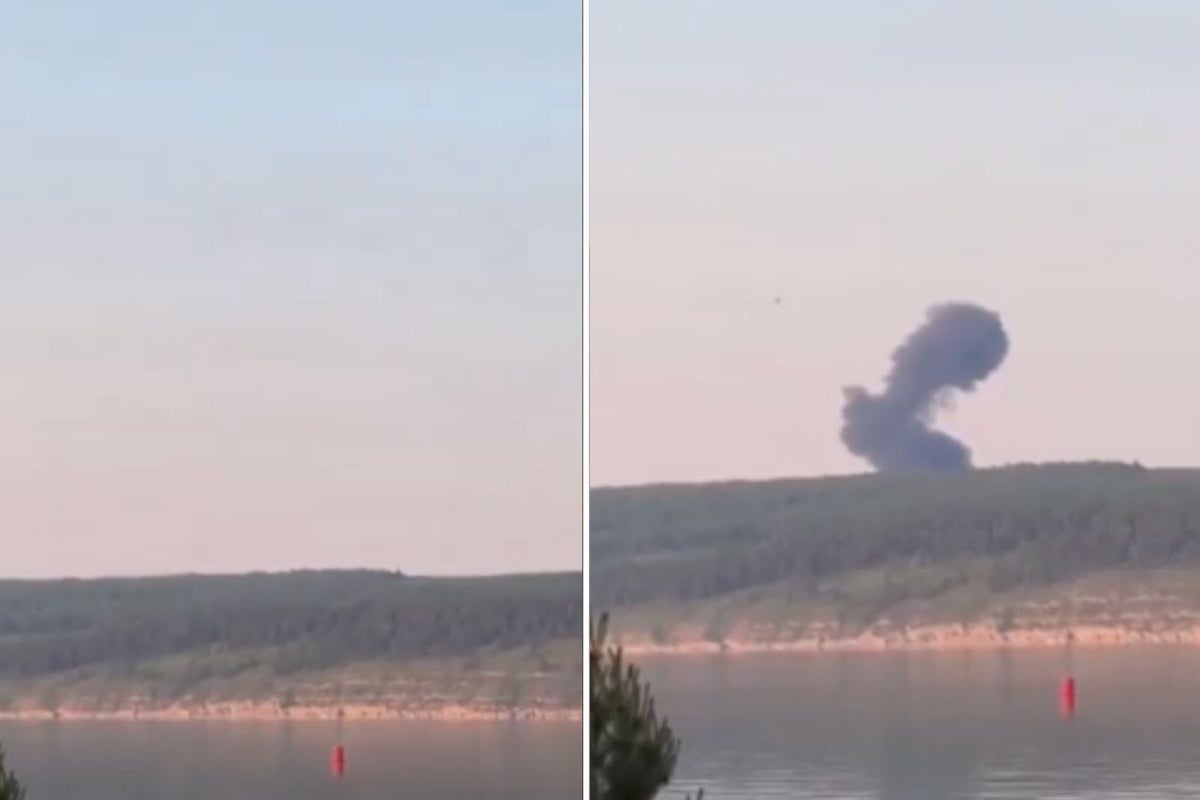
Another Russian Tu-22M3 Backfire bomber drops out of the sky over Siberia. Cue the immediate, predictable wave of Western media analysis. The headlines practically write themselves, painting a picture of an aviation fleet in terminal decline, crippled by sanctions, running on fumes, and held together by duct tape and hope.
It is a comforting narrative. It is also dangerously wrong.
Mainstream defense reporting treats these crashes as proof of systemic collapse. They look at a plume of smoke in Irkutsk and see a military on its deathbed. What they are actually witnessing is something far more grim: a brutal, high-tempo wartime attrition cycle that Moscow is perfectly willing to tolerate.
If you think a sputtering Soviet-era airframe means Russia is losing its grip on strategic deterrence, you are asking the wrong questions entirely.
The Fallacy of the Maintenance Crisis
The lazy consensus blames sanctions for every dropped bolt in Siberia. The logic goes like this: Western components are cut off, maintenance schedules are slipping, and therefore, the fleet is cannibalizing itself.
I have spent years analyzing military procurement and supply chains. Let’s dismantle this premise with basic aerospace reality.
The Tu-22M3 and the Tu-95 Bear do not rely on microchips from Taiwan or actuators from France. These are Cold War relics. Their supply lines are entirely domestic, deeply analog, and crude by design. They do not crash because they lack Western parts. They crash because Russia is flying them at operational tempos they were never designed to sustain.
During the Cold War, strategic bombers spent most of their time sitting on the tarmac, waiting for a nuclear apocalypse that never came. Today, Moscow is using them as airborne trucks to lob cruise missiles outside the reach of Ukrainian air defenses.
- The Airframe Tax: Every flight hour burns through a finite structural lifespan.
- The Metal Fatigue Reality: Aluminum and titanium under constant stress eventually yield.
- The Human Factor: Maintenance crews are working 24/7 shifts in sub-zero conditions, accelerating human error.
When you fly forty-year-old airframes at 300% of their intended peacetime capacity, some of them will break. To Moscow, this isn't a systemic failure; it is just the cost of doing business.
People Also Ask: Is Russia Running Out of Strategic Bombers?
Go ahead and type that into your search bar. You will find endless speculative articles counting tail numbers and declaring that Russia is down to its last handful of operational missile carriers.
The brutal, honest answer is: No, and the exact number doesn't matter anyway.
The Numbers Game is a Trap
Military analysts love to look at satellite imagery and cross out planes that disappear or catch fire on the tarmac. They calculate that if Russia loses two more bombers this year, their strategic capability drops by a specific percentage.
This ignores the fundamental asymmetry of modern standoff warfare. Russia does not need eighty operational Tu-22M3s to terrorize infrastructure or strain air defense networks. They need a half-dozen functioning platforms capable of reaching a launch basket hundreds of miles behind the front lines.
The Missiles Are the Weapon, Not the Plane
A bomber is just a highly mobile, reusable first stage for a Kh-22 or a Kh-101 cruise missile. The bottleneck in Russian long-range strikes has never been the availability of aluminum wings; it is the production rate of solid-fuel rocket motors and guidance systems.
As long as the factories in Raduga are churning out missiles, the Russian Aerospace Forces will find a way to get them into the air. Even if they have to strip three airframes to keep one flying.
The Danger of Our Own Wishful Thinking
There is a distinct downside to pointing out this reality. It ruins the morale-boosting narrative that the adversary is incompetent. But comforting lies make for horrific defense policy.
When Western media hypes up every Siberian crash as a sign of imminent collapse, it breeds complacency. It suggests that time is on our side and that sanctions will naturally erode Russia's long-range strike capability to zero.
"Never interrupt your enemy when he is making a mistake," Napoleon famously said. But assuming your enemy is making a fatal mistake when he is simply absorbing a known cost is a fast track to getting blindsided.
Look at the data from the Royal United Services Institute (RUSI). Despite repeated claims that Russian precision munitions were depleted in late 2022, missile production actually increased through 2024 and remains stable. The bombers are still flying because the military-industrial complex behind them adapted to a wartime footing far faster than Western analysts predicted.
Stop Looking at the Wings, Look at the Factory Floor
If you want to evaluate the true state of Russian strategic aviation, stop counting the smoking craters in the taiga. Start looking at Kazan.
The Gorbunov Aviation Plant in Kazan has been working to modernize the Tu-160M fleet and produce completely new airframes. Is the progress slow? Yes. Are there corruption scandals? Always. But the capital expenditure is happening. Russia is actively transitioning from maintaining a legacy Soviet fleet to building a smaller, more sustainable, and modernized long-range strike force.
The crashes we see today are the violent purging of the oldest, least reliable elements of the old fleet under the pressure of non-stop combat operations. It is ugly, it is expensive in terms of pilot lives, but it is not a halt to operations.
The Real Threat is Post-War Reconstruction
Here is the counter-intuitive reality that nobody wants to admit: the current attrition cycle is forcing Russia to build a more resilient military infrastructure for the future.
The companies that survive this high-stress environment are the ones learning how to bypass sanctions, substitute materials, and streamline repair logistics under fire. When this conflict eventually freezes or concludes, Russia will not be left with zero bombers. It will be left with a battle-tested logistics apparatus, a consolidated fleet of modernized airframes, and a manufacturing sector tuned specifically for high-rate production.
The Western strategy of waiting for the Russian air force to fall apart under its own weight is a failure of imagination. They are not falling apart; they are burning through their excess legacy mass to achieve immediate tactical objectives, confident that they can rebuild the core later.
Stop celebrating the smoke in Siberia. It is a distraction from the factories that are still running shifts around the clock.