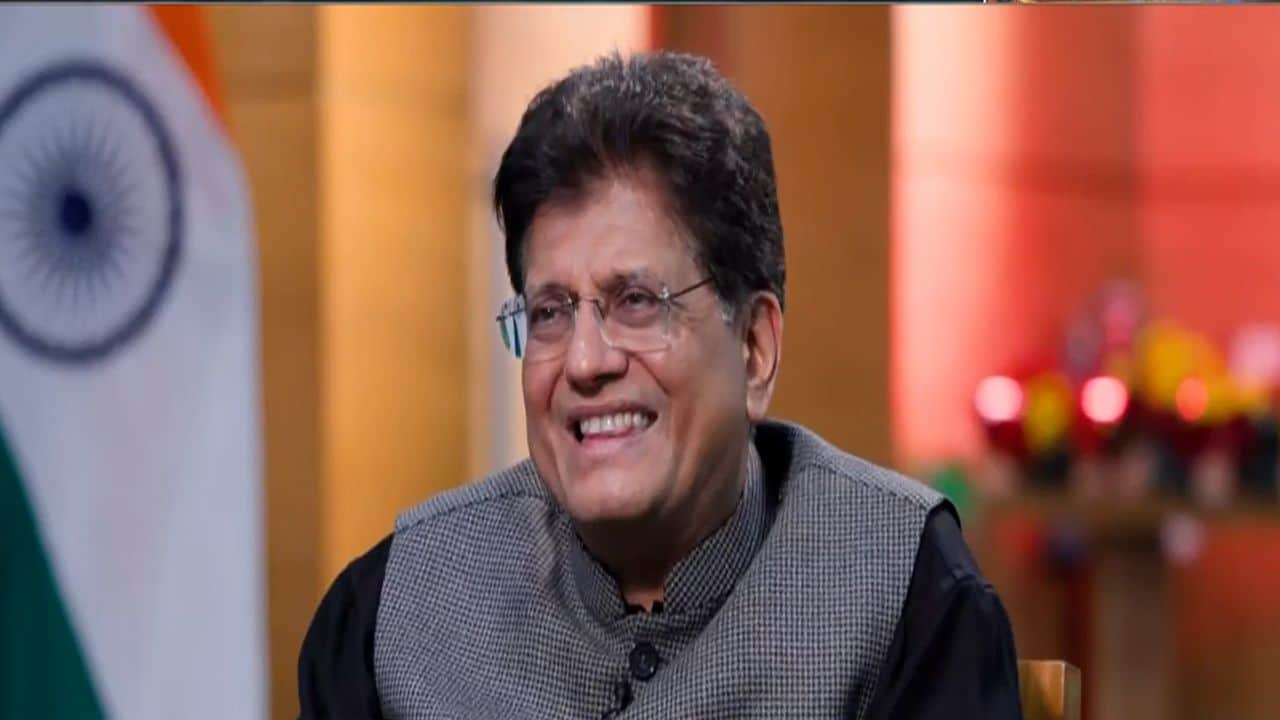
Piyush Goyal wants to talk about trust. He wants to talk about consensus. He wants to talk about a "non-negotiable" return to the table to save the World Trade Organization (WTO).
It is a beautiful sentiment that ignores a decade of reality. If you liked this piece, you might want to read: this related article.
The obsession with "rebuilding trust" is a diplomatic fairy tale designed to keep trade ministers relevant while the actual engine of global commerce has moved elsewhere. The WTO isn’t a patient in need of a transplant; it is an obsolete operating system that the world’s biggest players are finally deleting. If you think the current paralysis in Geneva is a "crisis," you are looking at the data upside down. The paralysis is the feature, not the bug.
The Myth of Consensus-Driven Progress
The core argument being peddled by the Indian Commerce Ministry—and echoed by every "rules-based order" enthusiast from Brussels to Brasília—is that the WTO’s strength lies in its consensus model. Everyone gets a vote. Everyone must agree. For another angle on this story, check out the latest coverage from Financial Times.
This is structurally designed for failure.
In any other industry, if you required 164 stakeholders with diametrically opposed interests to agree on a single pricing strategy, you wouldn’t call it "inclusive decision-making." You’d call it a suicide pact. The WTO’s consensus model worked when the world was smaller and the stakes were lower. In 2026, it is a weapon of mass obstruction used by nations to hold global progress hostage in exchange for local subsidies.
Consensus doesn't create "fairness." It creates a lowest-common-denominator environment where the most protectionist member sets the speed of the entire global economy.
Why Polarization is More Honest Than "Trust"
The "trust deficit" Goyal mentions isn't something that can be fixed with a few high-level dinners and a handshake. It is a fundamental divergence in economic philosophy.
On one side, you have the "Market-Driven" camp, which is increasingly skeptical of any multilateral rule that doesn't account for state-led capitalism. On the other, you have the "Development-First" camp, led by India and South Africa, who argue that existing rules are a colonial hangover designed to keep them down.
Neither side is "wrong." They are just playing different games.
Trying to force these two groups back into a "trusting" relationship is like trying to convince a chess player and a poker player to use the same board. The friction we see today—the death of the Appellate Body, the rise of unilateral tariffs, the "friend-shoring" of supply chains—is not a failure of diplomacy. It is the market correctly identifying that a one-size-fits-all trade rulebook is a fantasy.
The Appellate Body is Dead and It Should Stay That Way
The loudest cry for "rebuilding the WTO" is the demand to restore the dispute settlement mechanism. The logic goes: without a judge, there is no law.
I’ve seen trade lawyers spend twenty years and millions of dollars arguing over the definition of a "subsidized aircraft" or a "dumped shrimp." While they litigated, the entire industry changed. By the time the WTO issues a ruling, the technology is obsolete, the companies have merged, and the market has moved on.
The Appellate Body was an experiment in global governance that overstepped. It began making laws rather than interpreting them. When the U.S. began blocking appointments to the body under the Obama and Trump administrations—a policy the Biden and subsequent administrations have effectively maintained—it wasn't a "rogue" move. It was a rejection of judicial activism on a global scale.
The world doesn't need a supreme court for trade. It needs a flexible framework for bilateral and plurilateral deals.
The Hidden Genius of Regionalism
While the WTO stagnates, trade is actually thriving. It just isn't happening in Geneva.
Look at the CPTPP. Look at the RCEP. Look at the bilateral deals being inked between the EU and India or the U.S. and Japan. These agreements are faster, leaner, and more specific. They don't require 164 signatures; they require two or three.
- Agility: A bilateral deal can be negotiated and ratified in two years. The Doha Round of WTO talks has been dragging on for over two decades.
- Specificity: You can write rules for AI, green hydrogen, and digital services—topics the WTO hasn't even begun to digest properly.
- Enforcement: If your partner breaks the deal, you don't wait ten years for a panel report. You trigger the specific dispute clauses you both agreed to.
The argument that we "need" the WTO for consensus-driven decision-making is like saying we "need" a dial-up modem to access the internet. It was a great bridge to the future, but we’ve reached the other side.
The Indian Paradox: Leading While Looking Back
India’s position is particularly fascinating. Piyush Goyal is a brilliant negotiator who has secured massive wins for India on the bilateral front. Yet, on the WTO stage, he plays the role of the defender of the old order.
Why? Because the WTO’s dysfunction allows India to maintain its "Developing Nation" status and protect its massive agricultural subsidies while simultaneously playing the role of the global diplomat. It is a brilliant strategy, but we should stop pretending it’s about "rebuilding the organization." It’s about managing the decline of an organization that no longer serves the giants of the 21st century.
Imagine a scenario where the WTO actually did get its act together. Imagine if it forced transparency on state-owned enterprises or mandated the removal of agricultural price supports. India would be the first to walk out. The "trust" everyone is asking for is actually a demand for the other side to surrender.
Stop Trying to "Save" the WTO
The most dangerous thing we can do for the global economy is to keep pouring energy into a dead-end multilateralism.
Every minute spent trying to revive the Appellate Body is a minute not spent building the digital trade corridors of the future. The "rules-based order" isn't dead; it's just becoming decentralized. We are moving toward a world of "Trading Clubs." If you’re in the club, you follow the rules. If you aren’t, you don't. It’s tribal, it’s messy, and it’s infinitely more efficient than the bureaucratic sludge of Geneva.
The WTO should be downgraded to what it actually is: a library. It is a place for data collection, a forum for occasional discussion, and a repository for historical trade standards. It is not, and will never again be, the world's trade policeman.
Stop asking for consensus. Start asking for results.
If a trade agreement requires 164 countries to agree, it isn't an agreement. It's a miracle. And "hope" is a terrible economic policy.
The era of the global trade monolith is over. Don't mourn it. Capitalize on the fragments.
Build the clubs. Write the new rules. Leave the "trust" talks to the people who still believe the 1990s are coming back.