The smell hits you first. It is a distinct, heavy cocktail of diesel exhaust, salt-crusted wood, and the sharp, metallic tang of the open South China Sea. If you stand on the edge of the Aberdeen waterfront long enough, that smell becomes a part of your clothes, your skin, the very air you breathe.
For the older generation, those who remember the 1960s and 70s, this scent brings back memories of a crowded, chaotic, and vibrant life. Back then, the typhoon shelter was a floating city. Thousands of Tanka people lived their entire existence on wooden sampans, navigating a world where the water was the road, the grocery store, and the front yard. It was a life of grueling physical labor, tethered to the rhythm of the tides and the size of the day's catch.
Today, the water tells a different story.
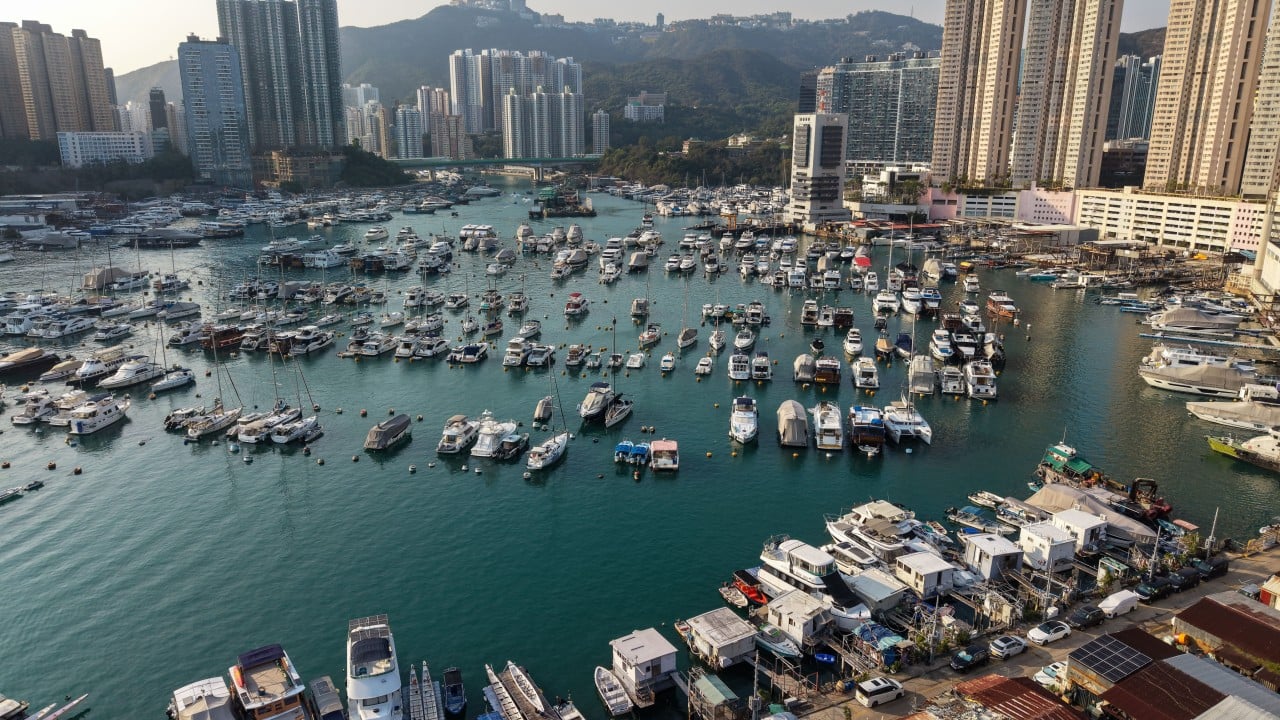
If you walk toward the Aberdeen Marina, the wooden hulls have largely vanished, replaced by the fiberglass sheen of multimillion-dollar yachts. The chaos of the fishing fleet has been smoothed over, organized into neat, locked-gate berths. And now, the talk around the marina is no longer about the weather or the fish prices. It is about capital, exclusivity, and the quiet, aggressive pursuit of real estate in one of the world's most congested urban corridors.
The recent flurry of interest in the Aberdeen marina project—a mix of local heavyweights and overseas investors sniffing the air—is not merely about upgrading docks. It is about a fundamental shift in what the Hong Kong harbor represents.
Consider the reality of the money moving in.
International investors do not wake up one morning and decide to park their capital in a marina by accident. They are looking for safe harbor, both literally and figuratively. Hong Kong remains a financial fortress, and when a project like this gains traction, it signals that the elite are looking to secure their footprint in a city that, for all its political and social turbulence, refuses to stop being valuable.
I once spoke to a man named Uncle Chan, who spent forty years operating a ferry service between the shore and the mid-harbor vessels. He watched the Aberdeen coastline change from a cluster of shanties to a sprawl of high-rise apartments, and finally to the sterile, high-end recreational zones of today. He didn't view it with nostalgia—he was too practical for that. He viewed it as a tightening.
"When you have money," Chan told me, "you want space. When you don't have money, you share the space. In Aberdeen, we used to share everything. Now, the water has fences."
The marina project is the physical manifestation of that sentiment. The attraction for overseas investors isn't just the boating utility. It is the exclusivity. In a city where square footage is more precious than gold, a plot of land—or water—that offers privacy, prestige, and a view of the skyline is an asset that defies standard market volatility.
But why the sudden hunger now?
The answer lies in the psychological state of the global investor. Markets in the West are jittery. Inflation has chewed through returns. The old ways of playing the stock market have become treacherous. But real estate? Specifically, high-end, luxury-adjacent property in a hub like Hong Kong? That is seen as a bedrock. It is tangible. You can touch the concrete. You can see the yacht moored at the dock. It offers the illusion of permanence in a world that feels increasingly temporary.
There is a strange, cold irony in this development. The marina was once the heart of the working class. It was where the families of the sea gathered to survive. Now, it is becoming a gated sanctuary for the ultra-wealthy. The overseas money pouring into these projects isn't coming here to build a community; they are coming here to secure an enclave.
However, we should not mistake this for a simple story of gentrification. That is too easy. It ignores the intricate web of Hong Kong’s economic necessity. The city needs these developments. It needs the foreign investment to keep the engine humming. It needs the luxury tax revenue. It needs to prove that it can still attract the high-net-worth individuals who move the global economy.
If the harbor stagnates, if it becomes a relic of the fishing village days, the city loses its relevance. The marina, for all its exclusionary architecture, serves as a beacon of vitality. It says to the world: We are still here. We are still expensive. We are still the place where the money goes to play.
The tension, then, is not between the "good" old days and the "bad" new days. It is a tension between identity and survival. Can a city built on the sweat of fishermen sustain itself by catering to the leisure of the global jet set?
We are witnessing a slow-motion transformation. The quiet, oily water of the typhoon shelter is being polished. The debris of the past is being cleared out to make room for the pristine hulls of the future.
Every time I go back to that part of the city, I look for the old markers. I look for the hand-painted names on the boats, the lines of drying fish, the smell of wood smoke. Most of it is gone. In its place are glass, steel, and a security guard who will ask you to step back from the pier.
The investment interest is proof that the project is sound, at least on paper. The numbers will likely be excellent. The return on investment will satisfy the shareholders. But there is an invisible cost to this evolution that rarely makes it into the brochures.
When you fence off the water, you change the way people interact with the city. The harbor was once a place of connection, where the shore met the sea and people crossed the gap. Now, the marina creates a hard border. You are either inside, or you are looking through the fence.
This project is not just a building site. It is a mirror. It reflects a Hong Kong that is turning inward, securing its borders, and polishing its surface to a mirror sheen. It is a city that has decided to bet its future on the idea that high-end exclusivity is the best defense against the uncertainty of the wider world.
Maybe it is the right move. Maybe the only way to save the harbor is to sell it to those who can afford the maintenance.
But as the sun sets over the Aberdeen waterfront, casting long, orange shadows across the gleaming yachts, you can still catch a faint whiff of that old, briny scent. It is fading, buried under the perfume of new paint and expensive fuel.
Soon, it will be gone entirely.
The investors won't notice. They will be busy counting the returns on their berths, watching the charts, and ensuring their assets are secure. The yachts will rise and fall with the tide, indifferent to the history that lies beneath the keel.
The city moves on. It always has. But for those who remember the sound of a thousand sampan engines humming in the early morning light, the silence of the new marina feels heavy. It is a silence bought with billions of dollars, and it is a silence that is likely here to stay.
The tides still come in. They still go out. But the water doesn't belong to the people in the same way anymore. It belongs to the ledger, and the ledger has no memory of the smell of the sea, only the value of the view.
Look closely at the next crane that rises above the Aberdeen skyline. It isn't just building a marina. It is building a wall between the past and the future, a high-water mark of a city that has decided, quite consciously, to trade its soul for a berth.
It is a sophisticated, clean, and profitable exchange.
Whether it is worth it is a question for a different kind of balance sheet. For now, the contracts are signed. The money is flowing. And the water, once wild and full of life, is finally, perfectly still.