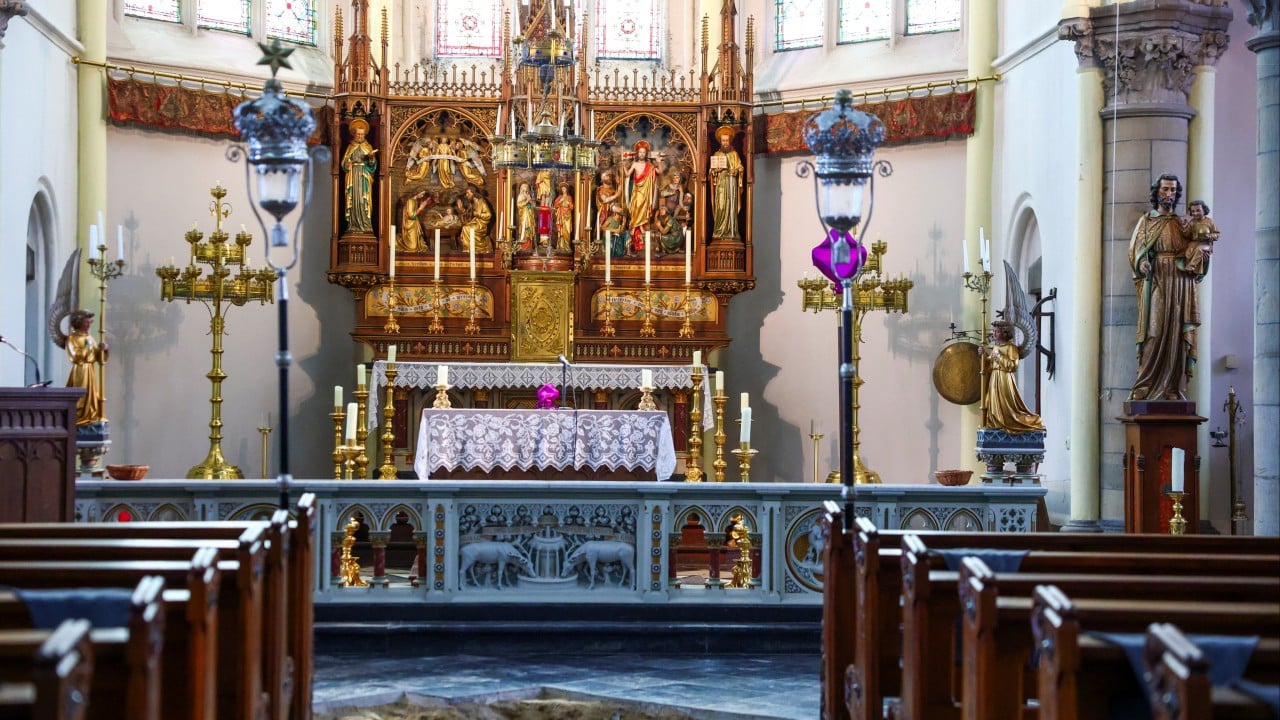
The identification of the physical remains of Charles de Batz de Castelmore, better known as the musketeer d’Artagnan, shifts from a historical mystery to a high-stakes forensic validation exercise. Following the 1673 Siege of Maastricht, the location of his remains became a matter of archival speculation. However, recent evidence centering on the Church of St. Peter and Paul in Wolder, a suburb of Maastricht, provides a concentrated site for investigation. This is not merely an exercise in heritage; it is a complex intersection of 17th-century military logistics, ballistic trauma analysis, and genetic sequencing under degraded conditions.
The Triangulation of the Wolder Site
The probability that d’Artagnan is interred at Wolder is predicated on three logistical constraints that dictated French military behavior during the Franco-Dutch War.
- Proximity to Point of Demise: D’Artagnan fell during a counter-attack on the Tongersepoort (Tongeren Gate) on June 25, 1673. In 17th-century warfare, high-ranking officers were rarely transported long distances for burial due to rapid decomposition and the tactical necessity of maintaining troop morale. The Wolder church served as the headquarters for Louis XIV during the siege, placing it within the immediate operational security zone of the French command.
- Ecclesiastical Hierarchy: As a captain-lieutenant of the Mousquetaires de la Garde and a confidant of the King, d’Artagnan’s status required burial in consecrated ground. Historical records indicate that several high-ranking officers killed in the same breach were interred within the local parish church nearest the royal quarters.
- Archaeological Discontinuity: Previous excavations at the site have revealed skeletal remains that align with the demographics of the 1673 casualty list. The challenge lies in isolating one specific individual from a mass of combat-related fatalities.
The Forensic Matrix for Identification
To transition from "potential discovery" to "verified identification," the investigative team must clear a hierarchy of evidence. This process is susceptible to high failure rates due to soil acidity and previous church renovations.
Osteological Trauma Profile
D’Artagnan died from a musket ball to the throat. This specific cause of death leaves a distinct bio-archaeological signature. Analysts must look for:
- Perimortem Fractures: Impact damage to the cervical vertebrae or the mandible that shows no signs of healing.
- Lead Residue: Using X-ray fluorescence (XRF) to detect trace amounts of lead or bismuth in the bone matrix surrounding the suspected impact site.
- Age and Wear Patterns: The subject was approximately 60 years old at the time of death. Forensic examination should show age-related degenerative changes in the spine and joints, consistent with decades of equestrian service and heavy infantry combat.
The Genomic Bottleneck
The ultimate verification depends on DNA. However, the degradation of organic material over 350 years creates a significant data gap. The strategy involves a two-pronged genetic comparison:
- Mitochondrial DNA (mtDNA): Tracing the maternal line. Researchers must locate documented descendants of d’Artagnan’s mother, Françoise de Montesquiou d'Artagnan, to establish a reference sequence.
- Y-Chromosomal Analysis: Comparing the remains to known male descendants of the de Batz family. The primary obstacle here is the "false fatherhood" rate across ten generations, which can statistically decouple a modern descendant from a 17th-century ancestor.
Quantitative Limitations of the Maastricht Find
We must account for the high probability of a "Type II Error"—failing to identify the remains even if they are present. The soil composition in the Limburg region is known for varying levels of decalcification. If the skeletal remains have undergone significant leaching, the extraction of endogenous DNA becomes functionally impossible, leaving the identification reliant on weaker circumstantial evidence such as uniform remnants or burial orientation.
Furthermore, the church has undergone several structural modifications since the 17th century. Each renovation increases the risk of "stratigraphic scrambling," where remains from different eras are co-mingled or displaced. A rigorous analysis must include a spatial mapping of the church floor to identify undisturbed 17th-century layers versus "re-deposited" soil.
The Mechanics of Siege Fatality
To understand why d'Artagnan was in the "kill zone" at the Tongeren Gate, one must evaluate the tactical failure of the French assault. The siege utilized Vauban’s trench system, designed to minimize casualties through mathematical precision. However, a counter-attack by Dutch defenders forced a chaotic melee.
D’Artagnan’s presence at the front was a result of a command breakdown. The "Captain of the Musketeers" was an administrative and elite combat role; his involvement in a trench-clearing operation was an outlier, likely driven by the need to stabilize a crumbling flank. This context is critical for forensic analysts: they are not looking for a "clean" burial, but a hurried interment of a combatant who died in high-stress, high-velocity circumstances.
The Strategic Path Forward
The verification of d’Artagnan’s remains requires a shift from traditional archaeology to a multidisciplinary forensic audit. The following sequence represents the only viable path to a definitive conclusion:
- Non-Invasive Subsurface Mapping: Utilize Ground Penetrating Radar (GPR) to identify void spaces and anomalies beneath the current church floor without disturbing the structural integrity or potentially fragile remains.
- Isotope Analysis: Analyze the oxygen and strontium isotopes in the tooth enamel of recovered remains. Since isotopes are absorbed from local water sources during childhood, the signature must match the Gascony region of France, where d'Artagnan was raised, rather than the local Dutch environment.
- Comparative Taphonomy: Evaluate the preservation state of all skeletons in the trench. If one skeleton shows a distinct burial treatment—such as a lead coffin or specific placement near the altar—it indicates a status-based priority consistent with a royal officer.
The absence of a definitive "smoking gun" in the initial Dutch findings suggests that the media narrative has outpaced the scientific data. Until the strontium isotope results confirm a southern French origin and the DNA markers align with the de Batz lineage, the remains must be classified as "unidentified military personnel, circa late 17th century."
The next tactical move for the research team is the acquisition of a reference sample from the de Batz family crypt in France. Without this comparative baseline, the Maastricht remains exist in a vacuum of probability rather than a framework of certainty. Efforts should focus on the exhumation of a verified immediate relative to bridge the 350-year genomic divide.