The silence is the loudest part. For months along the undulating, olive-groved border between Lebanon and Israel, life was measured in the screech of incoming iron and the concussive thud of retaliatory strikes. Then, the music stopped. Not permanently, but long enough for a mother in Tyre to hang laundry without scanning the sky, and for a shopkeeper in Kiryat Shmona to sweep the glass from his storefront without checking the distance to the nearest bunker.
This is the reality of a prolonged truce. On paper, diplomatic dispatches frame the extension of the ceasefire as a bureaucratic achievement—a necessary window to consolidate complex political and military negotiations. The headlines speak of buffer zones, UN resolutions, and troop withdrawals. They treat peace like a blueprint.
But peace is not a blueprint. It is a fragile, collective holding of the breath.
To understand what is actually happening beneath the sterile language of international diplomacy, you have to look at the invisible stakes. You have to look at the mechanics of a pause, and why the hardest part of ending a war is often the terrifying quiet of the negotiation table.
The Geography of Fear
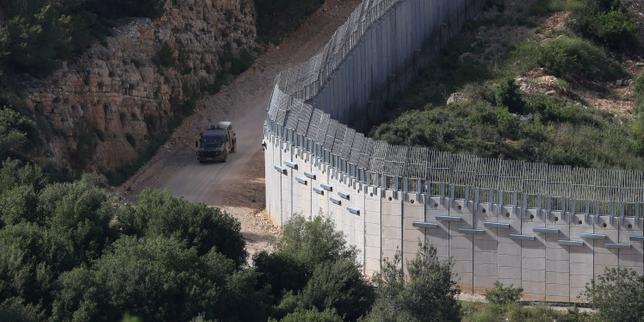
Consider a hypothetical family, split by geography but united by the same horizon of smoke. Let us call them the Amans. In southern Lebanon, the Amans look south toward hills that have historically promised both beauty and bloodshed. A few miles away, across a heavily fortified line, an Israeli family looks north. For both, the border is not just a line on a map; it is a living, breathing entity that dictates when they sleep, where their children go to school, and whether their homes will exist tomorrow.
When a truce is prolonged, the immediate reaction is relief. It is a biological decompression. The adrenaline that sustained communities for weeks begins to drain away, leaving a profound, bone-deep exhaustion.
But the relief is instantly chased by a secondary, sharper emotion: suspicion.
During a standard twenty-four or forty-eight-hour humanitarian pause, no one unpacks their bags. You stay near the shelter. You stock up on water. You wait for the clock to run out. But when a truce is extended indefinitely to allow diplomats in European capitals to argue over the fine print of military positioning, the psychological calculus changes.
People begin to wonder if they can go home. They look at the ruins of their lives and try to decide if it is safe to rebuild, or if laying a new foundation is simply an invitation for the next wave of destruction to tear it down.
The political machinery behind this pause operates on an entirely different timeline than the human beings caught in its gears. Diplomats require weeks to negotiate what armies can destroy in seconds. The current extension is designed to address the structural failures of past agreements, specifically the enforcement mechanisms of border demilitarization.
The core friction is simple yet seemingly insurmountable. One side demands a complete absence of hostile infrastructure near its border to ensure its citizens can return to their abandoned towns. The other side views that very infrastructure as its only shield against an existential threat. Resolving this requires more than just moving troops back five or ten miles; it requires rewriting the psychological contract of the region.
The Architecture of the Pause
How do you negotiate when neither side trusts the paper the contract is printed on? You do it by lengthening the silence.
The prolongation of a truce is a deliberate tactic to create a new baseline of normalcy. The longer the guns remain quiet, the higher the political cost becomes for whoever fires the first shot to break it. It shifts the burden of proof from peace to war.
Yet, this creates a dangerous paradox. In the diplomatic theater, a pause is a position of strength. It allows both military commands to re-arm, re-evaluate intelligence, and reposition assets under the guise of stillness. While the public sees a cessation of hostility, satellites see a frantic logistical dance.
Trucks move under the cover of night. Supply lines are reinforced. Position papers are drafted with one hand, while contingency targets are mapped with the other.
The real danger of a protracted negotiation is that it can accidentally incentivize a return to violence. If the political talks stall—if the compromise required feels too much like surrender to a domestic audience—a sudden, sharp escalation can be used by either side to reset the terms of the debate. A single mortar shell, fired by a rogue element or authorized by a frustrated commander, can collapse weeks of diplomatic posturing in an instant.
This is why the current negotiations are treating the military and political tracks as separate but deeply intertwined entities. The military track focuses on the immediate: where do the tanks go? Where are the observation posts? Who patrols the gray zones?
The political track, however, looks at the impossible: how do you guarantee long-term stability without resolving the broader, regional animosities that fuel this specific border flashpoint? It is an attempt to build a roof while the earthquake is still happening.
The Price of Standing Still
For the people living through it, this extended truce feels less like a bridge to safety and more like a tightrope suspended over an abyss.
I remember talking to a man who had lived through three separate border conflicts in his lifetime. He told me that the hardest part wasn't the bombing. The bombing was clear; it required immediate, primal action. The hardest part was the waiting. It was the weeks of sitting in a quiet room, listening to the birds return to the trees, while knowing that thousands of tons of ordnance were still pointed at his ceiling.
He called it the "poisoned quiet."
That quiet has an economic cost, too. In the absence of outright war, businesses try to reopen, but supply chains remain fractured. Farmers look at fields littered with unexploded ordnance or blocked by new military exclusions. Investors hold their breath, keeping capital locked away until the word "truce" is replaced by the word "treaty."
The current negotiations are attempting to solve a riddle that has baffled the international community for decades. The standard formula—pull back, insert international peacekeepers, hope for the best—has proven entirely inadequate. Peacekeepers can report violations, but they rarely have the mandate or the muscle to prevent them.
Therefore, the talks are currently hovering over the concept of enforceable guarantees. This means identifying third-party nations willing to act as guarantors, states that will penalize whichever side breaches the agreement. But finding a nation willing to insert itself into the center of the world's most volatile geopolitical fault line is a monumental ask.
So, the truce is extended again. Another week. Another two weeks. The clock is wound up just before it hits zero.
The Invisible Stakes
We tend to view international relations through the lens of grand strategy, as if nations were players in a game of chess. We talk about leverage, deterrence, and strategic depth.
But nations are just collections of frightened people who want to see their grandchildren grow up.
The tragedy of the prolonged truce between Lebanon and Israel is that the longer it takes to reach a political settlement, the more detached the negotiations become from the reality on the ground. The diplomats sitting in air-conditioned rooms in neutral cities are playing a game of percentages. They can afford a stalemate. They can afford to let a meeting run into the next day, or the next week.
The family waiting in the shelter cannot.
Every day the truce is extended without a final resolution is a day that the trauma of the conflict is prolonged. It is a day spent in limbo, where the future is entirely unknowable. The human mind is not built to endure indefinite uncertainty; it craves a conclusion, even if that conclusion is violent. That is the dark secret of protracted crises: eventually, people become so tired of waiting for the floor to drop that they begin to wish it would just give way.
The negotiators know this. They are using the pressure of that human exhaustion as a tool. They are betting that the sheer weariness of the population will force concessions that would have been unthinkable when the conflict was hot. It is a cruel strategy, but in the realm of high-stakes diplomacy, cruelty is often mistaken for realism.
The Final Chord
As night falls over the border, the quiet returns, thick and heavy.
In the villages scattered across the hillsides, lights flicker on. Some belong to families who have dared to return, sleeping on mattresses dragged into hallways, away from the windows. Others belong to military outposts, where young soldiers stare through thermal optics into the darkness, watching for the slight movement that signals the end of the peace.
The truce remains extended. The papers are being shuffled. The statements are being prepared for the morning press.
But out in the dirt, where the olive trees cast long, distorted shadows under the moonlight, there are no political breakthroughs. There are only millions of people, waiting for the silence to either break into a song of reconstruction, or shatter into the familiar rhythm of the roar.