The sound does not start with a boom. It starts with a sharp, metallic rattle, the kind that makes the coffee cups dance in their saucers before you even realize the ground beneath your feet is moving. Then comes the pressure wave, a sudden vacuum that sucks the air straight out of your lungs, followed by a roar so absolute it ceases to be sound and becomes a physical weight crushing down on your chest.
In Lebanon, this sequence of events is a deeply familiar language.
When forty-seven people are erased from the census rolls in a single day, the international news wires run a standard script. They tally the casualties. They quote the military spokesmen. They print the official press releases filled with sterile, sanitized vocabulary like "targeted strikes" and "collateral impact." But stats do not bleed. Numbers do not leave behind half-finished cups of tea on kitchen counters, or school backpacks stuffed with colored pencils that will never be used again.
To understand the volatile diplomatic fury currently erupting across the Middle East, you have to look past the cold arithmetic of the body count and stand in the dust of a collapsed apartment building.
The Anatomy of an Ultimatum
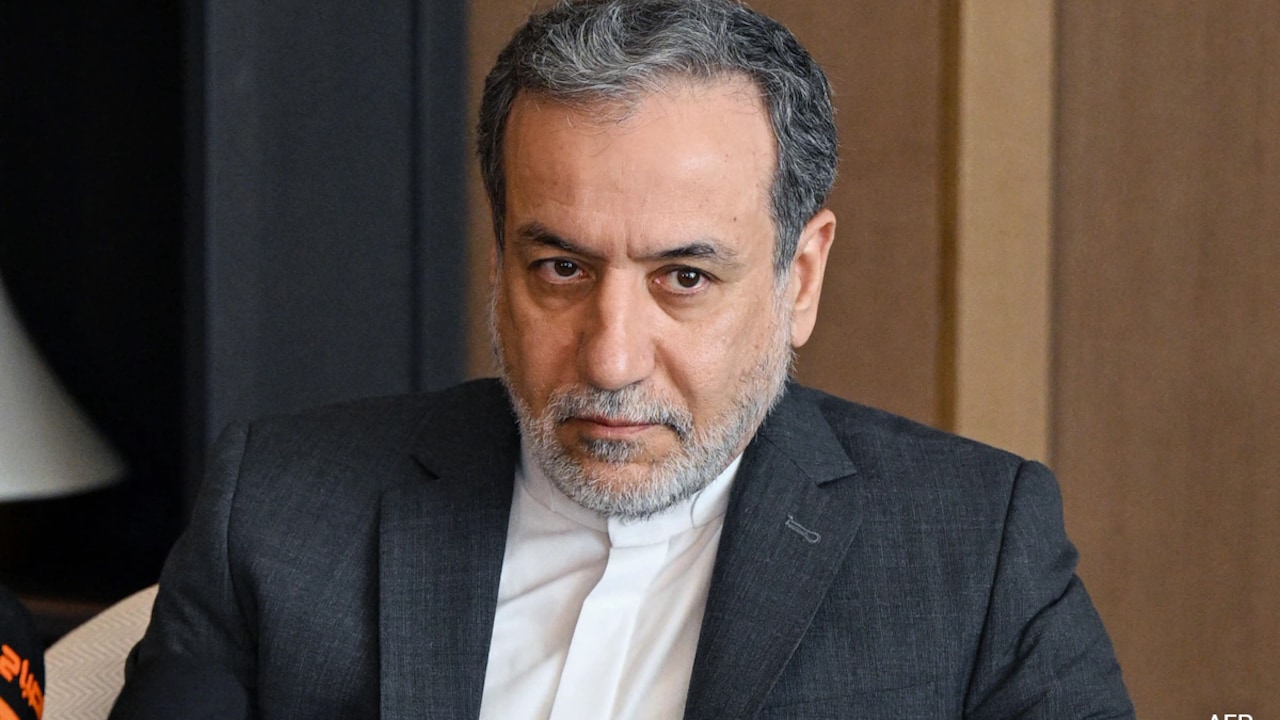
Words used in the halls of international diplomacy are usually carefully weighted, polished by committees to ensure they leave room for retreat. But when Iranian Foreign Minister Abbas Araghchi stepped forward to address the latest wave of airstrikes, the polish was entirely gone. He didn't use the standard vocabulary of geopolitical disagreement. Instead, he branded the Israeli leadership a "genocidal death cult."
It is a phrase designed to strip away any pretense of political legitimacy. It signals a terrifying shift in the regional psyche. When you label an adversary a political opponent, you are signaling a willingness to negotiate at some distant, future table. When you label them a death cult, you are stating that coexistence is no longer on the menu.
Consider the sheer weight of that shift.
The immediate catalyst for this rhetorical firestorm was a series of devastating military operations that left dozens dead across Lebanese towns and villages. The smoke had barely cleared from the hillsides when the diplomatic cables began to fly. Araghchi’s condemnation was not just a defense of Lebanon; it was a public declaration that the threshold of restraint had been crossed. The Iranian state was binding its own narrative directly to the blood spilled in the streets of Beirut and Tyre.
The tragedy of modern warfare is that the people who write the press releases rarely have to sweep up the glass.
The View from the Balcony
Imagine a family living on the outskirts of Sidon. Let us call the father Tariq, a hypothetical composite of the dozens of civilians caught in the crossfire of this long-running shadow war. Tariq does not belong to a political faction. He does not spend his evenings reading geopolitical white papers or tracking drone paths on Telegram. He worries about the price of cooking oil, the erratic electricity supply, and whether his daughter’s asthma will flare up from the dust raised by the constant construction—and destruction—around them.
When the sirens go off, Tariq doesn’t think about regional hegemony. He thinks about the hallway. The hallway has no windows. It is the only part of his home that offers even a illusion of safety from flying shards of glass.
During the latest strikes, forty-seven individuals—each with a name, a favorite meal, a specific way they laughed when they were tired—experienced the terrifying reality of that illusion shattering. Some were asleep. Others were sitting down to dinner. In a fraction of a second, their lives became the raw material for a diplomatic shouting match on the global stage.
This is the disconnect that makes the current crisis so agonizing to watch. The rhetoric climbs higher and higher into the stratosphere of existential threats and historical grievances, while the reality on the ground remains stubbornly, brutally physical. It is concrete dust in the throat. It is the smell of burning rubber and old insulation. It is the deafening silence that follows a detonation, before the screaming begins.
The Rhetoric of Escalation
The use of extreme language by high-ranking officials is rarely accidental. Araghchi’s choice of words was a deliberate calculation aimed at an international audience that has grown increasingly numb to standard diplomatic protestations. By invoking the concept of a cult, the Iranian foreign minister attempted to reframe the conflict from a territorial or political dispute into something far more primitive and dangerous: a fight against pure irrationality.
But this strategy carries an immense, invisible cost.
When both sides of a conflict convince themselves that the other is driven by a desire for total destruction, the space for diplomacy vanishes entirely. Trust becomes a liability. Compromise is viewed as treason. The conflict stops being a series of problems to be solved and becomes an existential storm that must be endured, no matter how many lives it consumes.
The international community watches this escalation with a mixture of helplessness and fatigue. Western capitals issue familiar calls for restraint, their statements sounding increasingly hollow against the backdrop of crumbling infrastructure and rising casualties. The machinery of global governance seems entirely unequipped to handle a situation where the participants are no longer speaking the same linguistic or moral language.
What Remains in the Dust
Behind the headlines and the fiery speeches, the true cost of this conflict is being registered in the quiet, mundane moments of grief that never make it to the evening news. It is found in the hospitals where doctors work by the light of smartphones because the power grid has failed yet again. It is found in the impromptu funerals held in village cemeteries, where the mourners keep one eye on the sky, listening for the distinct, high-pitched buzz of an unmanned aircraft circling overhead.
The tragedy of the forty-seven killed in Lebanon is not just that their lives were cut short. It is that their deaths have been immediately weaponized, transformed into fuel for a geopolitical engine that seems to require a constant supply of human grief to keep running.
The political commentators will spend days analyzing the long-term strategic implications of Araghchi’s statement. They will debate whether this signals a broader regional mobilization, or if it is simply a verbal placeholder while both sides calculate their next military movements. They will treat the entire region like a massive chessboard, moving abstract pieces across a map with clinical detachment.
But for the people living along the fault lines of this crisis, there are no abstract pieces. There is only the fragile safety of an interior hallway, the smell of cordite on the wind, and the terrifying knowledge that the next rattle of the coffee cups could be the last sound they ever hear.
The sun sets over the Mediterranean, casting long, bloody shadows across the scarred streets of Beirut, completely indifferent to the fury of the men who claim to rule it.