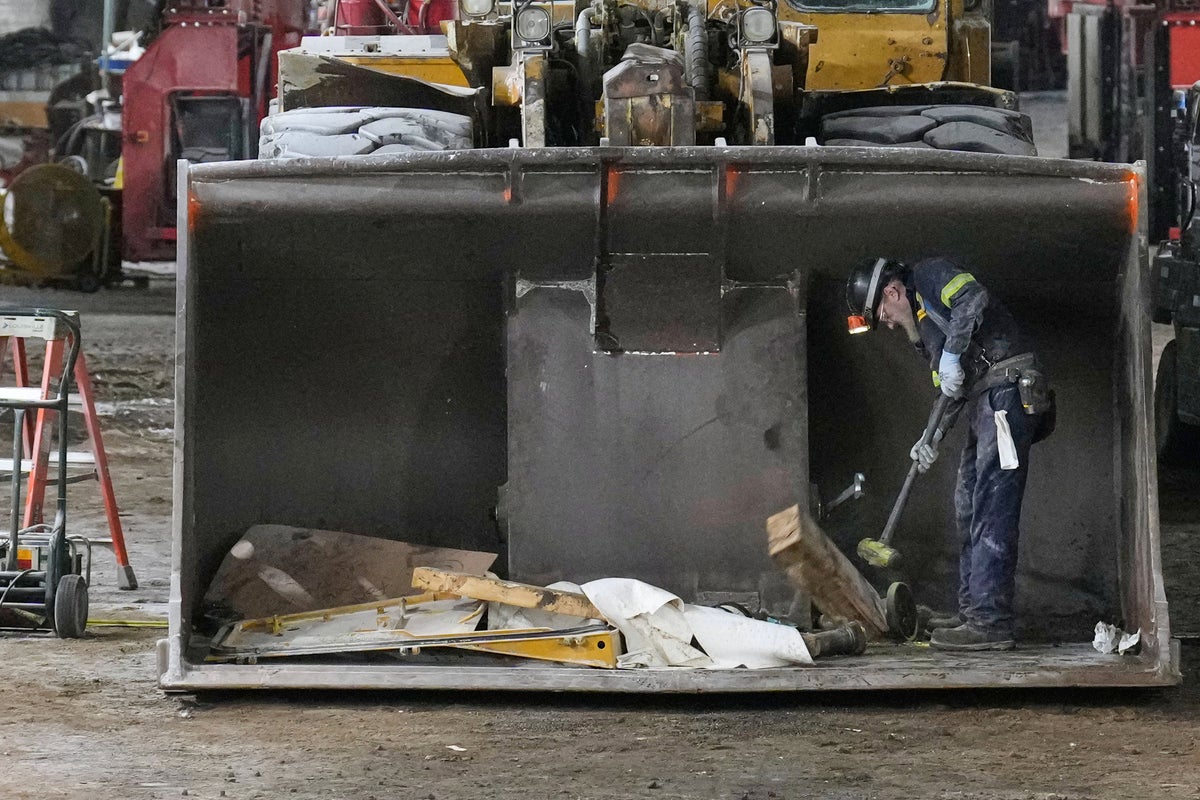
Nearly two thousand feet beneath the shifting ice of Lake Erie, a dark, industrial miracle keeps the American Midwest from grinding to a halt every winter. This is the Cleveland Salt Mine, a sprawling subterranean labyrinth carved into a 400-million-year-old prehistoric seabed. While the city above sleeps through lake-effect blizzards, a crew of hundreds operates heavy machinery in a pressurized, self-contained world to extract the "white gold" that makes modern winter commerce possible.
The operation isn't just about digging rocks out of the ground. It is a high-stakes race against the thermometer. When a polar vortex dips south, the demand for sodium chloride spikes by 500 percent in a matter of hours. If the mine stops, the highways freeze. If the highways freeze, the supply chain snaps. This 1,800-foot-deep fortress is the silent heartbeat of Northern infrastructure, yet few realize the sheer physical and economic violence required to keep it beating.
The Geography of a Prehistoric Payday
The Cleveland mine exists because of a geological fluke known as the Michigan Basin. Hundreds of millions of years ago, a shallow inland sea evaporated, leaving behind massive deposits of halite. Today, those deposits sit directly beneath one of the busiest maritime shipping lanes in the world.
Operating a mine under a massive body of fresh water presents a set of engineering nightmares that would break a standard construction firm. The ceiling of the mine is not just rock; it is the weight of Lake Erie itself. This requires a "room and pillar" extraction method. Miners leave massive blocks of untouched salt—sometimes 40 feet wide—to act as permanent structural supports. You cannot take it all. If you get greedy, the lake comes in.
The logistics of getting equipment down there are equally absurd. Every bulldozer, every specialized drill, and every massive dump truck currently roaming the tunnels had to be dismantled at the surface. They are lowered piece by piece down a narrow shaft, then re-welded together in underground shops. Once a machine goes down, it rarely comes back up. It lives, works, and eventually dies in the salt.
The Economics of the Melt
Salt is a commodity with a brutal bottom line. It is heavy, it is corrosive, and it is cheap. In the world of industrial minerals, the profit isn't in the mining—it's in the movement.
Because the Cleveland mine sits on the edge of the Great Lakes, it has a massive competitive advantage. It can dump its product directly onto lake freighters. One 700-foot ship can carry the equivalent of 750 semi-truck loads. This maritime shortcut allows the operators to undercut competitors who have to rely on expensive rail or road transport.
However, this business model is at the mercy of the weather. A "brown winter" with little snow is a financial disaster for salt producers. They end the season with massive stockpiles, no room to store new extractions, and plummeting prices. Conversely, a severe winter leads to "salt panics." When municipal budgets run dry in February and the bins are empty, the price per ton can skyrocket, leading to bidding wars between cities like Chicago, Detroit, and Cleveland.
The Invisible Cost of Clear Roads
We have an addiction to clear pavement. In the 1940s, most cities used sand or cinders for traction. Today, the expectation is "black pavement" within hours of a storm. This shift has turned salt into a non-negotiable utility, but the environmental bill is coming due.
Sodium chloride doesn't just disappear when the snow melts. It washes into the groundwater. It enters the very lake the miners are working under. Recent studies show that the salinity of freshwater lakes across the Rust Belt is rising at an alarming rate. We are effectively trading long-term water purity for short-term driving convenience.
Furthermore, the salt is an apex predator for infrastructure. It eats bridge decks, dissolves rebar, and rots the undercarriages of the very trucks that haul it. It is a circular economy of destruction. We use the salt to keep the roads open, and the salt ensures those roads must be rebuilt every decade.
Inside the Shift
The work down there is grueling. It is constant 60-degree temperatures, pitch blackness beyond the headlamps, and the pervasive smell of diesel and ancient dust. The miners work in 10-hour shifts, vibrating the walls with explosives to loosen the face of the salt wall.
Each blast releases thousands of tons of rock salt. This raw material is then crushed, screened for size, and treated with anti-caking agents. If the salt isn't the right size, it won't spread evenly from the back of a city plow. If it isn't treated, it turns into a solid brick of useless crystal the moment it hits a humid storage dome.
Technology is slowly encroaching on this old-school world. Remote-controlled loaders and automated conveyor systems are reducing the number of bodies needed at the "face" of the mine. But at the end of the day, mining salt under a lake remains an act of raw physical will.
Why the Alternatives Fail
Every few years, a "miracle" alternative hits the news cycles. Beet juice, cheese brine, or solar-heated pavement. While these make for great headlines, none of them can scale to the millions of tons required to keep a continent moving.
- Beet Juice: It lowers the freezing point and helps salt stick, but it's expensive and can deplete oxygen in streams.
- Sand: It provides grip but does nothing to melt ice and eventually clogs storm drains, costing millions in cleanup.
- Calcium Magnesium Acetate: It's much kinder to the environment but costs nearly 20 times more than rock salt.
The reality is that rock salt is too cheap and too effective to be replaced. We are tethered to the halite beds of Lake Erie for the foreseeable future.
The Perpetual Cycle
As the climate becomes more volatile, the pressure on the Cleveland mine increases. We are seeing fewer "average" winters and more "extreme" events. This volatility is a nightmare for production planning. The mine must operate at peak capacity during the summer months just to build the "safety stock" required for a single bad week in January.
The relationship between the city above and the mine below is one of mutual necessity and mutual ignorance. Millions of people drive over those tunnels every day, never realizing that 1,800 feet down, a man is triggering a dynamite charge to ensure their commute remains uneventful.
The next time you see a salt truck spraying white grit onto a freezing highway, look past the orange truck. Follow the supply chain back to the shores of the lake, down the narrow hoist shaft, and into the dark, cavernous rooms carved into the earth. We aren't just fighting the weather; we are mining a prehistoric ocean to maintain the illusion that we have conquered winter.
Check your local municipality’s salt storage levels before the next major frost hits. If the domes are less than half full by January, expect the price of everything delivered by truck to climb as the logistics chain begins to freeze.


.jpg?width=1200&auto=webp&crop=3%3A2)