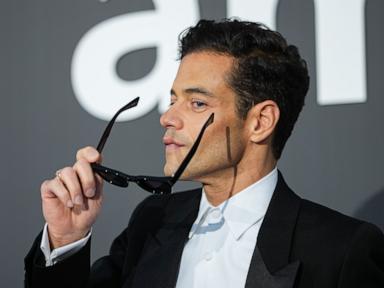
The annual amfAR Gala Cannes remains the ultimate display of conspicuous consumption masked as altruism. At the Hotel du Cap-Eden-Roc, the ultra-wealthy gather to bid millions on luxury items, ostensibly to fund a cure for HIV/AIDS. While the event successfully injects millions of dollars into scientific research, the mechanics of this high-society auction reveal a stark reality. The gala functions less as a spontaneous outpouring of charity and more as a transactional marketplace where billionaires trade pocket change for tax write-offs, social absolution, and corporate branding.
The 2026 iteration proved no different, pulling in vast sums through the liquidation of high-end art and Hollywood vanity projects. Yet, as the total historical fundraising amount creeps toward the billion-dollar milestone, the disconnect between the opulence on the French Riviera and the realities of global public health has never been more visible. Expanding on this topic, you can also read: Why Disney Reviving Sofia the First is a Massive Corporate Risk.
Inside the Million Dollar Transaction Room
The auction tent at the amfAR Gala operates on a psychological feedback loop engineered to separate billionaires from their liquidity. It relies heavily on ego, alcohol, and the public pressure of a room filled with peer-level titans.
This year, a full set of Andy Warhol screen prints of Marilyn Monroe brought in 2.8 million euros. A limited-edition Audemars Piguet watch fetched 1.45 million euros. These are staggering numbers, but they represent assets that often appreciate, effectively moving wealth from one private portfolio to another under the tax-exempt umbrella of charitable giving. Observers at IGN have shared their thoughts on this situation.
2026 amfAR Cannes High-Value Auction Lots:
+-----------------------------+--------------------+--------------------+
| Auction Item                | Value in Euros     | Value in USD       |
+-----------------------------+--------------------+--------------------+
| Warhol Marilyn Prints       | €2,800,000         | $3,252,228         |
| Audemars Piguet Watch       | €1,450,000         | $1,684,160         |
| Chopard Diamond Earrings    | €600,000           | $696,906           |
| Emily in Paris Cameo (x2)   | €375,000 (each)    | $435,545 (each)    |
+-----------------------------+--------------------+--------------------+
The transactional nature of the night is best exemplified by the sale of non-tangible assets. Actor William Abadie took the stage to auction a walk-on role for the sixth and final season of Emily in Paris. The bidding was so intense that the lot was duplicated, selling to two separate bidders for 375,000 euros each.
Buying a walk-on role in a television show is pure vanity. It has no intrinsic artistic value, yet it commands nearly a million dollars combined because it offers something the wealthy prize above all else: access and visibility.
The Economics of High-Society Altruism
To understand why amfAR remains a fixture of the Cannes Film Festival landscape, one must look at the financial architecture of international charities. Events of this scale require astronomical upfront costs. Securing the Hotel du Cap-Eden-Roc, flying in global pop stars, providing security, and hosting an ultra-premium dinner runs a bill that would bankrupt a smaller non-profit.
Corporate underwriting bridges this gap. Luxury brands like Chopard do not donate jewelry out of pure benevolence; they do it for prime placement in front of the exact demographic capable of buying their retail lines. The 600,000 euros paid for a pair of Chopard diamond earrings at the auction serves as a double-win: the buyer gets a tax deduction, and the brand receives global press coverage that functions as high-ROI marketing.
The modern mega-gala has turned philanthropy into an asset class. The ultra-rich do not write flat checks in silence; they demand an experiential return on their investment.
This reality introduces a distinct ethical gray area. When a billionaire spends 1.4 million euros on a watch at a charity auction, the charity receives the funds, but the billionaire walks away with an asset that retains value. If that same billionaire wrote a direct check for 1.4 million euros to an immunology lab, they would lose the cash entirely. The auction format allows the wealthy to perform philanthropy without actually decreasing their net worth in a meaningful way.
The Disconnect Between the Riviera and the Lab
While the elite danced to performances by Robbie Williams and Lizzo, the actual fight against HIV/AIDS continues to face severe structural challenges that money alone cannot solve.
The foundation has raised nearly $950 million since 1985, funding thousands of grants. This capital has been instrumental in developing antiretroviral therapies that turned a death sentence into a manageable chronic condition. However, the final mile of eradication is proving to be the most difficult.
The Scientific Hurdle
Funding a cure requires long-term, high-risk basic science. Elite galas prefer quick, headline-grabbing announcements over the slow, agonizing reality of laboratory failures. The scientific community has identified roughly ten individuals historically cured of HIV through complex bone marrow transplants. Replicating this on a global scale is logistically impossible.
The Access Gap
The funds raised in Cannes do not immediately translate to medicine in sub-Saharan Africa or the American Deep South. There is a profound disconnect between the high-flying rhetoric on the red carpet and the geopolitical barriers preventing drug distribution, needle exchange programs, and comprehensive sex education in the regions hit hardest by the epidemic.
Moving Beyond the Red Carpet Illusion
The amfAR Gala is too big to fail because the entertainment industry and the financial elite need it. It provides a necessary moral shield for the excess of the Cannes Film Festival. If the event were to disappear, the sudden vacuum in research funding would be catastrophic, proving that the medical research ecosystem has become dangerously dependent on the whims of partying billionaires.
Relying on high-society auctions to fund global health initiatives is an inherently unstable model. True progress in eradication relies on state-funded research, institutional policy changes, and systemic healthcare reform. Until the focus shifts from high-rolling vanity auctions to structural global equity, the amfAR Gala will remain what it has always been: a magnificent, dazzling distraction.