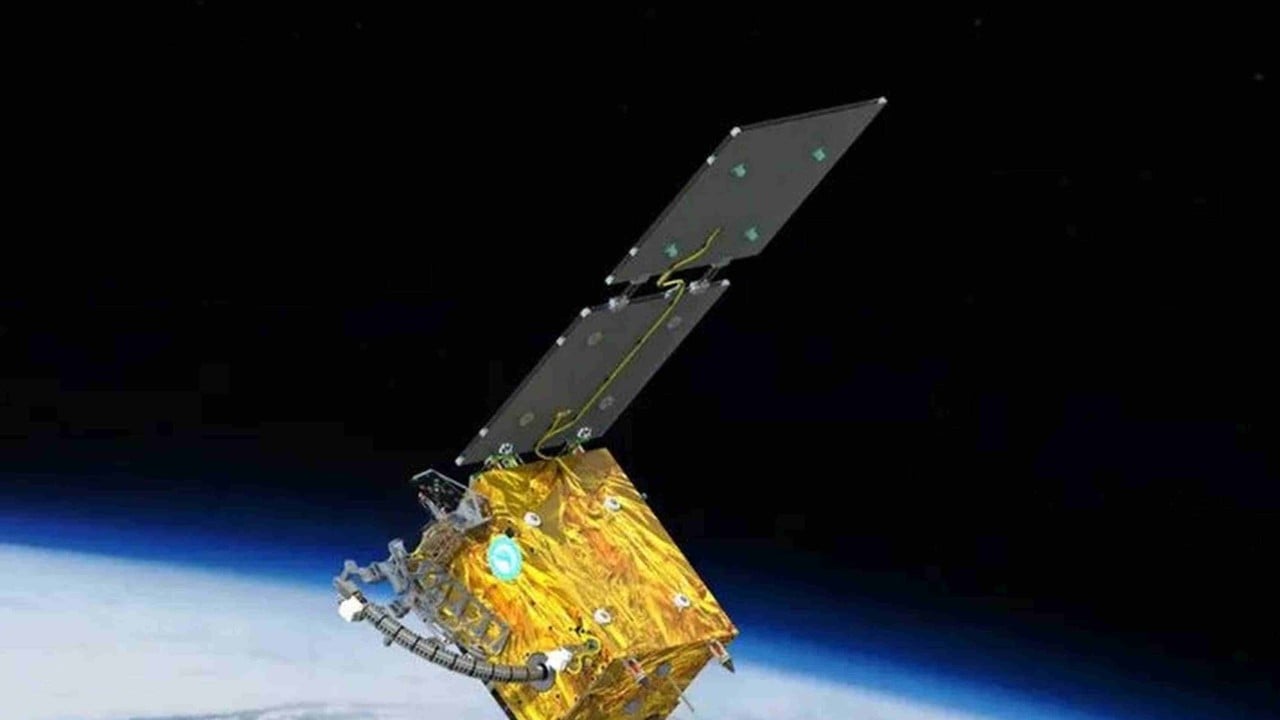
The media is obsessed with the "octopus tentacle." They see a Chinese commercial satellite sporting a multi-jointed robotic arm designed for refueling and they start hyperventilating about a revolution in low-Earth orbit (LEO). They frame it as the "holy grail" of space sustainability. They are dead wrong.
Refueling satellites in orbit isn't a breakthrough; it’s a desperate attempt to fix a 20th-century hardware philosophy that has no business existing in 2026. While the world watches these mechanical arms fumble with valves in microgravity, they are missing the reality: the era of the "forever satellite" is over, and the "gas station" model is a fiscal suicide pact. Building on this topic, you can find more in: Stop Blaming the Pouch Why Schools Are Losing the War Against Magnetic Locks.
The Myth of Life Extension
The lazy consensus among space analysts is that keeping a satellite alive for twenty years instead of five is an inherent win. It sounds logical. You spent $300 million on a bird; why wouldn't you want to top off its tank?
Here is what the spreadsheet-warriors ignore: Moore’s Law doesn't stop just because your hardware is in vacuum. Observers at Engadget have provided expertise on this trend.
If you refuel a satellite launched in 2024 so it can stay operational until 2039, you aren't "extending an asset." You are subsidizing a flying museum piece. In the time it takes to orchestrate a complex, high-risk docking maneuver to pump a few kilograms of hydrazine or xenon, the terrestrial processing power and sensor resolution have improved by orders of magnitude.
A refueled legacy satellite is a bottleneck. It occupies a prime orbital slot with antiquated transponders while newer, faster, cheaper constellations are ready to iterate at the speed of software. We don't try to "refuel" or "repair" a five-year-old smartphone to make it last fifteen years. We recycle it because the silicon is obsolete. Space is finally reaching that same inflection point, but the "refueling" crowd is stuck in the era of the mainframe.
The Octopus Tentacle is a Mechanical Liability
Let’s talk about the physics of the "octopus" arm itself. Proponents argue that multi-jointed flexibility allows for "universal" docking. I’ve seen enough orbital dynamics simulations to know that complexity is the enemy of reliability.
Every degree of freedom in a robotic arm is a point of failure. When you are trying to mate two objects moving at $7.8 \text{ km/s}$ with different thermal expansion profiles and sloshing propellant masses, "flexible" often translates to "unpredictable."
- The Seal Problem: Most satellites currently in orbit were never designed to be opened. They are hermetically sealed boxes. To refuel them, you have to break a seal or use a "piercing" tool. The moment you introduce a mechanical puncture in a pressurized system, you aren't just refueling; you are creating a debris event waiting to happen.
- The Contamination Risk: Hydrazine is nasty stuff. A single leak during a "flexible" docking procedure doesn't just ruin the mission; it coats the sensors of the target satellite in a frozen toxic film, effectively blinding the asset you just spent millions to "save."
Why the Economics Do Not Close
The "People Also Ask" sections of the internet want to know if orbital refueling will make space travel cheap. The answer is a brutal "no."
To refuel a satellite, you need a tanker. That tanker needs its own launch, its own guidance systems, its own propellant, and its own highly skilled ground team. By the time you calculate the cost per kilogram of delivered fuel, you realize you’ve paid for 80% of a brand-new satellite just to get a 20% life extension on an old one.
I have watched companies burn through venture capital trying to build "tugboats" and "tankers." They always hit the same wall: The Launch Cost Paradox. Thanks to the massive increase in launch cadence and the radical drop in price-to-orbit driven by reusable boosters, it is now often cheaper to launch a modern replacement than it is to service an old one. The "octopus arm" is a solution searching for a problem that SpaceX and its competitors already solved by making the ride to space a commodity.
The Counter-Intuitive Truth: Build to Burn
Instead of wasting engineering talent on robotic tentacles, we should be perfecting Disposable Excellence. The future of LEO isn't a few massive, immortal platforms. It’s thousands of small, interconnected nodes designed for a three-year sprint. When the fuel runs out, they should de-orbit and burn up completely, clearing the lane for the next generation of tech.
This isn't "waste." It’s iteration.
The obsession with refueling stems from a scarcity mindset. We used to treat satellites like cathedrals because getting there was hard. Now that the door is open, we should treat them like ammunition. Use them, exhaust them, and replace them with something better.
The Military Shadow Play
If the economics of commercial refueling are a fantasy, why is China—and the US, for that matter—pouring money into it?
Let’s drop the "sustainability" mask. An arm that can refuel a friendly satellite is an arm that can disable an enemy one.
If you can match orbits, dock with a non-cooperative target, and manipulate its valves, you have the ultimate kinetic-free weapon. You don't need to blow a satellite up and create a cloud of shrapnel. You just need to "refuel" it with a little too much pressure, or simply give it a gentle nudge into a graveyard orbit.
The "octopus tentacle" isn't a gas station attendant. It’s a wrestler. The commercial "refueling test" is a convenient cover for developing sophisticated close-proximity maneuvering and grappling capabilities. Calling it a "commercial refueling service" is like calling a tank a "high-speed tractor."
The True Path to Longevity
If we actually care about satellite lifespan, the answer isn't a robotic arm. It’s Standardized Interfaces. If every satellite was built with a standard, open-source docking port and a common fuel coupling—much like a USB-C port for space—refueling might actually make sense for massive, GEO-stationary commsats that cost a billion dollars. But the industry refuses to standardize because everyone wants to own the "proprietary" port.
Until there is a universal mandate for docking hardware, every "octopus arm" is just a bespoke, expensive gimmick that won't work on 99% of the hardware already up there.
The Actionable Reality
Stop investing in the "maintenance" of the past. If you are a player in the space economy, your capital belongs in Edge Computing and On-Orbit Processing, not in mechanical plumbing.
The value of a satellite is the data it produces, not the chassis that carries it. The moment we prioritize the "tank" over the "processor," we've lost the race.
Forget the gas station. Build a better engine, or better yet, build a cheaper plane. The octopus tentacle is a distraction. It's a clever piece of engineering serving a flawed strategy.
Don't let the spectacle of a robotic arm hide the fact that the platform it’s trying to save is already a ghost.
Stop trying to keep the lights on in a building that’s scheduled for demolition.
Would you like me to analyze the specific propulsion metrics of the latest Shijian-series tests to show exactly where the mass-ratio fails?