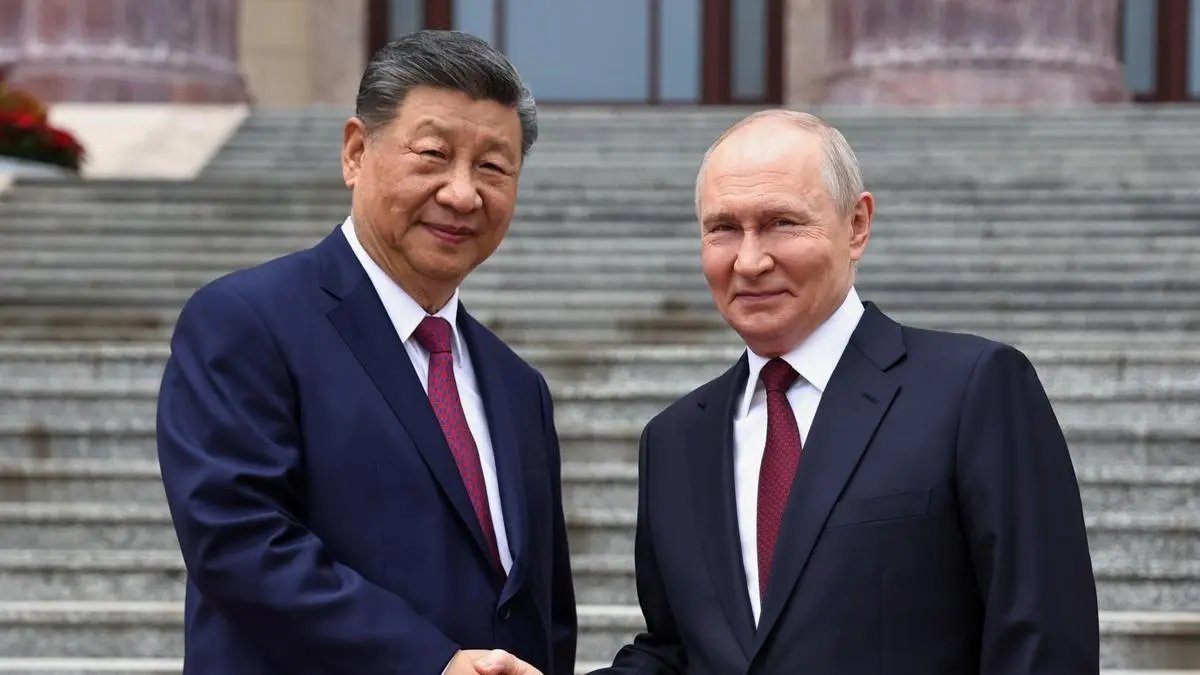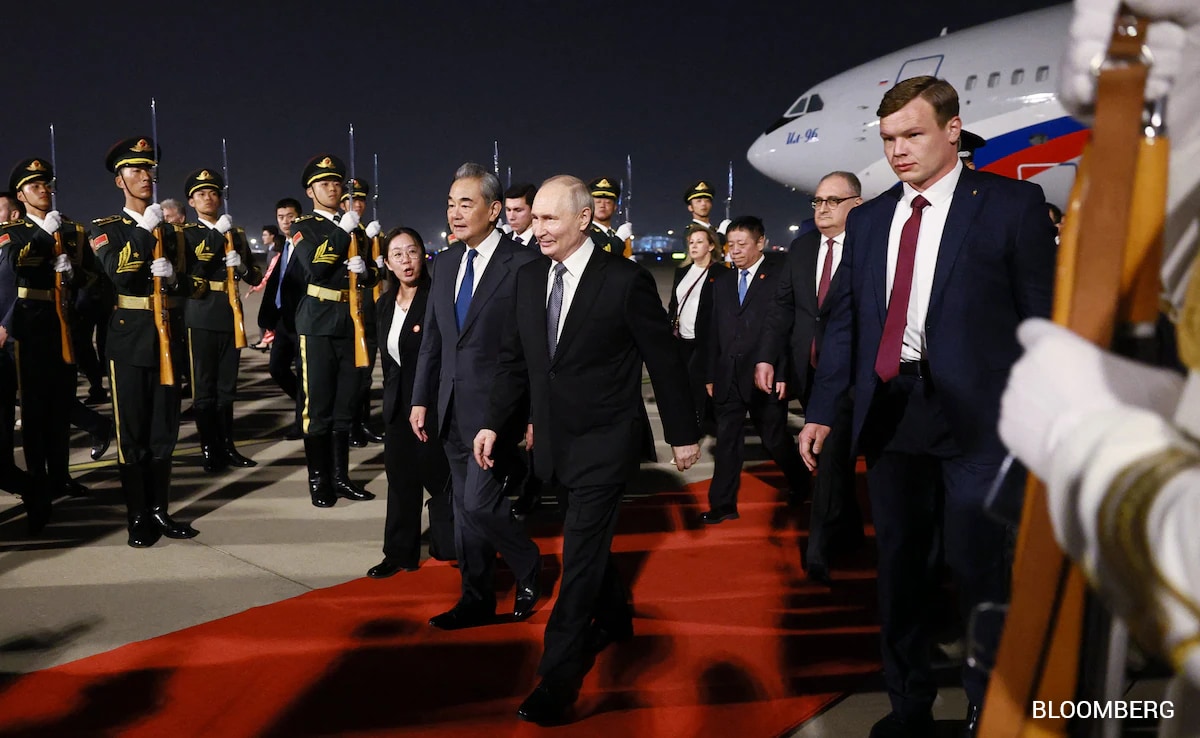
The heavy brass doors of the Grand Kremlin Palace do not open so much as they yield. When Chinese President Xi Jinping walked through them to meet Vladimir Putin, the cameras caught the usual geometry of statecraft. Red carpets stretched precisely to the millimeter. Flags hung in rigid, flawless symmetry. The televised handshakes looked solid, cast in the iron of a shared geopolitical destiny.
But geopolitics is rarely about the handshake. It is about the slight hesitation before the fingers lock. It is about the quiet words spoken just out of range of the directional microphones.
Behind the public display of an unshakeable partnership lies a delicate, high-stakes negotiation. As the two men sat beneath the towering chandeliers, a third reality sat with them, invisible but suffocating. Thousands of miles away, smoke rose over Gaza and the wider Middle East. The wires were buzzing with a new, urgent directive from Beijing. Xi Jinping was not just in Moscow to toast a "new era" of bilateral ties. He was there to deliver a message that his host, currently locked in a grueling war of attrition in Ukraine, might find deeply inconvenient.
Beijing wants a ceasefire. And Beijing expects Moscow to help clear the path.
The Tailor and the Storm
To understand why a conflict in the Levant matters so desperately to a meeting in Moscow, we have to look past the military briefings. We have to look at something far more fragile: the global nervous system of trade.
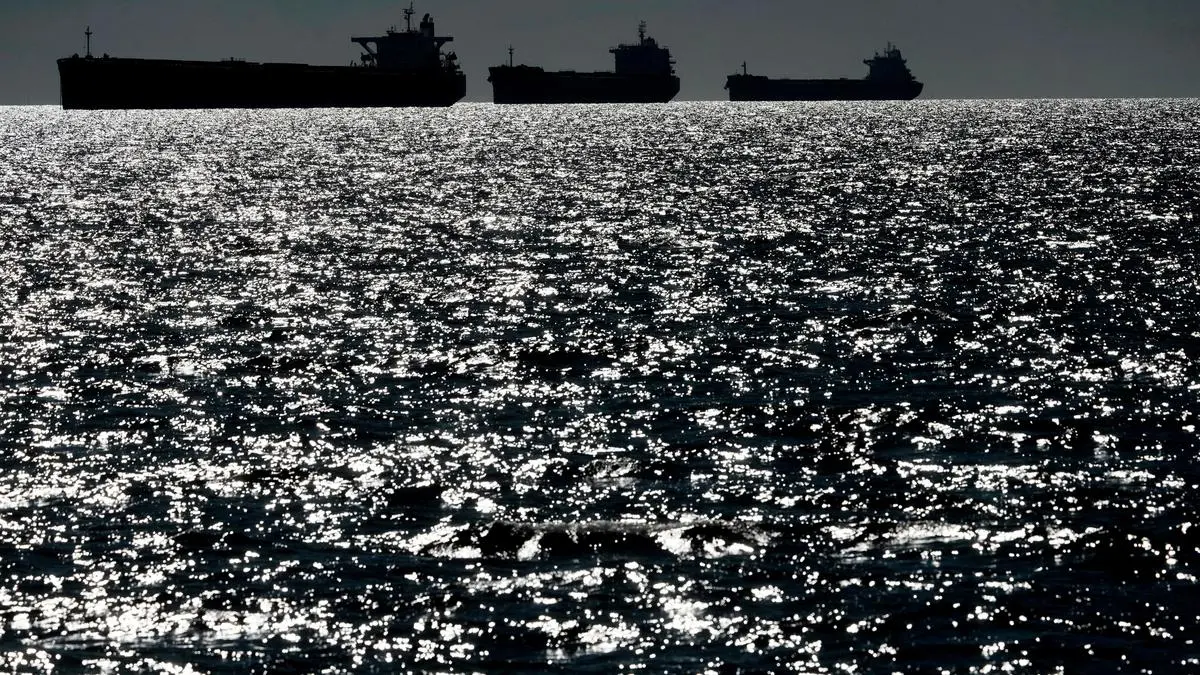
Imagine a logistics manager in Yiwu, a bustling trade hub in Zhejiang province. Let us call him Zhang. Zhang does not study satellite imagery of missile strikes, nor does he read intelligence briefings. His reality is measured in standard twenty-foot equivalent units—shipping containers. For years, Zhang’s world was predictable. He loaded containers with electronics, textiles, and machinery, sent them to the ports, and watched them glide through the South China Sea, across the Indian Ocean, up through the Red Sea, and straight into the lucrative markets of Europe via the Suez Canal.
It was a beautiful, unbroken assembly line of global commerce.
Then, the Middle East ignited. Houthi rebels, backed by Iran, began launching drones into the shipping lanes of the Bab al-Mandab Strait. Suddenly, the Red Sea turned into a no-go zone.
Consider the math that Zhang now faces. Instead of a direct, predictable route through the canal, his containers must now travel all the way around the Cape of Good Hope at the southern tip of Africa. It adds ten to fourteen days to the journey. It burns through thousands of tons of extra fuel. Insurance premiums have skyrocketed. For a country like China, which relies on the smooth, uninterrupted flow of goods to sustain its massive economy, these delays are not just an annoyance. They are a bleeding wound.
When Xi Jinping stepped up his appeal for an immediate, comprehensive ceasefire in the Middle East at the very start of his talks with Putin, he was not merely exercising moral leadership. He was trying to suture that wound. China’s vast economic empire is built on stability. War is bad for business, especially when that war threatens to engulf the world’s primary energy spigot and its most vital trade arteries.
The Friction of Unequal Fates
There is a popular theory that Beijing and Moscow move as one giant, authoritarian monolith. It is a comforting simplification. It allows observers to draw neat lines on a map and declare a new Cold War.
The reality is far more messy, defined by a profound asymmetry of needs.
Putin needs friction. For Moscow, a chaotic world is a distracted world. Every artillery shell fired in the Middle East, every diplomatic crisis that consumes the White House, and every spike in global oil prices represents a momentary relief of pressure on the Ukrainian front. If the West is busy managing a regional conflagration in the Levant, its attention is divided, its stockpiles are strained, and its political will is tested. Chaos, in a very cynical sense, serves Russia's current strategic calculus.
China, conversely, requires order.
The Chinese economic engine is a precision instrument. It needs cheap, reliable oil from the Gulf. It needs open seas. It needs European consumers to have the disposable income to buy its goods, rather than spending their euros on inflated energy bills and defense budgets.
This is the hidden tension that filled the room in Moscow. Xi Jinping arrived as the senior partner in the relationship—a reality that would have been unthinkable during the Soviet era but is undeniable today. China is Russia’s economic lifeline, buying its discounted oil and supplying the dual-use technology keeping its domestic industry alive. Yet, here was the senior partner demanding a halt to a conflict that partially serves the junior partner's interests.
It is a delicate dance. Xi cannot alienate Putin, whom he views as an indispensable ally in balancing Western dominance. But he cannot let Putin’s appetite for global disruption wreck the global markets China needs to survive.
The Mirage of the Neutral Arbiter
Over the past few years, Beijing has carefully crafted a new persona on the world stage: the adult in the room.
When China brokered a surprise detente between Saudi Arabia and Iran, the diplomatic community caught its breath. It was a masterclass in quiet diplomacy, a sign that Beijing was ready to step into the vacuum left by decades of erratic American policy in the region.
But playing the mediator is a dangerous game. It requires more than just hosting signing ceremonies; it requires leverage, and it requires the willingness to use it.
When Xi uses the platform of a high-profile summit with Putin to demand a Middle East ceasefire, he is broadcasting to the Global South. He is signaling to Riyadh, to Cairo, to Tehran, and to Jakarta that while the West provides weapons, China seeks peace. It is a powerful narrative. It resonates deeply in capitals that are weary of decades of Western military interventions.
But look closer at the architecture of this diplomacy, and the cracks appear.
China’s influence in the Middle East is primarily financial. It is the biggest buyer of Iranian oil. It is a massive investor in Saudi infrastructure. But money does not automatically translate into behavioral control. Beijing has discovered that it can buy compliance, but it cannot easily buy restraint. Iran continues to fund proxy networks that disrupt the very shipping lanes China relies on. Russia continues to cultivate ties with those same actors to keep the pot boiling.
The vulnerability in China’s position is palpable. It wants the status of a global superpower without the messy, costly baggage of becoming a global policeman. It wants to broker peace from a safe distance, using words instead of putting its own skin in the game.
What Happens When the Cameras Turn Off
The true test of the Moscow summit will not be found in the joint communiqués filled with boilerplate language about "multipolarity" and "strategic coordination." It will be found in the shipping logs of the Red Sea and the back-channel messages sent to Tehran.
If Xi’s appeal for a ceasefire was just rhetorical window dressing to appease Middle Eastern trading partners, the conflict will continue its erratic, dangerous trajectory. But if Beijing is truly beginning to feel the economic pain of a prolonged war, the pressure on Moscow—and by extension, on Iran—will quietly intensify.
We often view history as a series of grand pronouncements made by powerful men in opulent rooms. We watch the footage of Xi and Putin standing shoulder to shoulder, and we assume we are witnessing the turning of the global wheel.
But history is also written by the silent frustrations of people like Zhang, watching digital tracking maps turn red as ships detour around an entire continent. It is written in the calculations of factory owners who realize that a war on the other side of the planet has just eaten their entire profit margin.
As the summit concluded and the motorcades sped away into the Moscow twilight, the flags were taken down and the red carpets rolled away. The public show of unity remained intact. But the fundamental contradiction of their alliance was left hanging in the cold air: one empire needs the world to burn to rebuild its borders, while the other needs the world to stay perfectly still so it can keep building its future.