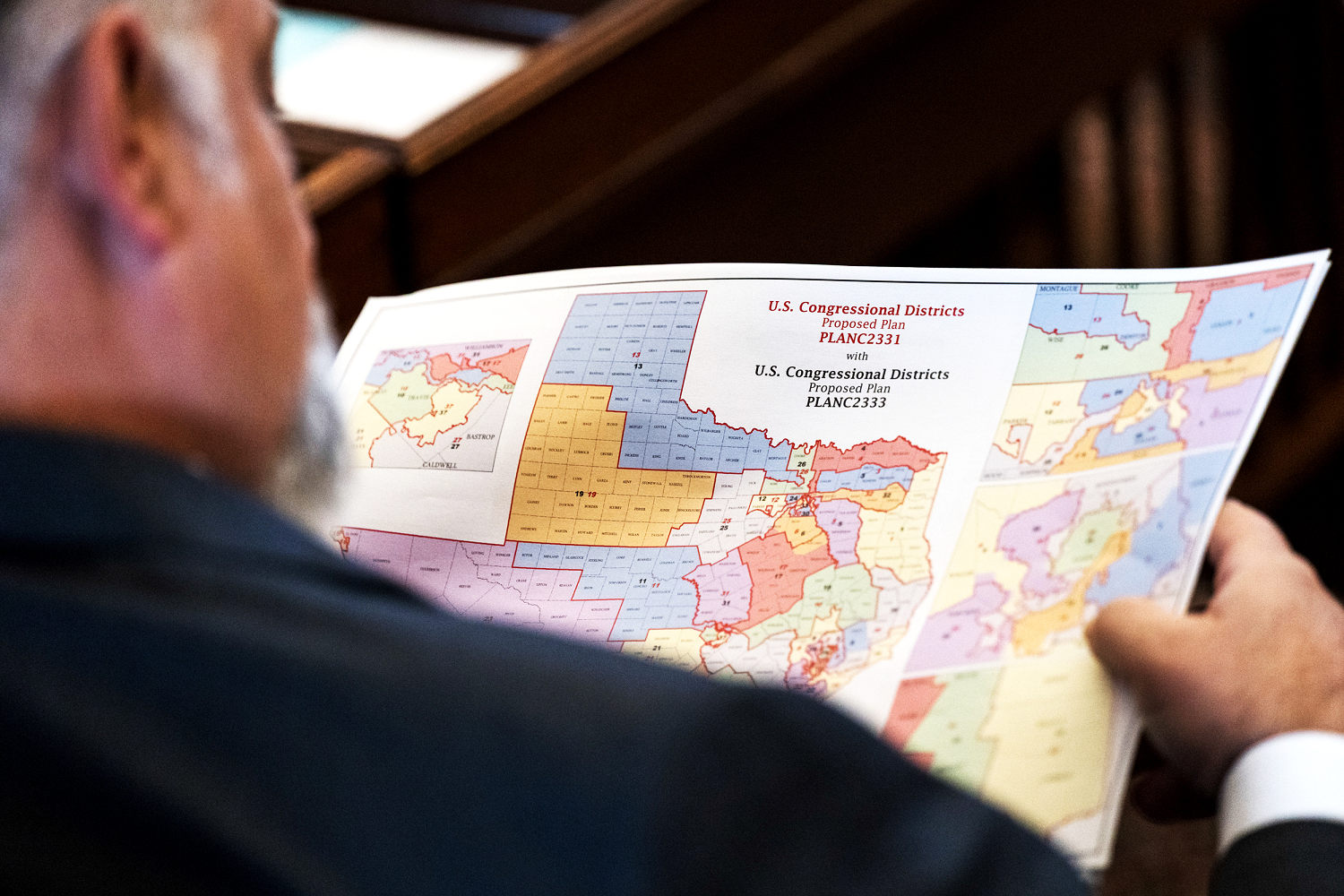
The political commentary class loves a good crisis, and nothing gets them salivating quite like a redistricting cycle. For months, mainstream analysis has fixated on a predictable, lazy narrative: that map drawing is a existential tug-of-war where every shifted boundary line represents a fatal blow to democracy. They track the lawsuits like sports scores. They lament the death of the competitive district. They treat voters like helpless chess pieces being shuffled around by partisan grandmasters.
It is a comforting, simplistic worldview. It is also completely wrong.
The obsessive focus on gerrymandering as the primary driver of political polarization and congressional dysfunction is an intellectual dead end. I have spent years analyzing voting patterns, demographic shifts, and legislative behavior. If you look at the raw data instead of partisan fundraising emails, you quickly realize that the maps are not the problem. The problem is where people choose to live, how political parties have sorted themselves, and the fundamental misunderstanding of what a representative democracy is actually supposed to do.
The conventional wisdom insists that we need a neutral, perfectly balanced map to save the system. The reality is that no map, no matter how "fair" or independently drawn, can fix a fundamentally sorted electorate. Stop obsessing over the lines on the map.
The Myth of the Stolen Majority
The central thesis of the standard redistricting freak-out is that clever cartographers are systematically thwarting the will of the majority. The narrative suggests that a state leans heavily toward one party, but through the dark magic of "packing and cracking," the other party seizes control of the congressional delegation.
While extreme partisan gerrymandering certainly exists, it is rarely the decisive factor national commentators claim it to be. Look at the hard numbers compiled by political scientists like Nolan McCarty, Keith Poole, and Howard Rosenthal. Their research into legislative polarization demonstrates a inconvenient truth: polarization in Congress has risen steadily for decades, completely independent of the ten-year redistricting cycles.
If gerrymandering were the primary culprit behind our broken politics, we would see sharp spikes in polarization and seat-swapping immediately following years ending in zero. We do not. In fact, the United States Senate—a body where the district lines are the permanent, unyielding borders of the states themselves—has polarized at virtually the exact same rate as the House of Representatives. You cannot gerrymander Ohio, Texas, or California, yet their Senate delegations are just as fiercely partisan as their House counterparts.
The real driver is geographic sorting. Voters are doing the packing themselves, completely free of charge for the political parties.
Democrats have increasingly clustered in high-density urban centers and inner suburbs. Republicans have consolidated their hold on rural areas and exurbs. This is not a conspiracy; it is a lifestyle preference. When a party packs its own voters into deep-blue cities, it naturally dilutes its power across the rest of a state. A mapmaker trying to draw a visually compact, logical district in a major metro area will inevitably create a seat that votes 85% Democratic. That is not malice. That is math.
The Dangerous Delusion of "Competitive Districts"
When reformers try to fix this, their holy grail is almost always the "competitive district." They argue that if we just create more districts with a 50-50 partisan split, politicians will be forced to moderate their views to appeal to the center.
This sounds beautiful in a civics textbook. In practice, it is a disaster.
I have watched political operations pour tens of millions of dollars into these rare, highly competitive swing districts. What actually happens? Do the candidates run to the enlightened center? Absolutely not.
In a hyper-polarized environment, a competitive district does not produce a moderate politician. It produces a highly volatile, terrified politician who views every single vote through the lens of absolute political survival. Because the district can flip at any moment, the winning candidate enters Congress with a short-term mentality. They cannot engage in long-term policymaking or risky bipartisan compromise because their own base will primary them, or the opposition will use it to wipe them out in the next midterm cycle.
Furthermore, competitive districts maximize voter dissatisfaction. Imagine a district that splits 51% to 49% every two years. In that scenario, nearly half of the population is permanently represented by someone they actively despise.
Now look at the alternative: a deeply lopsided, "safe" district. While it sounds counter-intuitive, representatives from safe districts often have more breathing room to break from party orthodoxy on specific issues because they do not face a viable threat from the opposing party. Their only real threat is a primary challenge, which admittedly pulls them toward their party's fringe, but the idea that competitive general elections automatically breed moderation is a fantasy debunked by decades of legislative history.
PAA: The Flawed Premises Driving Public Anxiety
The public's understanding of this issue is warped by a few recurring questions that dominate search engine queries. Dismantling the false premises behind these questions reveals why the current debate is so broken.
Does redistricting determine which party wins control of the House?
Hardly ever. National political waves, economic conditions, and presidential approval ratings matter vastly more than a few shifted borders. In any given midterm or presidential election, the national mood overrides the marginal advantages baked into the maps. A party with a poorly drawn map can still sweep into power if the macroeconomic indicators are in their favor. Relying on maps to secure a permanent majority is a strategy built on sand, as both parties discover every single decade when national tides wipe out their carefully constructed firewalls.
Why can't we just use algorithms to draw fair maps?
Because "fairness" is an ideological choice, not a mathematical equation. An algorithm needs instructions. What do you tell it to prioritize?
- Do you want the districts to be perfectly compact shapes?
- Do you want them to respect county and city lines?
- Do you want them to guarantee proportional representation based on statewide vote totals?
- Do you want them to ensure minority communities have a voice, as mandated by the Voting Rights Act?
You cannot have all of these things simultaneously. If you optimize for compact shapes, you will accidentally wipe out minority-majority districts and create overwhelmingly one-sided partisan seats due to geographic sorting. If you optimize for partisan balance, you will create wildly distorted, tentacle-like shapes that look just as bizarre as any old-school gerrymander. Turning the process over to a computer does not eliminate human bias; it merely hides that bias inside the code.
Aren't independent commissions the answer?
Look at the states that use them. Independent commissions frequently end in gridlock, lawsuits, and public recriminations. Human beings are political animals; putting the label "independent" on a retired judge or a university professor does not magically strip them of their worldview. Often, these commissions simply shift the backroom dealing from elected politicians to unelected, unaccountable bureaucrats. The results are rarely superior; they are just wrapped in a veneer of false neutrality.
The Self-Correction the Experts Ignore
The ultimate irony of the redistricting panic is that the politicians who try to rig the system are remarkably bad at it. The human element always introduces chaos into the grand plan.
When a political party controls the map-drawing process, greed almost always gets the better of them. Instead of drawing five completely safe districts, they try to draw seven marginally safe districts to maximize their power. They spread their voters too thin.
Political scientists call this the "dilemma of the gerrymander." By trying to win as many seats as possible, you lower your margin of safety in each individual seat. All it takes is a minor shift in public opinion—a 3% shift in suburban independent voters, for instance—and the entire map collapses. Districts that were engineered to win by five points suddenly flip to the opposition. The party that attempted the gerrymander ends up losing more seats than they would have under a completely neutral map.
We saw this play out vividly in past midterms, where heavily engineered state maps cracked under the weight of shifting suburban demographics. Voters are not static data points. They change their minds. They move. They die. A map drawn based on 2020 census data is often obsolete by 2024 because human behavior refuses to cooperate with political spreadsheets.
Stop Trying to Fix the Lines
If you want a functioning legislature, stop trying to fix the lines. Start looking at the underlying rules of the election itself.
The obsession with redistricting is a symptom of a deeper cowardice: the refusal to admit that our single-member, first-past-the-post electoral system is structurally incapable of handling a geographically sorted, hyper-polarized populace. If two distinct groups of people live in entirely different areas and consume entirely different media, changing the shape of the box you put them in will not make them like each other, nor will it make their representatives compromise.
If you genuinely want to disrupt the stagnation in Washington, you don't need independent commissions or cleaner geometric shapes. You need to change how votes are cast and counted.
Acknowledge the downside of the contrarian view: letting politicians draw maps means we will continue to see grotesque, highly partisan spectacles every ten years. It means some politicians will get to choose their voters rather than the other way around. It is a ugly, cynical process. But it is a predictable ugliness, and one that the national political climate regularly overrides anyway.
Accept the messy reality of geographic sorting. Let the mapmakers draw their ridiculous shapes. Stop wasting hundreds of millions of dollars on litigation that yields marginal, temporary victories. Direct that energy, money, and intellectual capital toward structural voting reforms that actually alter candidate incentives. Anything else is just rearranging the deck chairs on a ship that is taking on water because of a completely different hole in the hull.
The map is not the territory. The map is not even the problem.