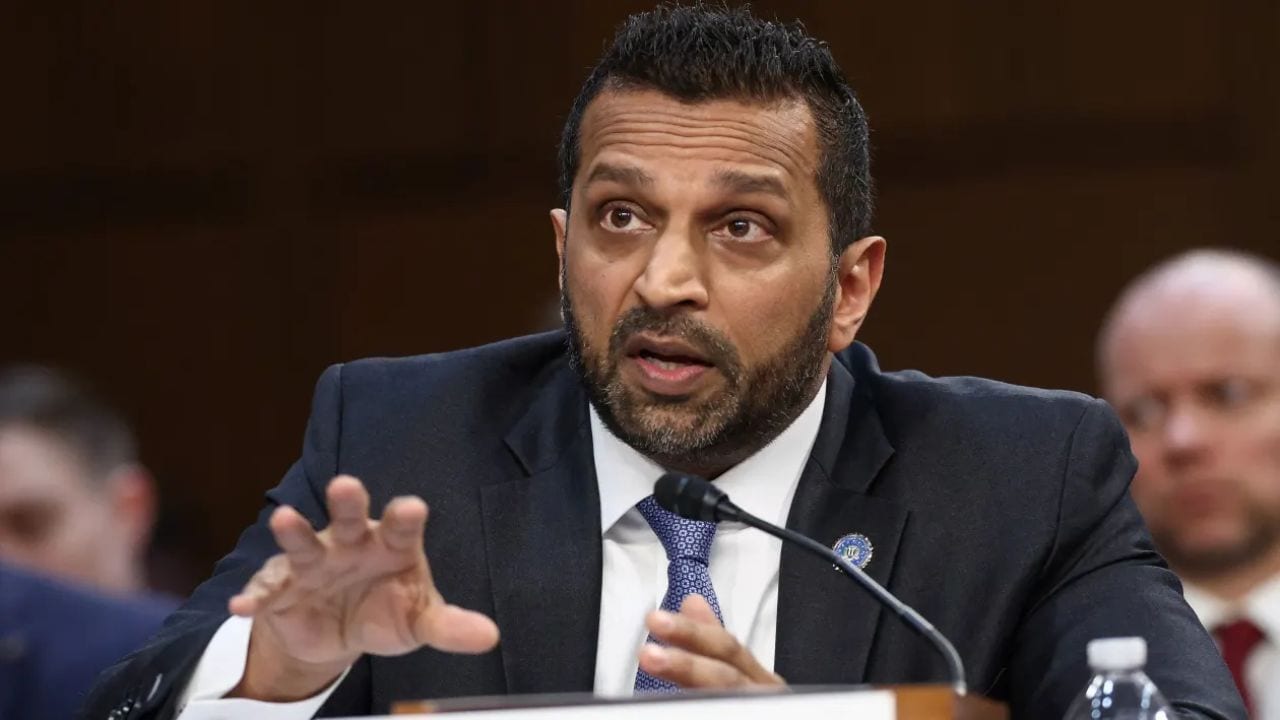
The headlines are screaming about a "sophisticated" Iranian breach of an FBI director's personal email. They want you to feel a chill. They want you to think we are under a coordinated digital siege by a foreign superpower. They are lying to you by omission.
What the mainstream tech press calls a breach, I call a Tuesday. If you think a state-sponsored actor "hacking" a personal Gmail or Proton account is a sign of declining national security, you’ve been sold a narrative designed to keep you buying blinky-light boxes and "military-grade" VPNs. The real story isn't the breach. The real story is the catastrophic failure of the human ego at the highest levels of the intelligence community.
Stop asking how they got in. Start asking why the person in charge of the world's most powerful domestic investigative agency was still using a "personal" inbox for anything more sensitive than a Bed Bath & Beyond coupon.
The Myth of the Sophisticated Actor
Every time a government official gets rolled, the media uses the word "sophisticated." It’s a linguistic shield. If the attacker is sophisticated, the victim isn't a moron. But let’s look at the mechanics.
Most "state-sponsored" Iranian breaches aren't the result of Zero-Day exploits or $10 million malware chains. They are the result of persistent, boring, low-cost social engineering. We’re talking about spear-phishing 101. I have consulted for firms where the C-suite thought they were being targeted by "advanced persistent threats" (APTs), only to find out a junior analyst clicked a link in an email claiming their Netflix subscription was expiring.
When we talk about the FBI director's email, we aren't talking about a breach of the FBI's internal, air-gapped systems. We are talking about a guy—a human being—who likely recycled a password or failed to use a hardware security key.
The Credentials Fetish
The "lazy consensus" says we need better firewalls. Wrong. We need to kill the password. If you are still using a string of characters to protect your digital identity in 2026, you are the vulnerability.
- Password Managers are a Single Point of Failure: While better than using "Hunter2," they create a "keys to the kingdom" scenario.
- SMS 2FA is a Joke: SIM swapping is so prevalent it’s practically a hobby for teenage hackers in Eastern Europe.
- Hardware Keys (YubiKeys) are the Only Defense: If the FBI director wasn't using a physical FIDO2 token, he wasn't trying to be secure. He was roleplaying security.
Why Your "Personal" Account is the Backdoor
There is no such thing as a "personal" account for a high-ranking official. The distinction is a legal fiction that hackers don't respect.
Imagine a scenario where a foreign intelligence service wants to know the FBI's strategy on domestic counter-terrorism. Do they try to kick down the door of the J. Edgar Hoover Building's servers? No. They wait for the Director to go home, sit on his patio, and log into his personal email to check his kid's soccer schedule.
The "personal" account is the soft underbelly. It’s where the guard is dropped. It’s where the metadata lives. Even if no classified documents were sent, the contact list alone is a goldmine for secondary targeting. The hackers didn't just get an inbox; they got a map of the Director's entire social and professional ecosystem.
The Encryption Fallacy
The competitor's article likely bleated on about "encryption" and how it should have protected the data. This is a fundamental misunderstanding of how data is stolen.
Encryption protects data at rest and in transit. It does absolutely nothing to protect data from a user who has already authenticated. If I steal your keys and walk through your front door, the fact that the door is made of reinforced steel is irrelevant.
- At Rest: The email is encrypted on Google's or Microsoft's servers. But when the hacker logs in as "You," the server happily decrypts it for them.
- In Transit: TLS (Transport Layer Security) protects the data as it moves from the server to your screen. The hacker is the one at the end of that tunnel.
The industry spends billions on encryption algorithms while ignoring the fact that $10 worth of social engineering bypasses all of it. We are building 50-foot walls around a house with no roof.
Stop Trying to "Secure" the User
The industry standard is to "educate" the user. "Don't click links," they say. This is a losing strategy. Humans are wired to click links. Curiosity is a biological imperative.
If your security model depends on 35,000 employees never making a mistake, your model is broken. The solution isn't more training; it's the removal of agency.
The Zero-Trust Reality
Real security—the kind that actually stops Iranian, Chinese, or Russian state actors—is built on Zero Trust. In a Zero Trust environment:
- The network doesn't care who you are.
- The device must be verified.
- The location must be verified.
- The behavior must be verified.
If the FBI director logs in from a new laptop at 2:00 AM, the system shouldn't just ask for a password. It should shut the account down and require a manual reset from a separate, trusted authority. But that's "inconvenient." And in the C-suite, convenience always trumps security.
The Geopolitical Grift
Let’s be brutally honest: the attribution to "Iran-linked hackers" is often a convenient political tool.
By naming a foreign adversary, the agency shifts the blame from internal negligence to "foreign aggression." It turns a shameful security lapse into a rallying cry for more funding. I've seen it a hundred times. A company gets breached because they left an S3 bucket open to the public, and three days later, the PR firm is whispering about "Russian state actors."
Is it possible it was Iran? Sure. They have capable teams. But attribution in the digital space is notoriously messy. IP addresses can be spoofed. Code signatures can be faked. Using "Iran" as the bogeyman allows the FBI to avoid answering why their Director was such a low-hanging fruit.
What You Should Actually Do
If you want to protect yourself from the same "sophisticated" attacks that took down a federal director, ignore the "top 10 tips" lists. Do these three things instead:
- Assume You Are Already Compromised: Operate under the assumption that your primary email is visible to someone else. Use it only for noise.
- Burn the Password: Use passkeys or hardware tokens. If a site doesn't support them, don't use the site for anything important.
- Compartmentalize by Hardware: Use one device for banking and "real" life. Use a separate, cheap Chromebook for your "personal" browsing and social media. Never let the two meet.
The FBI breach isn't a failure of technology. It’s a failure of humility. When you think you're too important to follow the rules of digital hygiene, you’ve already been hacked. You just haven't seen the excerpts online yet.
The director didn't lose his data to a genius. He lost it to a mirror.