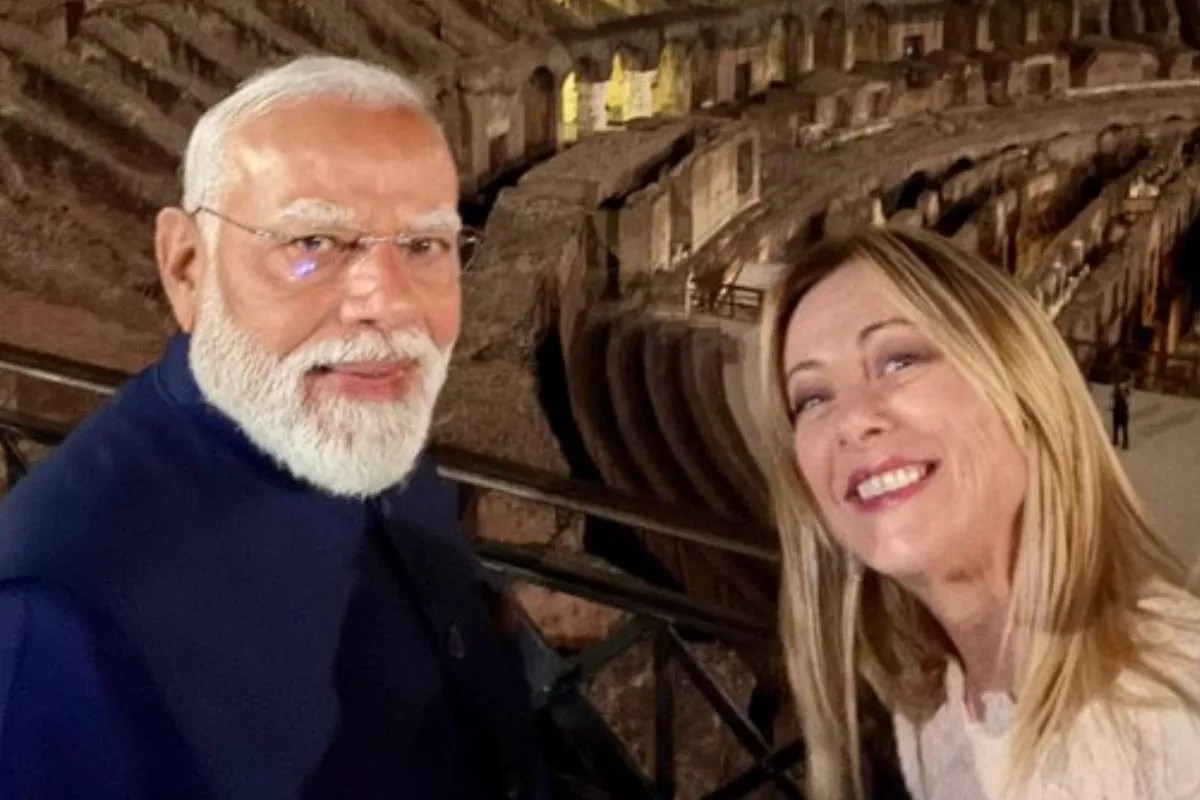
Mainstream media outlets love a good distraction. When Indian Prime Minister Narendra Modi and Italian Prime Minister Giorgia Meloni share a viral selfie at a global summit, newsrooms rush to pump out superficial commentary about diplomatic chemistry, internet trends, and "soft power triumphs." They feast on the optics. They dissect the smiles, track the hashtags, and convince the public that a shared photo is a milestone in international relations.
It is not. It is a calculated optical illusion that masks severe, hard-nosed friction between two deeply nationalistic states.
The lazy consensus suggests that social media camaraderie translates directly into seamless bilateral cooperation. Cable news anchors talk about the "Melodi" phenomenon as if a viral moment can dissolve structural economic barriers, defense procurement bottlenecks, or fundamentally misaligned migration priorities. This is a profound misunderstanding of how modern geopolitics operates. Behind the curated warmth of a smartphone camera lies a cold reality dictated by national self-interest, domestic political pressure, and structural economic limitations.
The Friction Behind the Frame
Diplomacy is not a popularity contest; it is a transactional ledger. While the internet obsesses over viral content, the actual machinery of statecraft between Rome and New Delhi remains bogged down by divergent strategic priorities.
Let’s look at the actual data. Italy’s trade volume with India remains remarkably modest compared to its European peers. Germany and France consistently outpace Italy in trade and strategic defense partnerships with New Delhi. Why? Because superficial political alignments do not automatically rewrite supply chains or corporate risk assessments.
- Defense Procurement Stagnation: For years, defense ties between India and Italy have been haunted by historical baggage, notably the Finmeccanica (AgustaWestland) chopper scam and the protracted Enrica Lexie (Italian marines) diplomatic standoff. While high-level visits aim to signal a reset, Italian defense firms face immense hurdles navigating India’s bureaucratic "Make in India" defense mandates, which demand extensive technology transfers that European boards are hesitant to clear.
- The Migration Paradox: This is where the ideological alignment breaks down entirely. Both leaders command domestic bases that are highly sensitive to migration. Meloni’s political identity is built heavily on curbing undocumented immigration into Europe. Conversely, India's primary diplomatic objective with Western partners is securing high-skilled labor mobility, streamlined visa regimes, and professional exchange programs for its massive diaspora. You cannot bridge that structural chasm with a hashtag. Rome wants tighter borders; New Delhi wants greater mobility.
The Myth of Shared Right-Wing Synergy
Political analysts frequently fall into the trap of assuming that because two leaders share similar ideological branding on the global stage, their policies will naturally harmonize. This is amateur analysis.
Nationalism, by its very definition, is self-serving. It does not create international brotherhoods; it creates hyper-transactional partners. When Italy looks at the Indo-Pacific, its primary interest is securing maritime trade routes and hedging against Chinese economic dominance. However, Italy was also the only G7 nation to initially join China’s Belt and Road Initiative (BRI). Though Meloni’s administration subsequently exited the pact, the economic temptation to engage with Beijing remains a powerful undercurrent in Rome. India, dealing with direct border confrontations with China, requires absolute strategic clarity from its allies—not the oscillating economic policies of a Mediterranean state balancing European Union mandates with domestic fiscal deficits.
Consider the reality of the European Union’s complex institutional framework. Italy cannot negotiate independent trade deals with India. Every major tariff reduction, intellectual property agreement, and market-access clause must go through Brussels. A viral selfie cannot bypass the European Commission's rigorous regulatory scrutiny or the protectionist instincts of agricultural lobbies in France, Poland, or Italy itself.
Strategic Realism vs. Digital Performance
I have watched diplomatic delegations spend months negotiating single clauses in Memorandums of Understanding, only to see the entire substance of the meeting overshadowed by a five-second clip on social media.
This digital theater serves a specific domestic purpose for both leaders. For Modi, it projects a image of global acceptance and high-profile alliances to a massive, digitally active domestic electorate. For Meloni, alignment with the leader of the world’s most populous nation projects statesmanlike gravitas beyond the confines of Eurocentric politics, signal-boosting her influence within the G7.
But what happens when the cameras turn off? The unresolved issues return to the table:
- Carbon Border Taxes: The EU’s Carbon Border Adjustment Mechanism (CBAM) threatens to impose heavy penalties on Indian steel, aluminum, and cement exports entering Europe. Italy, as an EU member, is bound to enforce these rules. India views CBAM as a protectionist trade barrier disguised as climate action. No amount of social media camaraderie changes the fact that Italian border authorities will be forced to tax Indian goods.
- Technology Transfer Disconnects: While joint statements frequently highlight cooperation in renewable energy, semiconductors, and digital infrastructure, the actual capital flows are minimal. Italian capital is risk-averse, currently constrained by high domestic debt and strict EU fiscal rules. Indian markets demand aggressive, high-volume capital investments that Italy simply cannot deploy at scale compared to the United States, Japan, or the UAE.
Dismantling the Premise of "Viral Diplomacy"
When people look at these viral moments, they ask the wrong questions. They ask, "How will this bond strengthen the India-Italy alliance?"
The brutal, honest answer is: it won't.
The premise that personal rapport between heads of government alters the long-term geopolitical trajectory of nation-states is a fallacy. States are guided by permanent interests, not fleeting friendships. The UK and the US do not maintain a special relationship because their leaders like each other; they maintain it because their intelligence apparatuses, military commands, and financial markets are deeply interdependent.
The India-Italy relationship lacks that structural depth. It lacks the institutional inertia that drives real, immovable alliances. It is a relationship built on opportunistic alignments in specific sectors like green energy transition and maritime security, wrapped in a massive public relations blanket.
The downside of pointing this out is obvious: it ruins the narrative. It doesn't generate clicks, it doesn't trend on social platforms, and it forces people to look at dry macroeconomic indicators instead of charismatic political figures. But relying on optical diplomacy creates a dangerous strategic complacency. It allows policymakers to substitute symbolic victories for tangible legislative and economic progress.
Stop reading geopolitics through the lens of social media engagement metrics. When a state leader posts a selfie, they are not executing foreign policy; they are managing a brand. The true health of an international partnership is found in the unglamorous, un-shareable text of bilateral tax treaties, customs data, and defense manufacturing joint ventures. Everything else is just noise designed to keep you looking at the screen while the real hard-power calculations happen entirely out of view.
Stop looking at the smiles. Watch the capital flows, count the shipping containers, and read the tariff schedules. That is where history is written. The rest is just content.