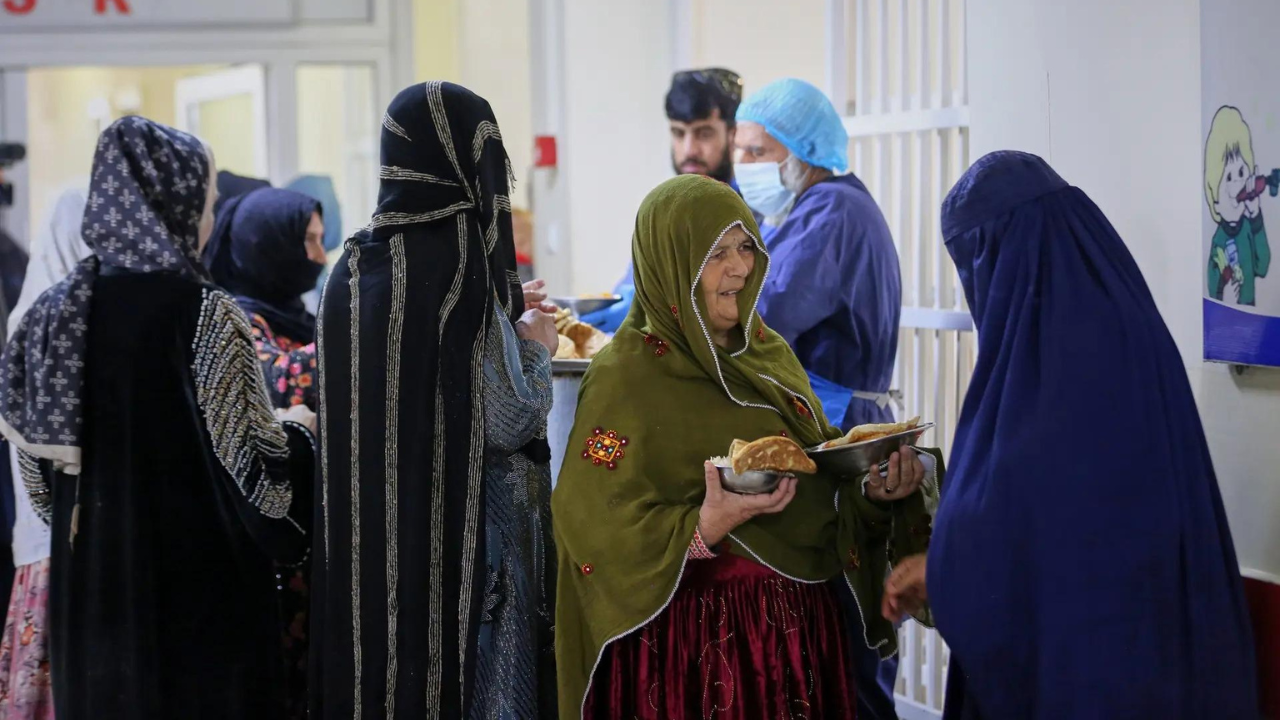
Hunger isn't just a stomach ache in Afghanistan. It's a predator. Since the 2021 shift in power and the subsequent freezing of international assets, the country has spiraled into a poverty trap so deep that basic survival has become a luxury. We're seeing a terrifying trend where parents are selling their young daughters into marriage just to keep the rest of the family from starving to death. It’s a gut-wrenching reality that highlights the total collapse of a nation's economy and social safety net.
When you look at the numbers, they're staggering. The World Food Programme (WFP) consistently reports that over half the population faces acute food insecurity. But numbers don't capture the desperation of a father in Ghor or Badghis who has to decide which child to save. This isn't about culture or tradition. It’s about a complete lack of options. People are eating grass. They're selling kidneys. And, most tragically, they're "selling" girls as young as six or seven to older men under the guise of marriage.
Why the Afghan Hunger Crisis is Different Now
The situation in Afghanistan didn't just happen. It’s the result of a "perfect storm" of economic isolation, climate change, and political upheaval. When the previous government collapsed, billions of dollars in foreign aid vanished overnight. That aid made up roughly 75% of the public spending. Imagine your local economy losing three-quarters of its cash flow in a week. Banks froze. Jobs disappeared. Inflation sent the price of flour and oil into the stratosphere.
Then there's the drought. Afghanistan is on the front lines of climate change. Successive years of failed harvests mean rural families who relied on their land now have nothing. No crops mean no food and no income. When the sheep die and the well runs dry, the only "asset" left in a desperate household is often the promise of a daughter’s future.
The Brutal Mechanics of Child Marriage for Survival
Calling these "marriages" is a stretch. They're financial transactions born of absolute despair. Typically, a family receives a dowry, or "bride price," which might range from $500 to $2,000. For a family in a displacement camp, that's enough to buy food for a year.
The girls often stay with their parents until they reach puberty, but the "buyer" owns them from the moment the money changes hands. It’s a debt. If the father can't pay back the money—which he almost never can—the girl is taken. Humanitarian workers on the ground, including those from Save the Children and UNICEF, have documented cases where these girls are treated as domestic servants or worse once they move to the husband’s home.
The psychological toll is immeasurable. I've read reports of mothers who can't stop crying and fathers who contemplate suicide because they feel they've failed their children. They aren't villains. They're victims of a global political game that has left the most vulnerable Afghans to rot.
The Economic Black Hole and the Role of Sanctions
We need to talk about the elephant in the room: international sanctions. While intended to pressure the de facto authorities, these measures have largely strangled the ordinary citizen. The banking system is paralyzed. Small business owners can't import goods. Aid organizations struggle to transfer funds to pay their local staff.
There’s a massive debate in the international community about how to help without legitimizing the current regime. But while diplomats argue in Doha or New York, the people in Herat are starving. The "humanitarian exception" to sanctions exists on paper, but in practice, "over-compliance" by international banks makes it nearly impossible to get money into the country effectively. This creates a liquidity crisis. No cash means no economy. No economy means parents selling children.
Education and the Loss of Hope
The ban on girls' secondary education is a massive factor here too. When a girl can't go to school, her "value" in the eyes of a struggling society shifts from her potential as a future professional to her immediate value as a bride. Education provides a protective shield. It gives families a reason to keep their daughters at home, hoping for a better future. Without school, that hope dies.
When hope dies, pragmatism—no matter how cruel—takes over. If a girl has no prospect of a job or an education, her family sees marriage as her only path to being fed, even if that "feeding" happens in a stranger's house under conditions of bonded labor.
What Real Support Looks Like
Sending a few bags of grain is a band-aid on a gunshot wound. The scale of the Afghan crisis requires a total rethink of how we handle humanitarian aid in "pariah" states.
- Cash Assistance Programs: Direct cash transfers to the poorest families have proven to be the most effective way to prevent child marriage. It gives parents the agency to buy food without selling a child. Organizations like the Norwegian Refugee Council (NRC) have been vocal about the need for more flexible funding.
- Support for Agriculture: Since most of these "sales" happen in rural areas hit by drought, investing in solar-powered irrigation and drought-resistant seeds is vital. If a farmer can grow wheat, he doesn't need to sell his seven-year-old.
- Unfreezing Assets for the Central Bank: There has to be a way to release Afghan sovereign wealth to stabilize the currency and control inflation, managed by independent monitors to ensure it doesn't fund the military.
- Local NGO Support: Afghan-led organizations are still working. They know which families are at the breaking point. They need funding that isn't tied up in red tape.
The world’s attention has shifted to other conflicts, but the slow-motion catastrophe in Afghanistan hasn't stopped. It's getting worse. Every day we wait to address the underlying economic collapse, more girls are signed away.
If you want to help, stop looking for "awareness" and start looking for organizations that provide direct cash assistance and nutrition programs inside Afghanistan. Look at the WFP, the International Rescue Committee (IRC), or Islamic Relief. These groups are on the ground, literally buying time for these girls. Don't let the complexity of the politics blind you to the simplicity of the hunger. A hungry child doesn't care about geopolitics; they just want to eat. And a desperate father shouldn't have to choose which daughter survives at the cost of her childhood.