The blue light of a smartphone screen possesses a strange, hypnotic power. It whispers a promise of connection, validation, and romance to anyone scrolling through a dating app in the quiet hours of the evening. We slide a thumb across glass, filtering through faces, believing we are in total control of the narrative. The screen feels like a shield. We convince ourselves that the digital barrier protects us, that we can log off the moment a vibe feels off.
It is a lie.
The screen is not a shield; it is a glass door. And once you invite someone through it, the digital illusion evaporates, leaving behind the raw, unpredictable, and sometimes terrifying reality of physical space.
A young woman in New Zealand learned this in the most devastating way possible. She sought a human connection on a dating application, a routine act performed by millions every single day. Instead, she stepped into a trap engineered by a man who used the platform as a hunting ground. Her story, which culminated in a Hamilton District Courtroom, shatters the comfortable myths we tell ourselves about modern romance. It forces us to confront the invisible stakes of our highly connected, deeply isolated world.
The Collision of Two Worlds
To understand how this nightmare unfolded, we have to look at the intersection of two starkly different lives.
On one side was the victim. Her name is suppressed by law to protect her privacy, but her experience is painfully universal. She was someone navigating the modern dating scene, trusting the unspoken social contract that governs these digital interactions—the assumption that the person on the other end of the chat is essentially who they claim to be, operating with a baseline of human decency.
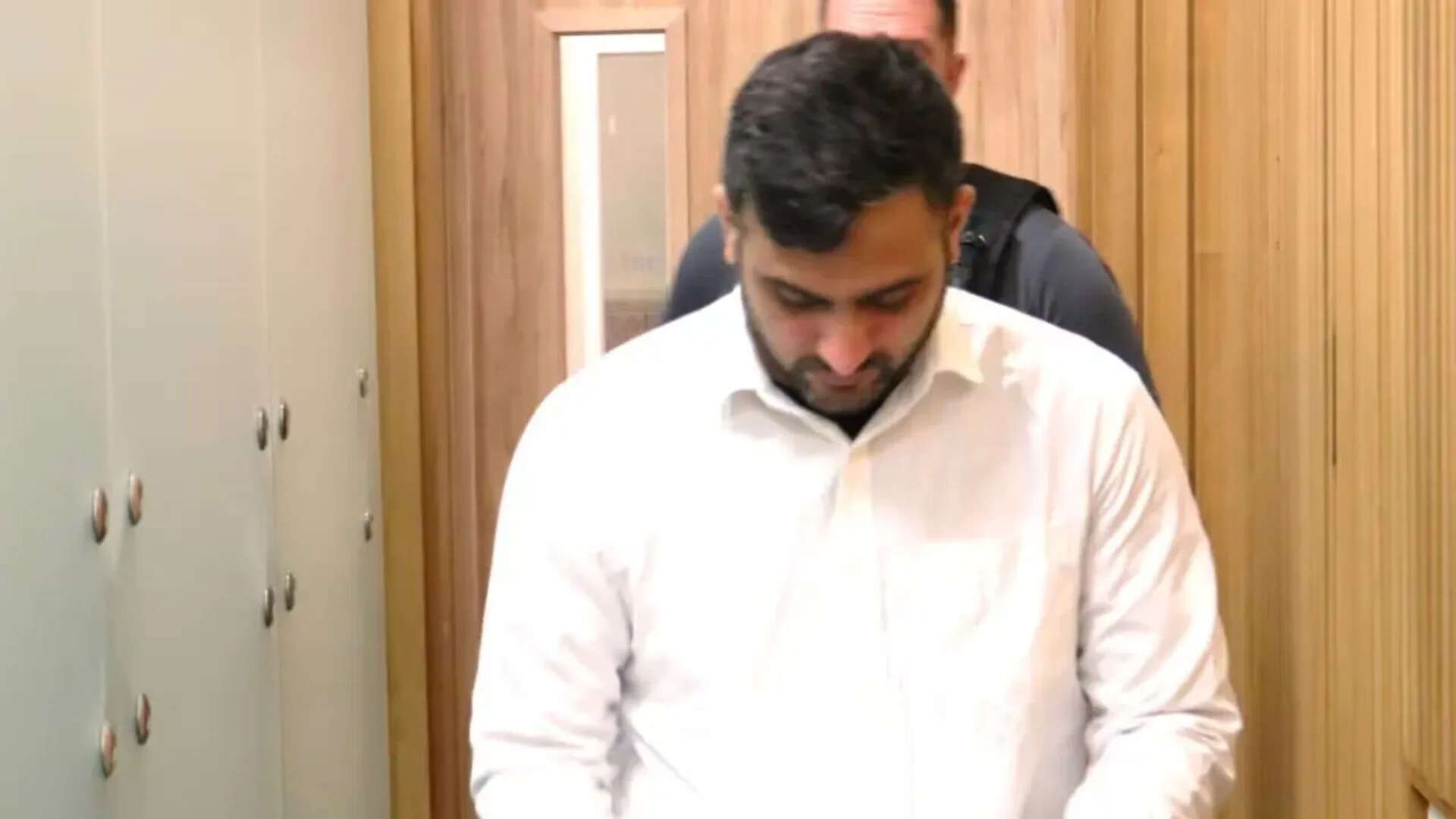
On the other side was Sukhwinder Singh.
Singh was a 25-year-old Indian national working in New Zealand on a work visa. He made his living driving trucks, navigating the long, winding roads of the North Island. It is a solitary profession, one that leaves a person alone with their thoughts for hours on end, watching the landscape roll by through a windshield. But when Singh put down the keys to his truck, he picked up his phone and entered a different kind of space. He created a profile on a dating app. He swiped. He messaged. He wore the mask of a suitor.
When the two matched, it seemed like the beginning of a standard, modern acquaintance. They talked. They agreed to meet. The woman, acting with a caution that many would consider prudent, decided to meet him at a public spot—a local park in Hamilton.
Public spaces feel safe. We think evil avoids the sunlight, that the presence of trees, open air, and the distant hum of traffic acts as a deterrent. We believe that as long as we stay within the boundaries of the shared world, we are secure.
But a park is only as safe as the exits, and an encounter can shift from a date to an ambush in the span of a single breath.
The Shift in the Air
They met. They spoke. But very quickly, the reality of Singh did not match the digital avatar he had cultivated. The atmosphere shifted. The casual banter dried up, replaced by a predatory intent that the victim could feel but, in those critical early moments, perhaps struggled to fully process. It is a psychological phenomenon many survivors speak of: the hesitation to react aggressively because society trains us to be polite, to give the benefit of the doubt, to avoid making a scene.
Singh exploited that hesitation.
He didn't just cross boundaries; he obliterated them. The encounter moved from the public park to a vehicle. Inside the cramped, enclosed space of a car, the power dynamic permanently alters. The outside world is cut off. The windows block out the sound, and the locks turn a means of transportation into a mobile prison.
It was here that Singh assaulted her. The details detailed in the court proceedings paint a picture of sheer terror. He raped her. In that moment, the digital algorithms that brought them together mattered less than nothing. The convenience of the app, the clever bio, the curated photos—all of it boiled down to a brutal, age-old exercise of physical dominance and violence.
The victim did not stay silent. She fled the vehicle and went to the police.
Consider what that takes. The sheer emotional fortitude required to walk into a police station hours after your world has been shattered, to recount the most intimate violation imaginable to strangers in uniform, to hand over your phone, your clothing, your very body as evidence. It is an act of immense bravery. It is a refusal to disappear.
The Myth of the Statistical Anomaly
When stories like this break, the collective reaction is often an attempt to compartmentalize the horror. We look at the details and try to find the anomalies so we can reassure ourselves that it won't happen to us, or to our daughters, sisters, and friends.
We point to Singh’s background. He was an immigrant on a temporary visa, a truck driver, an outsider. It is easy to compartmentalize the threat when it wears the face of a demographic outlier. But doing so misses the entire point of the systemic danger. The threat isn't the truck driver from India; the threat is the predator who understands that digital platforms provide unprecedented access to vulnerable targets.
Let's look at the cold reality of the numbers. New Zealand, a country often romanticized for its rolling green hills and low rates of violent crime relative to the rest of the world, struggles deeply with sexual violence. Statistics from the Ministry of Justice indicate that the vast majority of sexual assaults go unreported. When a case actually makes it to a courtroom, it represents the tip of a massive, submerged iceberg.
Furthermore, digital dating platforms have fundamentally altered the landscape of risk. A study by the Australian Institute of Criminology revealed that a staggering number of dating app users have experienced some form of technology-facilitated sexual violence, ranging from harassment to image-based abuse, and in the worst cases, physical assault.
The platforms create a false sense of intimacy. Because we converse with someone while sitting in our pajamas on our own couch, our brains trick us into feeling safe. We lower our psychological defenses. Predators know this. They use the digital interface to bypass the natural vetting processes humans have relied on for millennia—reputation, mutual acquaintances, and community oversight.
Singh didn’t need a social circle to recommend him. He didn’t need to prove he was a safe person to the woman's friends or family. He just needed a working data connection and a profile picture.
The Cold Room of Justice
The climax of this narrative did not take place on a dark road or in a park, but under the sterile fluorescent lights of the Hamilton District Court.
Judge Philip Crayton presided over the sentencing. In courts of law, the emotion of a tragedy is often stripped away, replaced by the precise, clinical language of the penal code. Lawyers speak of "counts," "maximum penalties," and "mitigating factors." But Judge Crayton’s remarks pierced through the legal jargon to address the human wreckage Singh left behind.
The judge described Singh’s actions as a profound breach of trust. He noted that the victim had been left with deep psychological scars, an invisible, lifelong sentence that she must serve through no fault of her own. The trauma of sexual assault doesn't end when the attacker leaves; it echoes through every subsequent relationship, every sleepless night, every sudden spike of adrenaline when a stranger walks too close on the street.
Singh’s defense council attempted to argue for leniency, pointing to his youth, his lack of prior convictions in New Zealand, and the inevitable consequence that a prison sentence would lead to his deportation back to India. They argued that losing his livelihood and his dream of a life in New Zealand was punishment in itself.
But justice, when it functions correctly, refuses to balance the career prospects of a predator against the shattered psyche of a victim.
Judge Crayton sentenced Sukhwinder Singh to four years and eleven months in prison.
Because of New Zealand's immigration laws, a conviction of this magnitude ensures that once Singh serves his time—or becomes eligible for parole—he will be handed over to immigration authorities and put on a plane back to India. His visa is effectively canceled; his future in the country is dead.
The Unseen Casualties
The sentence provides a clean legal ending. The gavel strikes. The defendant is led away in handcuffs. The journalists file their stories, and the public moves on to the next headline.
But look closer at the collateral damage of this single act of violence.
There is the immigrant community in New Zealand, the vast majority of whom are hardworking, law-abiding people driving trucks, working in agriculture, healthcare, and technology, trying to build a better life. Every time an individual like Singh commits a high-profile, heinous crime, a shadow of suspicion falls over an entire diaspora. Xenophobes seize upon the headline to justify hatred, and innocent people are forced to carry the reputational cost of a monster’s choices.
Then there are the tech companies. The creators of these dating apps pocket billions of dollars in revenue by designing algorithms optimized for engagement. They want you addicted to the swipe. They want you spending hours on their platform. Yet, when the real-world consequences of their product turn bloody, they retreat behind terms of service and user agreements. They offer advice like "meet in a public place" or "tell a friend where you are going," effectively shifting the entire burden of safety onto the user.
They provide the ecosystem where predators can roam, but accept none of the liability when the predators strike.
But the most profound casualty is our collective sense of trust. Every time a story like this emerges, it chips away at the social fabric. It makes us look at the person sitting across from us on the train with a little more suspicion. It makes a woman hesitate before going on a date, wondering if the charming person in the chat log is actually a wolf waiting at the park.
Beyond the Screen
We cannot engineer a world entirely free of malice. No algorithm can screen out the darkness in a human heart, and no prison sentence can undo the harm inflicted in the back of a car on a lonely New Zealand evening.
But we can change how we interact with the digital systems that shape our lives. We can stop treating dating apps as games or harmless pastimes and recognize them for what they are: powerful, unregulated pipelines that bring absolute strangers directly into our private orbits.
Safety is not an administrative task to be checked off with a few basic rules. It is a continuous, active state of awareness. It requires us to trust our instincts over our desire to be polite. If the air changes, if the voice in the back of your mind whispers that something is wrong, the digital contract is broken. You owe the stranger on the screen nothing—not a polite goodbye, not an explanation, not a second chance.
Sukhwinder Singh will spend the final years of his twenties inside the grey walls of a New Zealand prison before being cast out of the country entirely. His name will become a footnote in legal archives, a brief warning to those who track the intersection of technology and crime.
Meanwhile, a woman in Hamilton wakes up every morning and begins the long, grueling work of piecing her life back together. She carries the true weight of the story, a weight far heavier than any prison sentence. Her victory is not found in the judge’s verdict, but in her survival, her refusal to be silenced, and her journey back toward a world where she can finally feel safe under the open sky.