Western intelligence agencies have a long, bloody history of trying to micromanage regime change in the Middle East, usually with disastrous results. But a wild new revelation shows that even decades of blowback haven't stopped planners in Washington and Tel Aviv from cooking up mind-bogglingly bizarre political engineering schemes.
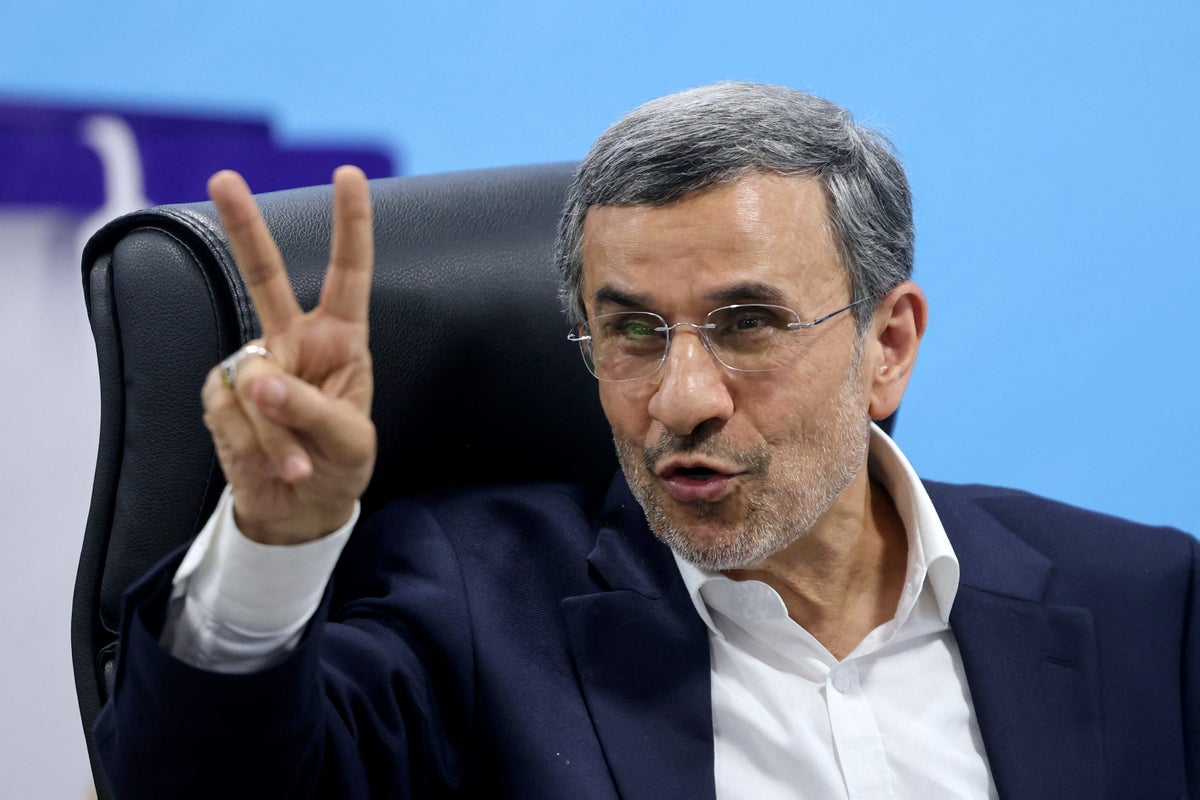
A stunning report from The New York Times reveals that during the opening hours of the US-Israeli war with Iran, military objectives stretched far beyond blowing up nuclear labs and missile silos. The actual blueprint, code-named "Operation Epic Fury," included a secret phase to break former Iranian President Mahmoud Ahmadinejad out of house arrest and install him as the leader of a new, post-war government in Tehran.
Yes, you read that correctly. The same Mahmoud Ahmadinejad who spent his 2005–2013 presidency denying the Holocaust, aggressively ramping up Iran’s uranium enrichment, and notoriously declaring that Israel should be "wiped off the map."
It sounds like a bad Hollywood script, but it was a real geopolitical gamble. And it blew up in everyone's faces almost immediately.
The Jailbreak Operation That Went Sideways
The entire strategy hinged on a rapid, paralyzing decapitation of Iran’s leadership structure. That part actually happened. Coordinated US and Israeli strikes killed Supreme Leader Ali Khamenei, ending his 37-year rule and throwing the Islamic Republic into a massive succession crisis.
With Khamenei out of the picture, the next phase was supposed to be a highly targeted "jailbreak" operation in eastern Tehran's Narmak district, where Ahmadinejad had been held under house arrest by the Islamic Revolutionary Guard Corps (IRGC).
According to US officials briefed on the operation, an Israeli airstrike deliberately targeted the security post outside Ahmadinejad’s residence. The goal wasn't to assassinate the former president, but to liquidate the IRGC guards keeping him confined, effectively freeing him to step into the leadership vacuum.
But the plan fell apart on day one due to bad execution and terrible assumptions.
- The strike injured the asset: The blast completely leveled the IRGC checkpoint, but it also injured Ahmadinejad himself.
- The psychological fallout: Surviving a near-miss from an Israeli bomb didn't make Ahmadinejad eager to play ball. Instead, associates say he became completely disillusioned with the Western regime-change plot and went into hiding. His current whereabouts are unknown.
- The regime didn't fold: Planners assumed Khamenei’s death would shatter the IRGC’s command structure. It didn't. The establishment closed ranks, and the expected popular uprisings never materialized.
Why Washington Gammeled on an Old Enemy
To understand why anyone in Washington or Tel Aviv thought Ahmadinejad was a viable option, you have to look at how his role inside Iran shifted over the last decade. He didn't stay a loyal foot soldier of the theocracy.
After leaving the presidency in 2013, Ahmadinejad had a massive fallout with Khamenei and the IRGC clerics. He reinvented himself as an anti-corruption populist, frequently attacking the ruling elite for robbing the Iranian people. The regime grew so terrified of his domestic popularity that they barred him from running for office again and ultimately locked him down.
Western intelligence saw this fracture and miscalculated. They figured that because Ahmadinejad was a fierce nationalist with deep roots in the political establishment, he could manage Iran's social and military factions without causing a total state collapse. They wanted a strongman who could hold the country together, not a chaotic democracy.
The Trump administration reportedly viewed the scenario similarly to how they handled Venezuela, where they successfully worked with internal establishment figures like Delcy Rodriguez to keep the state functioning after neutralizing top leaders. They wanted an insider who could handle the logistics of a messy transition.
The Fatal Flaw in Western Regime Change
This whole mess highlights a chronic blind spot in Western foreign policy: the belief that you can treat a complex foreign nation like a chess board where you just swap out the king.
Assuming a populist hardliner would willingly become a Western puppet just because he hated his old boss is peak hubris. Ahmadinejad’s entire political brand was built on fierce Iranian sovereignty. The moment Israeli bombs started falling on his street, any illusion of a smooth, cooperative transition evaporated.
If you are tracking the fallout of this conflict, don't buy into the clean narratives offered in official press briefings. The collapse of "Operation Epic Fury" shows that the back-room plans for the Middle East are far more chaotic, desperate, and unpredictable than anyone admits. Watch how the remaining IRGC council handles the power vacuum now that the Western-backed alternative has vanished from the board. The real struggle for control of Tehran is only just beginning, and it won't be directed from Washington or Tel Aviv.