The United States has abruptly paused its participation in the Permanent Joint Board on Defense, a foundational bilateral military advisory body established with Canada in 1940. Announced by U.S. Undersecretary of Defense for Policy Elbridge Colby, the Pentagon claims the freeze stems from Canada failing to make credible progress on its defense commitments. However, the true friction lies deeper than simple budget percentages. The decision reveals a major breakdown in continental security cooperation driven by billions of dollars in unresolved fighter jet procurement contracts, a escalating trade dispute, and direct political retaliation against Ottawa.
By severing ties with an institution that successfully steered continental security through the Cold War, Washington is risking vital aerospace and Arctic intelligence sharing to secure short-term leverage over Canadian purchasing decisions.
The Procurement Extortion Hidden in Plain Sight
Publicly, the Pentagon points to Canadian defense spending to justify the freeze. Yet Ottawa spent $63.4 billion on national defense in 2025, reaching the two percent gross domestic product threshold demanded by NATO. The math does not support Washington's formal complaints.
The real source of anger sits in a stalled procurement office. Canada is currently conducting a lengthy political review of an anticipated order for 88 F-35 fighter jets from Lockheed Martin.
The transaction is worth billions to the American defense sector. U.S. Ambassador to Canada Pete Hoekstra recently met with Colby at the Pentagon, delivering a explicit warning that a failure to finalize the F-35 purchase would trigger consequences for the bilateral defense alliance. By freezing the joint board immediately after this meeting, the White House is using continental security mechanisms as a blunt economic weapon to force Canada into buying American hardware.
Rhetoric Over Radar
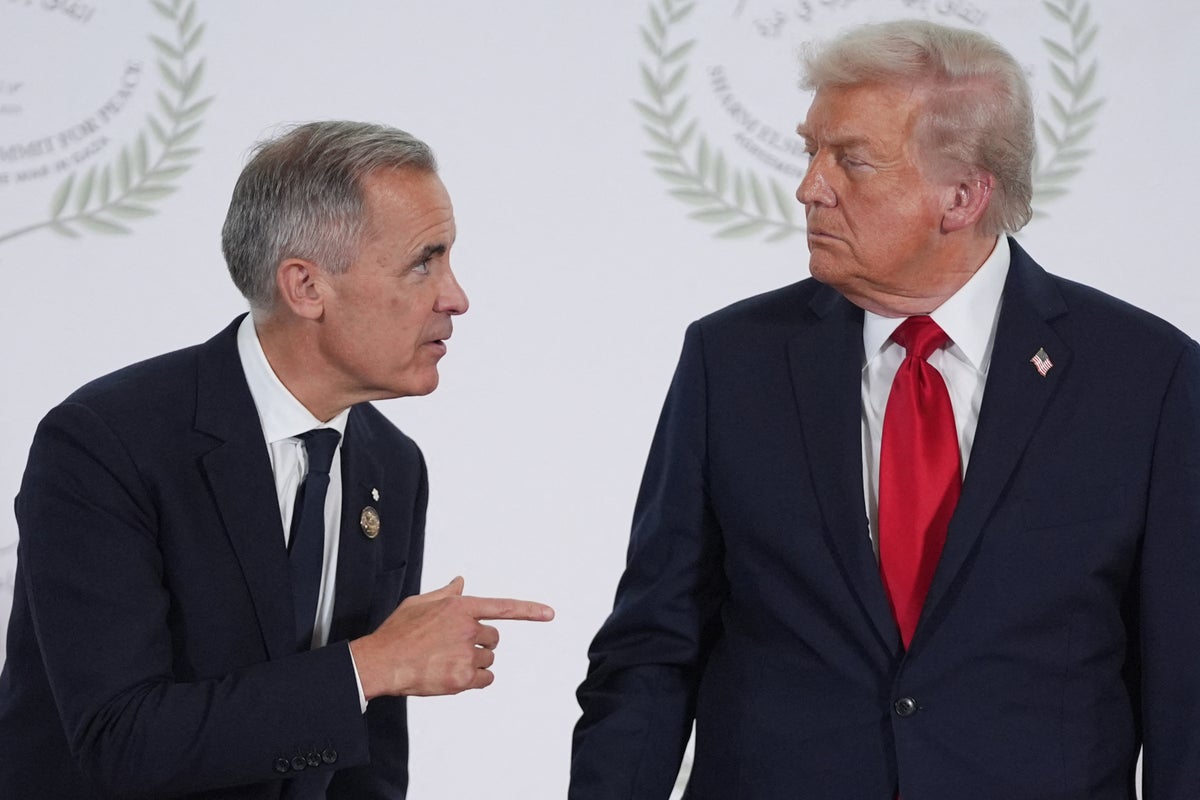
The timing of the decision exposes a deeper, more personal rift between Washington and Ottawa. Colby explicitly tied the suspension to a speech delivered by Canadian Prime Minister Mark Carney at the World Economic Forum in Davos, where Carney criticized a "rupture in the world order." Though Carney did not mention the American president by name, the White House viewed the remarks as an intolerable challenge.
This represents a dangerous shift in how North American defense is managed. Historically, the joint board operated above the political fray, ensuring that vital continental infrastructure projects remained insulated from executive temperaments.
- The DEW Line: The board oversaw the Early Warning radar networks built across the Arctic during the height of Soviet tensions.
- NORAD: It laid the policy groundwork for the shared aerospace command that tracks airborne threats.
- Infrastructure: It managed the dual military-commercial integration of the St. Lawrence Seaway.
By dismantling this channel, the current administration is sacrificing structured, long-term military policy planning to win a short-term public relations battle.
Mutual Destruction in the Arctic
The assumption in Washington appears to be that Canada needs American protection more than the U.S. needs Canadian cooperation. This is a severe miscalculation. The Arctic has become a primary zone of geopolitical competition, with Russia and China rapidly expanding their maritime footprint in northern waters.
The United States cannot effectively defend its northern flank without Canadian territory, Canadian radar installations, and Canadian geography.
North American Defense Spending vs. Strategic Access (2025-2026)
+------------------+-------------------------+-----------------------------------+
| Country          | Defense Spending status | Primary Strategic Value provided  |
+------------------+-------------------------+-----------------------------------+
| United States    | Exceeds 3% of GDP       | Advanced technology, global power |
| Canada           | Met 2% GDP target       | Arctic geography, early warning   |
+------------------+-------------------------+-----------------------------------+
Defense Minister David McGuinty responded to the freeze by noting that Canada remains committed to upgrading its Arctic radar infrastructure and buying under-ice capable submarines. He also noted that Ottawa is fully prepared to look for other trusted partners who are willing to collaborate cleanly. If the Pentagon freezes Canada out of policy planning, it risks pushing its closest neighbor to seek independent defense agreements with European allies, shattering the unified front that has protected the continent for nearly a century.
The Cost of Isolation
The broader implications extend far beyond the border. This move coincides with a wider, systematic drawdown of American security commitments globally. The Pentagon recently canceled scheduled troop deployments to Poland and Germany, reacting to allied critiques regarding American military operations in the Middle East.
Withdrawing from traditional commitments creates immediate intelligence gaps. While Prime Minister Carney publicly downplayed the suspension to prevent domestic panic, seasoned military planners on both sides of the border recognize the danger. Without a formal, active body to align policy, the daily operational efficiency of NORAD faces direct friction.
National security cannot be run like a real estate transaction. When tactical radar data and airspace coordination are treated as chips in a trade dispute, the entire continent becomes vulnerable. Washington has chosen to prioritize defense export sales over structural stability, leaving the northern border exposed to the very geopolitical ruptures it refuses to discuss.