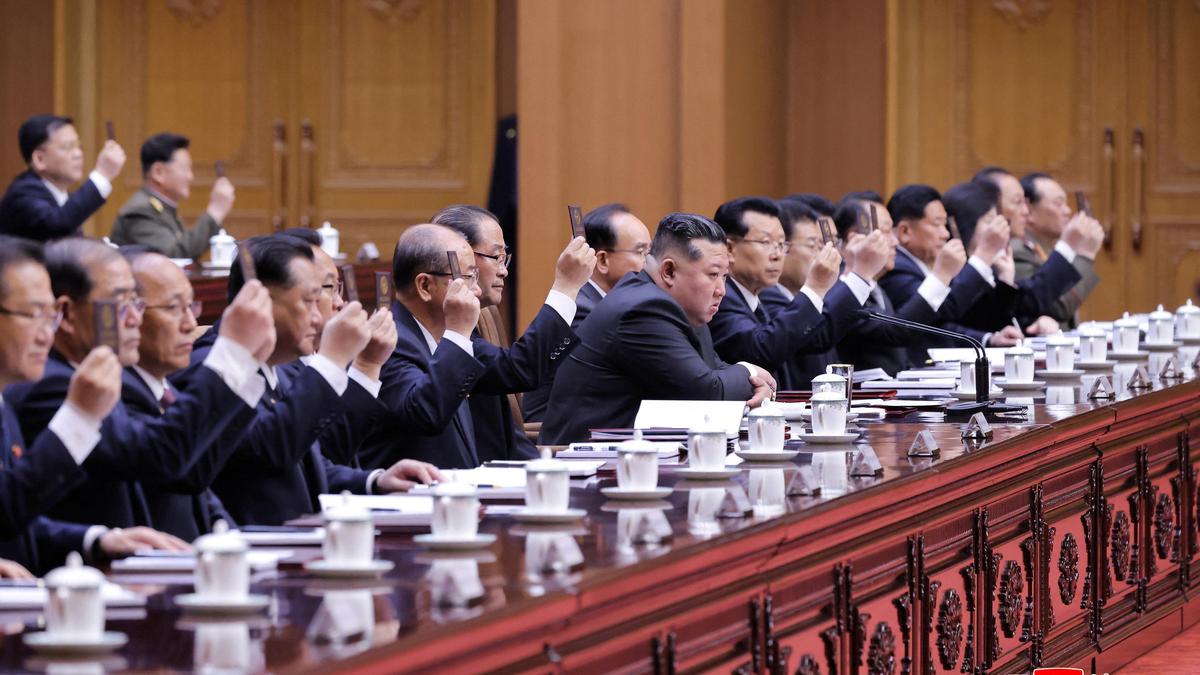
Kim Jong Un just secured his spot again. The Supreme People’s Assembly (SPA) in Pyongyang didn't surprise anyone by reappointing him as the President of the State Affairs Commission. It’s the highest post in North Korea. If you thought this was just another boring bureaucratic rubber-stamp session, you’re missing the bigger picture. This isn't about paperwork. It’s about a massive internal shift in how North Korea wants the world to see its leadership.
For decades, the West viewed North Korea through the lens of the "Eternal President" Kim Il Sung. That’s changing fast. By reclaiming and reinforcing this specific title, Kim Jong Un is effectively burying the old "military-first" era of his father. He’s building a state that looks, at least on the surface, like a normal functioning government. Don't let the suits and the podiums fool you. This is a power play designed to cement his absolute authority while signaling to Washington and Seoul that he’s the only one they can deal with.
The End of the Shadow Government
The re-election of Kim Jong Un as the head of the State Affairs Commission (SAC) isn't just a title change. It’s the final nail in the coffin for the National Defense Commission. That old body was the heart of the "Songun" or military-first policy. By moving power to the SAC, Kim is telling his own generals that the party and the state come before the brass.
You’ve got to understand the internal optics here. In the past, the military held the purse strings and the political clout. Now, Kim has reorganized the entire deck. The SAC is a hybrid body. It handles security, sure, but it also dictates economic policy and foreign affairs. It makes him the head of state in a way that feels more "modern" to the international community, even if the underlying total control remains exactly the same.
Most analysts focus on the nukes. They forget the bureaucracy. But the bureaucracy is how Kim survives. By being reappointed, he’s telling his people that the "New Line" of simultaneous economic development and nuclear force is the only path forward. He isn't just a guerrilla leader or a general. He’s a president. That distinction matters when you're trying to negotiate lifting sanctions with global powers.
Choe Ryong Hae and the New Guard
The SPA didn't just vote for Kim. They shuffled the deck around him. Choe Ryong Hae, often seen as Kim’s right-hand man, was also retained in his high-level positions. This matters because Choe represents the bridge between the old revolutionary guard and Kim’s new technocratic vision.
When you see these names on a list, it’s easy to tune out. Don't. These are the people who manage the day-to-day survival of the regime. The reappointment of the cabinet and the state commission shows a desire for stability. There’s no room for "reformers" in the Western sense, but there is a clear preference for loyalists who can actually run a ministry without getting purged every six months.
What the Title President Really Means
In North Korean politics, words are weapons. For a long time, Kim was referred to as the Chairman. Switching to President is a deliberate callback to his grandfather, Kim Il Sung. It’s a move for legitimacy. He’s trying to wrap himself in the nostalgia of the 1950s and 60s when North Korea’s economy was actually competitive with the South.
- Legitimacy: It connects him to the "Golden Age" of the regime.
- Diplomacy: It puts him on equal footing with leaders like Xi Jinping or Joe Biden.
- Centralization: It strips away the power of competing military factions.
Why the World Keeps Getting North Korea Wrong
We love to talk about "instability" or "imminent collapse." It’s wishful thinking. This reappointment proves the system is remarkably resilient. Kim has successfully navigated a decade of intense sanctions, a global pandemic that shut his borders tighter than ever, and a shifting relationship with China.
He’s still there. He’s still the President.
The biggest mistake we make is assuming these meetings are for show. They are, but the show has an audience of one: the North Korean elite. They need to see that the leader is secure. They need to know the hierarchy is fixed. If there was blood in the water, you wouldn't see a unanimous "re-election" with this much fanfare. You’d see silence.
The Economic Reality Behind the Politics
You can't eat a title. Kim knows this. While the SPA is busy clapping for his reappointment, the country is still struggling with a massive food gap and a lack of energy resources. The state affairs commission is now tasked with "self-reliance." This is the North Korean buzzword for "nobody is coming to help us, so figure it out."
I’ve looked at the trade data coming out of the Chinese border towns like Dandong. It’s messy. Even with the political theater in Pyongyang, the actual movement of goods is a fraction of what it was pre-2020. Kim’s reappointment gives him the political capital to push through painful economic "adjustments" that would normally spark resentment among the elites who lose money when trade shuts down.
Survival is the Only Metric
If you’re looking for signs of North Korea opening up because Kim is now "President," stop. That’s not what this is. This is about hunkering down. By consolidating his role, Kim is preparing for a long-term standoff with the United States. He’s betting that he can outlast the political cycles of Western democracies.
The Nuclear Elephant in the Room
Every time the SPA meets, the world looks for clues about the next missile test. This session was no different. While the official reports focused on "socialist construction," the underlying message was clear: the nuclear program is non-negotiable.
Kim’s reappointment as President of State Affairs means the nuclear button stays on his desk, not the military’s. That’s a crucial distinction. It makes the weapons a tool of the state, not just a tool of the army. It gives him the ultimate leverage in any future "grand bargain." He isn't going to trade his nukes for some food aid. He wants to be recognized as a nuclear-armed state with a legitimate president.
What Happens Next
Watch the border. That’s the real tell. Now that the domestic political house is in order, Kim will likely pivot back to more aggressive diplomacy with Russia and China. He’s already seen how the war in Ukraine has created a "New Cold War" dynamic that he can exploit.
If you want to understand North Korean strategy, stop looking for logic in their rhetoric and start looking at their structure. The reappointment of Kim Jong Un as President of State Affairs is the structural foundation for everything they do in 2026 and beyond. It’s a signal of total domestic confidence.
Check the state media KCNA for updates on the new cabinet’s specific economic directives. The names listed in the lower-tier ministry positions will tell you if they’re prioritizing construction, mining, or cyber-warfare. Those are the sectors where the regime actually makes its money to keep the lights on in Pyongyang. Pay attention to the budget allocations mentioned in the SPA reports; they usually hint at where the next big "prestige project" will be located.