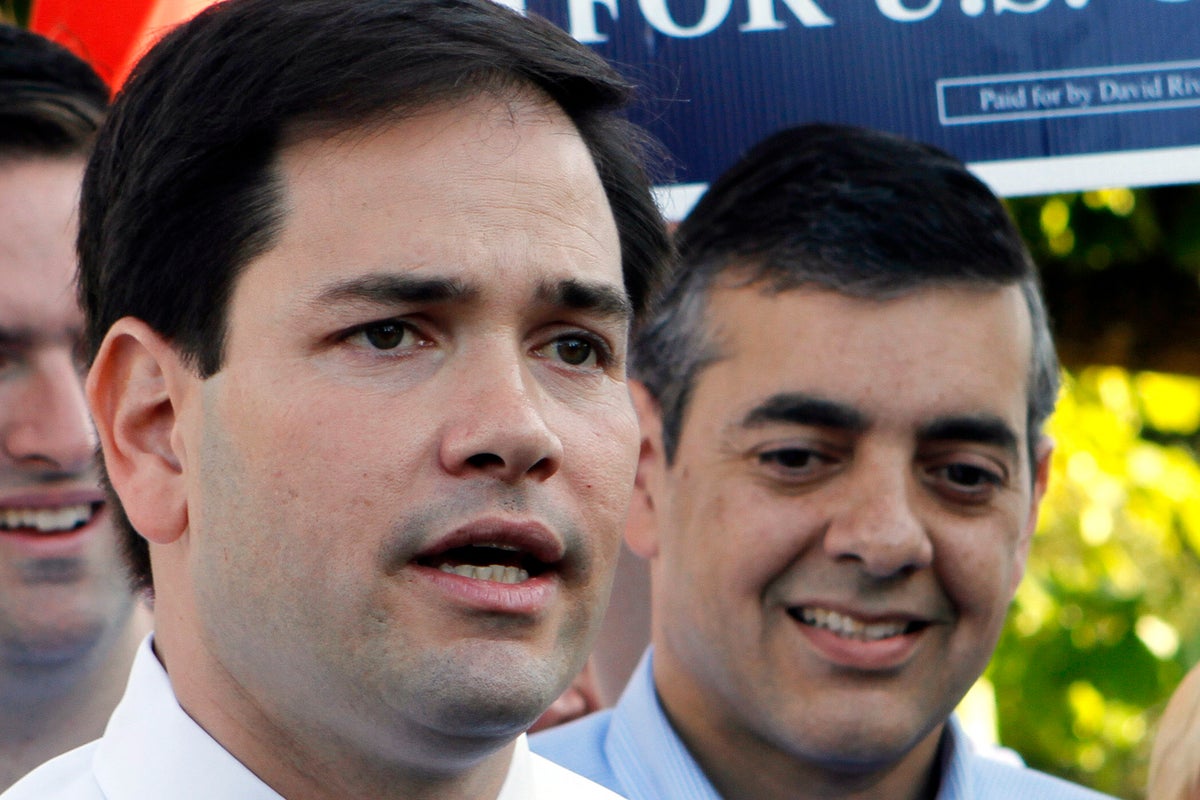
The trial of former Congressman David Rivera regarding his $50 million consulting contract with Venezuela’s state-owned oil subsidiary, PDVSA, serves as a diagnostic case study for the breakdown of the Foreign Agents Registration Act (FARA) and the exploitation of political proximity. While the media focuses on the proximity of high-profile figures like Senator Marco Rubio, a structural analysis reveals a more calculated attempt to arbitrage U.S. foreign policy through shadow channels. The central tension lies in the distinction between legitimate diplomatic backchannels and the criminal failure to disclose representation of a foreign adversary under 22 U.S.C. § 611.
The Architecture of Shadow Lobbying
Foreign influence operations typically operate within a tri-node framework: the Foreign Principal (PDVSA/Maduro Regime), the Intermediary (Rivera/Interamerican Consulting), and the Target (The U.S. State Department and Legislative branches). In this specific instance, the objective was not merely "consulting" but the systematic neutralization of U.S. sanctions during the 2017 transition of power. You might also find this related story interesting: Strategic Asymmetry and the Kinetic Deconstruction of Iranian Integrated Air Defense.
The logic of the engagement relied on Information Asymmetry. Rivera marketed his perceived influence and "access" to key decision-makers—specifically Senator Rubio—as a commodity. For the Maduro regime, the $50 million price tag represented a high-risk, high-reward investment in "sanctions insurance." If Rivera could successfully pivot the U.S. stance toward a "reconciliation" model, the ROI for PDVSA would have reached billions in unfrozen assets and restored market access.
The Triangulation of Senator Marco Rubio
Senator Rubio’s testimony functions as the pivot point for the prosecution’s argument regarding "intent" and "materiality." The defense’s reliance on Rubio’s involvement attempts to frame the operation as a legitimate, State Department-sanctioned diplomatic effort to facilitate a peaceful exit for Maduro. However, the structural reality of the communication suggests a Unilateral Influence Vector rather than a collaborative diplomatic mission. As reported in recent coverage by USA Today, the implications are worth noting.
- The Access Mirage: Rubio’s testimony established that while meetings occurred, the policy output remained unchanged. This creates a divergence between access (the ability to present a case) and influence (the ability to alter a result).
- The Credibility Gap: By failing to register under FARA, the intermediary (Rivera) deprived the target (Rubio) of the critical context required to evaluate the information being presented. In the absence of disclosure, the Senator was operating under the assumption that he was speaking with a former colleague rather than a paid agent of a sanctioned entity.
- The Buffer Mechanism: Rubio’s eventual realization that he was being used as a "prop" for the regime’s legitimacy highlights the inherent danger of "proximity-based" lobbying. The intermediary uses the target’s reputation to validate the foreign principal’s standing.
The Economic Logic of Non-Disclosure
The decision to bypass FARA registration is rarely an administrative oversight; it is a strategic choice governed by the Cost of Transparency. For Rivera and his associates, the costs of registration included:
- Political Devaluation: A registered agent of the Maduro regime loses all "organic" influence. The moment the disclosure is public, the agent’s access to hawkish legislators like Rubio is effectively severed.
- Legal Scrutiny: FARA requires detailed reporting of all activities, meetings, and expenditures. This level of granularity would have exposed the specific mechanisms of the $50 million disbursement, likely triggering immediate Treasury Department (OFAC) interventions.
- Social Capital Depletion: In the ecosystem of Miami-based Venezuelan politics, public association with PDVSA is a terminal event for a political career.
The "Shadow Premium"—the ability to operate without these costs—is what the Maduro regime was actually purchasing. The $50 million was not a fee for services rendered; it was a premium for the secrecy of those services.
The Failure of Internal Controls at PDVSA and CITGO
The case also exposes a catastrophic failure in corporate governance within CITGO’s U.S. operations. The contract was funneled through Interamerican Consulting, a firm with no prior history of large-scale international lobbying or geopolitical strategy.
The Due Diligence Deficit here was intentional. When a subsidiary of a state-owned enterprise (SOE) engages a consultant at a rate vastly exceeding market norms (e.g., $15 million initial payments for nebulous "strategic advice"), it indicates the contract is a vehicle for wealth transfer or sanctioned activities rather than professional services. The lack of Key Performance Indicators (KPIs) in the contract suggests that the "deliverable" was not a report, but a political outcome.
Regulatory Implications and the FARA Crackdown
The Department of Justice has shifted its enforcement posture from a voluntary compliance model to a prosecutorial model. This trial is a benchmark for how the government defines "Agency." To secure a conviction, the prosecution must demonstrate that Rivera acted at the "order, request, or under the direction or control" of a foreign principal.
The defense's argument that they were working toward U.S. interests (a democratic transition) is a common Counter-Narrative Trap. Under FARA, the intent or the benefit to the U.S. is irrelevant. The statute is a transparency law, not a loyalty law. The crime is the concealment of the relationship, regardless of whether the lobbying was "pro-American" or "anti-American."
Quantifying the Geopolitical Damage
The "Rivera-Maduro" pipeline created a friction point in U.S. foreign policy by:
- Diluting Sanctions Efficacy: By creating a perceived "backdoor" for negotiations, the regime was emboldened to stall on democratic reforms, believing a shortcut through U.S. domestic politics was available.
- Compromising Intelligence Integrity: When unregistered agents facilitate meetings between officials and foreign actors, they bypass the vetted channels used by the State Department and the Intelligence Community. This introduces "noise" into the system, making it harder to discern the regime's actual strategic intentions.
- Eroding Institutional Trust: The involvement of a former Congressman and the name-dropping of a sitting Senator undermines the public’s confidence in the neutrality of foreign policy formulation.
The Strategy of Plausible Deniability
The defense’s strategy relies on the concept of Diplomatic Freelancing. By claiming they were acting as "unofficial envoys" to help the U.S. government, they attempt to reclassify criminal non-disclosure as patriotic initiative. This logic is flawed because "unofficial" status does not grant immunity from registration requirements. If money changes hands from a foreign principal to an agent for the purpose of influencing U.S. policy or public opinion, the FARA trigger is absolute.
The prosecution's evidence—including encrypted messages and the flow of funds through offshore accounts—suggests a level of tradecraft inconsistent with "patriotic freelancing." The use of $3.75 million for "unspecified expenses" further indicates a breach of the Financial Transparency Standard required of anyone interacting with sanctioned foreign entities.
The ultimate takeaway from the testimony and the surrounding evidence is that the U.S. political system remains vulnerable to "Access Arbitrage." Former officials can monetize their previous roles by selling the appearance of influence to foreign adversaries who are desperate for a foothold in Washington. The only structural defense against this is the aggressive application of FARA, treating non-disclosure not as a clerical error, but as a fundamental threat to the integrity of the sovereign policy-making process.
The legal system must now determine if the "consulting" was a legitimate service or a $50 million operation to buy a piece of American foreign policy. Regardless of the verdict, the case has already provided a blueprint of the vulnerabilities that foreign actors seek to exploit. Organizations and individuals engaging in cross-border advisory work must prioritize a "Disclosure-First" protocol to mitigate the risk of being ensnared in similar influence-peddling investigations.
Establish a mandatory, centralized "Interaction Log" for all high-level political consultants that triggers an automatic internal compliance review whenever a contract involves a state-owned enterprise from a country on the OFAC Sanctions list. This proactive audit should occur prior to any outreach to U.S. officials, ensuring that the legal definition of "Agency" is addressed before "Access" is initiated.