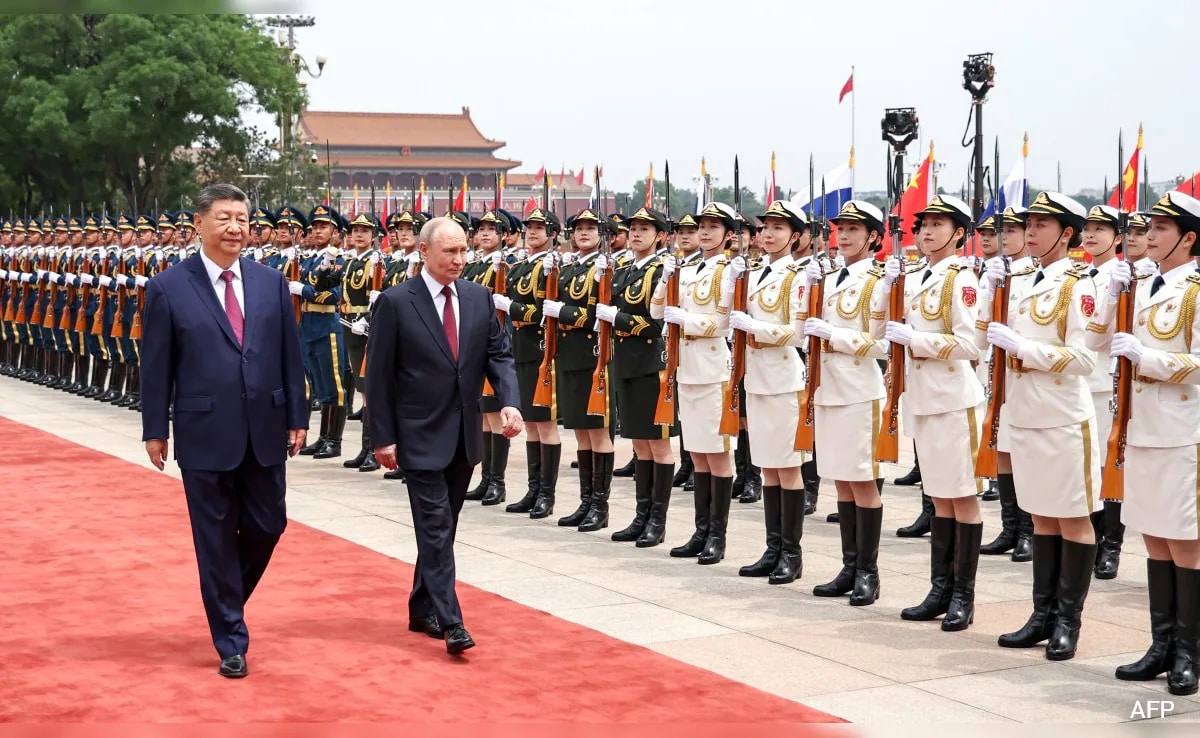
Mainstream geopolitical analysis has fallen into a lazy trap. Every time Vladimir Putin and Xi Jinping shake hands in Beijing, the Western press corps suffers a collective panic attack. The narrative is always identical. We are told a monolithic, unbreakable autocratic bloc is forming, solidified further by recent American diplomatic maneuvers and shifting administrations.
This view is completely wrong.
The media looks at the pomp, the joint statements, and the choreographed smiles, mistaking theater for structural alignment. In reality, the relationship between Moscow and Beijing is not an "unyielding axis." It is a highly transactional, deeply asymmetrical, and fundamentally fragile marriage of convenience. By treating this partnership as a permanent monolith, Western analysts misread the vulnerabilities embedded in Eurasian politics.
The Illusion of Asymmetry
The core mistake of current commentary is the assumption of mutual strength. It treats Russia and China as equal partners pooling resources against a common adversary.
They are not equals.
Russia has increasingly slipped into the role of a junior partner, a resource vassal providing discounted energy to fuel China’s industrial machine. For Beijing, Russia is a strategic buffer and a cheap gas station, nothing more. Xi Jinping is a cold calculator of national interest, and China’s economic survival remains deeply intertwined with the very Western markets Russia is entirely cut off from.
Consider the hard numbers of trade infrastructure. While Moscow boasts about pivoting its energy exports eastward, Beijing routinely stalls on major infrastructure projects like the Power of Siberia 2 pipeline. Why? Because China holds all the leverage. Beijing refuses to subsidize the construction costs and demands price parity with heavily subsidized domestic Russian rates.
Beijing is not acting out of ideological solidarity. It is exploiting a desperate neighbor.
Dismantling the Shared Ideology Narrative
Commentators frequently ask: "How will the West counter the shared ideological vision of Russia and China?"
The premise of the question is flawed. There is no shared ideological vision.
Russia’s current geopolitical stance is driven by a revanchist desire to upend the international order and reclaim lost imperial spheres of influence. It operates on a philosophy of disruption.
China, conversely, is a status-quo superpower. Beijing does not want to destroy the global financial and trading systems; it wants to dominate them. China’s rise was entirely enabled by global stability, maritime trade routes protected by international law, and access to Western consumers. When Russia disrupts global supply chains, spikes food prices, or threatens nuclear escalation, it directly undermines the predictable economic environment that China requires to maintain domestic stability.
This is a structural friction point that no amount of diplomatic pageantry can erase.
The Central Asian Powder Keg
To understand where this relationship inevitably fractures, stop looking at Beijing and look at Central Asia.
For decades, an implicit division of labor existed in republics like Kazakhstan, Uzbekistan, and Kyrgyzstan. Russia acted as the security guarantor through the Collective Security Treaty Organization (CSTO), while China functioned as the economic engine via the Belt and Road Initiative.
That equilibrium is gone.
- Economic Displacement: Chinese investment now completely dwarfs Russian capital in Central Asia, shifting the region's infrastructure orientation away from Moscow.
- Security Encroachment: Beijing is increasingly establishing its own security footprints, private military presences, and bilateral defense agreements in nations Russia considers its exclusive backyard.
- Sovereignty Shifts: Central Asian states are actively leveraging China to assert independence from Moscow, knowing that Russia cannot afford to anger Beijing by pushing back.
I have tracked regional integration dynamics for years. When a dominant power begins encroaching on the historical security sphere of a proud, militarized neighbor, the result is never long-term harmony. It is a quiet, simmering resentment.
The Western Sanctions Trap
The consensus view argues that Western sanctions have permanently pushed Russia into China’s arms, creating an insulated financial ecosystem.
The data tells a completely different story.
When the United States threatened secondary sanctions on foreign financial institutions dealing with Russia's military-industrial base, Chinese banks did not double down on solidarity. Instead, major Chinese financial institutions—including the Industrial and Commercial Bank of China and Chouzhou Commercial Bank—immediately halted or severely restricted Russian yuan-denominated payments.
"When forced to choose between access to the $28 trillion US economy and a isolated Russian market representing less than 3% of global GDP, Chinese banks choose Washington every single time."
Beijing’s compliance with Western financial restrictions proves that its partnership with Moscow stops exactly where Chinese economic self-interest begins.
The Wrong Question About Deterrence
Foreign policy circles are obsessed with asking: "How can Western diplomacy break up the Russia-China axis?"
This is the entirely wrong objective. The West does not need to break them up. The West needs to stop overreacting to their rhetoric, which only inflates their perceived leverage.
Trying to actively drive a wedge between Moscow and Beijing through diplomatic concessions is a failed strategy that underestimates the immediate tactical utility they offer each other. A superior approach recognizes the partnership's natural limits.
Instead of treating Russia and China as a singular threat, policy must address them as distinct challenges with conflicting long-term goals. Forcing China to continually choose between backing an erratic Russian state and maintaining its access to global markets exposes the cracks in their alignment far better than any Western diplomatic grandstanding.
Stop reading the communiqués. Watch the banks, watch the pipeline negotiations, and watch the borders in Central Asia. The unyielding axis is a facade. Treat it like one.