History is often treated like a museum exhibit, something to be glanced at behind glass but rarely touched. However, the 1973 oil crisis is not a relic. It is a blueprint. When the Organization of Arab Petroleum Exporting Countries (OAPEC) turned off the taps in October 1973, they didn't just cause a spike in gasoline prices. They shattered the post-war illusion that infinite growth was a birthright of the West. If we look at the current volatility in global energy markets, it becomes clear that we haven't learned the most painful lesson of that decade. Dependency is a choice, and it is a dangerous one.
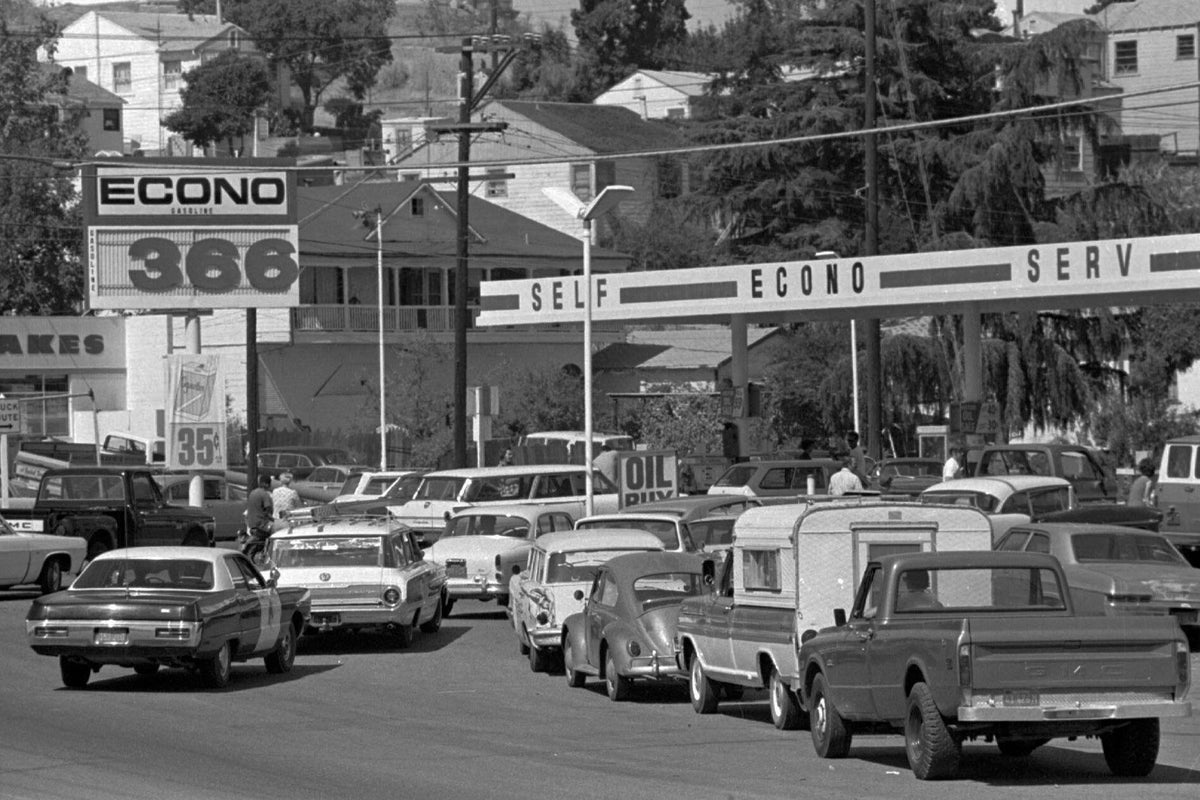
The primary takeaway from the 1970s is that energy is the ultimate geopolitical lever. In 1973, the embargo was a direct response to American support for Israel during the Yom Kippur War. Within months, the price of a barrel of oil quadrupled. This wasn't a market correction; it was a structural collapse. The immediate results—bread lines for gasoline, the lowering of highway speed limits, and the sudden, panicked birth of the subcompact car industry—were symptoms of a deeper rot. We had built an entire civilization on the assumption that a critical resource would always be cheap, plentiful, and provided by people who liked us. We were wrong on all three counts.
The Myth of the Quick Fix
Governments love a spectacle of action. In the wake of the 1973 shock, the United States established the Strategic Petroleum Reserve (SPR) and created the Department of Energy. These were defensive crouches. They were designed to buffer the blow of the next punch, not to prevent the fight. The SPR is a finite bucket. It provides a sense of security that is largely psychological during a sustained supply disruption.
The real failure of the post-1970s era was the refusal to commit to a total decoupling of economic growth from carbon-based energy. Instead, we hunted for "safer" oil. We looked to the North Sea, the Gulf of Mexico, and eventually the shale fields of the Permian Basin. This shifted the geography of the problem but kept the math exactly the same. As long as the global economy requires a constant, increasing flow of a single commodity to function, any interruption in that flow acts as a cardiac arrest for industry.
We see this today in the frantic scramble for liquefied natural gas (LNG) and the desperate reopening of coal plants in Europe. The players have changed, but the desperation remains identical. We are still reacting to the whims of autocrats because we failed to build an architecture of genuine autonomy.
The Efficiency Trap
One of the more subtle tragedies of the 1970s was the "efficiency" movement. On the surface, it worked. Cars got more miles to the gallon. Appliances used less electricity. Industrial processes became leaner. But Jevons Paradox—a principle from 19th-century economics—tells us that as a resource becomes more efficient to use, we don't use less of it. We use more.
Because we made energy use more efficient, we felt empowered to expand the scale of our consumption. We built bigger houses farther from city centers because the cars were more efficient. We filled those houses with more gadgets because the power was relatively cheaper. The 1970s taught us how to be frugal for a moment, but it didn't teach us how to be resilient. Resilience requires redundancy. It requires a system that can take a hit and keep moving. Our current "just-in-time" energy delivery systems are the opposite of resilient. They are brittle.
The Architecture of Vulnerability
The 1973 crisis was a supply shock. The 1979 crisis, triggered by the Iranian Revolution, was a price shock. Together, they created "stagflation," a miserable cocktail of stagnant economic growth and high inflation that economists previously thought was impossible.
The mechanism was simple. Energy is the "master resource." When the cost of moving a truck, heating a factory, or refining chemicals rises, those costs don't stay at the pump. They migrate into the price of milk, the cost of a mortgage, and the price of a winter coat. Central banks in the 1970s tried to print their way out of the problem, which only fueled the fire.
The lesson we refuse to acknowledge is that you cannot solve a physical supply problem with monetary policy. You can raise interest rates until the economy screams—as Paul Volcker eventually did—but that doesn't put more oil in the pipes. It only suppresses demand by making people poorer. This is the brutal truth of energy-driven inflation. It is a tax on existence that no government can truly offset.
The Overlooked Role of Logistics
While everyone focuses on the oil tankers, the real bottleneck in the 1970s—and now—is the infrastructure of distribution. In the 70s, we realized our refineries were geared for specific types of crude. Today, we realize our grids are geared for steady, predictable loads from coal and gas.
When we talk about "learning from the 70s," we usually talk about energy independence. That is a fantasy. In a globalized market, no one is independent. If the price of oil spikes in Dubai, it spikes in Texas, regardless of how much we pump domestically. The real goal should be energy insulation.
Insulation means building a system where the domestic economy is decoupled from the global commodity price. This isn't just about "going green." It's about national security. It’s about ensuring that a conflict 5,000 miles away doesn't decide whether a family in Ohio can afford to heat their home.
The Nuclear Abandonment
If you want to find the exact moment we failed to learn from the 1970s, look at the late 1970s. Following the 1973 crisis, there was a massive surge in nuclear power interest. It was the only technology capable of providing the scale of energy needed to replace oil and coal for base-load power. Then came Three Mile Island in 1979.
The fear that followed wasn't just about safety; it was a failure of nerve. We abandoned the one path that would have fundamentally changed our leverage in the 21st century. By stalling the nuclear industry, we ensured that the global economy would remain tethered to the carbon-cycle and the geopolitical instability that comes with it. We traded a manageable risk for a certain catastrophe.
The New Embargoes
Today's energy crisis isn't just about oil. It is about the minerals required for the next generation of energy: lithium, cobalt, copper, and rare earth elements. We are repeating the exact same mistakes of the 1960s. We are allowing the supply chains for these critical materials to be monopolized by a handful of nations, some of whom do not share our strategic interests.
We are sleepwalking into a "Green OAPEC." If a single nation controls 80% of the processing for battery-grade minerals, they don't need to turn off an oil valve to bring our economy to a halt. They just need to restrict the export of refined lithium. The 1970s taught us that being a customer is a position of weakness when the seller has no competition. We are currently building a future where we are once again the vulnerable customer.
The Strategy of Discomfort
The only way to actually apply the lessons of the 70s is to accept a period of intense discomfort. We have to overbuild. We have to create massive redundancies in our energy production that the "market" would normally deem inefficient. We need a surplus of energy that isn't tied to the global spot price.
This means a massive reinvestment in nuclear, a radical decentralization of the power grid, and an aggressive, state-led effort to secure and process raw materials domestically or through iron-clad alliances. It means stopping the pursuit of the "cheapest" energy and starting the pursuit of the most "secure" energy.
The 1970s ended with a return to normalcy, but it was a false normalcy. We went back to our old habits as soon as the prices dropped in the 1980s. We mistook a temporary reprieve for a permanent solution.
If we don't break the cycle now, the next energy shock won't just result in long lines at the gas station. It will result in the permanent decline of the industrial West. The warning signs have been flashing red for fifty years. It is time to stop looking at the light and start fixing the engine.
Stop treating energy policy like an environmental debate and start treating it like a mobilization for war. Build the reactors, secure the mines, and harden the grid.