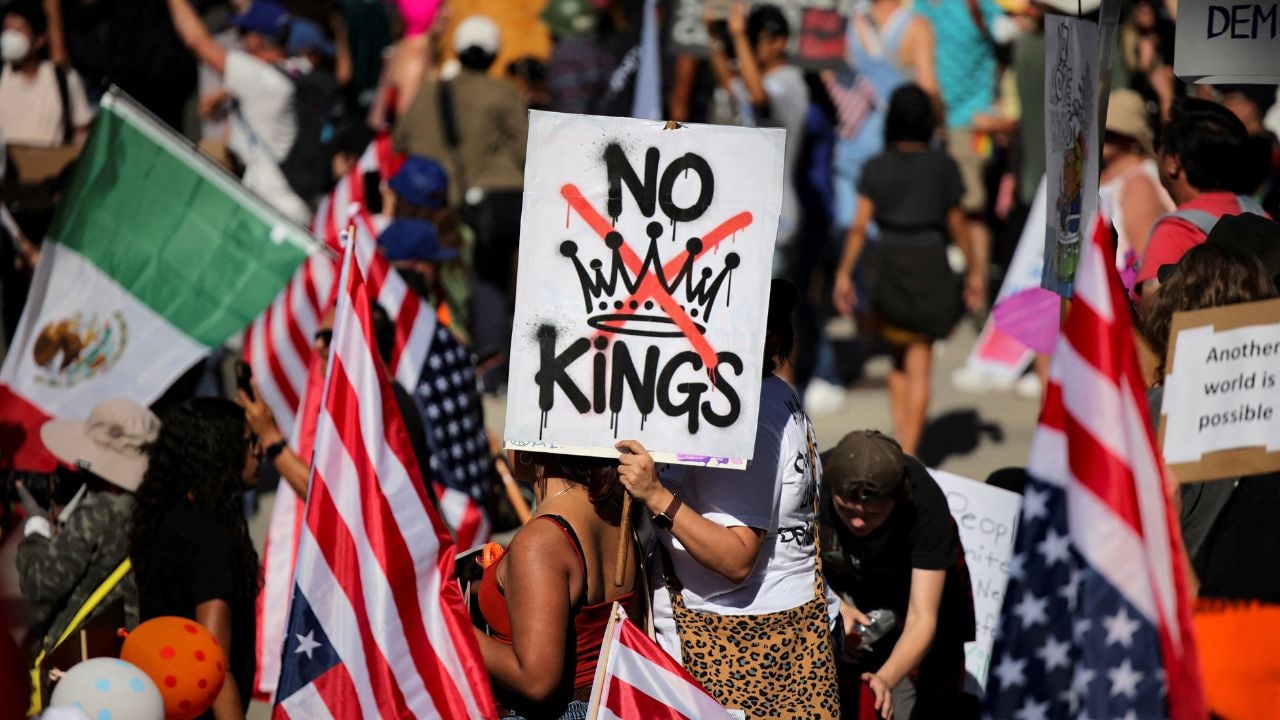
The "No Kings" movement is no longer just a coastal phenomenon of pink hats and urban shouting. On Saturday, March 28, 2026, an estimated nine million people took to the streets across more than 3,200 locations, effectively staging the largest single-day protest in American history. While the cameras naturally gravitated toward the star-studded stage in St. Paul—where Bruce Springsteen debuted "Streets of Minneapolis" alongside Bernie Sanders and Jane Fonda—the real story was unfolding in the parking lots of Boise, Idaho, and the town squares of Lebanon, Pennsylvania. For the first time in the second Trump term, the resistance has successfully breached the suburbs and rural strongholds that were once considered the bedrock of the administration’s support.
Organizers from Indivisible and the 50501 movement report that two-thirds of the RSVPs for this third "No Kings" day of action originated from outside major metropolitan centers. This is a 40% jump in rural and suburban participation since the movement’s inception in June 2025. This isn't just about "Trump Derangement Syndrome," as White House spokeswoman Abigail Jackson claimed this morning. It is a visceral response to a compounding domestic and foreign policy crisis that has left the American middle class feeling economically strangled and morally exhausted. You might also find this similar article interesting: Strategic Asymmetry and the Kinetic Deconstruction of Iranian Integrated Air Defense.
The Triggering Deaths in the Twin Cities
To understand why St. Paul became the flagship site for this massive mobilization, one must look back at the winter of 2026. The surge of Immigration and Customs Enforcement (ICE) operations under "Operation Metro Surge" led to a series of high-profile shootings by federal agents. The killings of Renée Good, Keith Porter, and Alex Pretti—ordinary citizens who were reportedly monitoring ICE activities—transformed a policy debate into a local tragedy.
When federal agents began operating with what many perceived as "monarchical" immunity in Democratic-led urban centers, the "No Kings" moniker stopped being a metaphorical jab. It became a literal description of the executive overreach many believe has bypassed the judicial and legislative branches entirely. The resulting general strike in Minnesota on January 23 was the dress rehearsal for today’s national eruption. As reported in latest coverage by Reuters, the effects are notable.
A War Without a Map
While immigration sparked the fire, the 2026 Iran War provided the oxygen. Protesters in Midland, Texas, and Scottsdale, Arizona, were seen carrying signs that read "No Kings, No War." The administration's decision to launch a conflict alongside Israel with ever-shifting timelines and objectives has alienated a significant segment of the veteran community. Marc McCaughey, a 36-year-old veteran who joined the Atlanta rally, noted that the feeling among many former service members is one of betrayal. "The Constitution is under threat in a multitude of different ways," he said. "Things aren't normal."
The economic fallout of the conflict is also hitting the kitchen table. Gas and food prices have spiked as the administration dubbed the Strait of Hormuz the "Strait of Trump," asserting a level of control over global energy lanes that has yet to stabilize the market. For voters in the bellwether counties of Bucks and Delaware in Pennsylvania, the protest is as much about the price of a gallon of milk as it is about the preservation of democratic norms.
The 3.5 Percent Rule in Action
The 50501 movement, a core organizer of these rallies, has been operating under the "3.5% rule." This political science theory suggests that no government can withstand a challenge by 3.5% of its population without either accommodating the movement or collapsing. With nine million people participating, the No Kings movement is rapidly approaching that threshold.
Unlike the disorganized protests of the past decade, this coalition is remarkably disciplined. Organizers have undergone extensive de-escalation training to avoid the "Antifa" labeling that the administration has used to prosecute activists in Texas. By prohibiting weapons—including legally permitted ones—and adopting yellow as a universal color of unity, the movement has made it harder for the Department of Justice to paint these gatherings as "terrorist" cells.
Turning Rallies Into Registration
The true test for the No Kings movement lies in whether it can translate street energy into the upcoming midterm elections. In states like Wyoming, Montana, and Utah—deeply Republican territories—there has been a surge in local organizing committees. Leah Greenberg, co-founder of Indivisible, argued that the defining story of this Saturday is not the headcount, but the location. The people doing the door-knocking and the voter registration in Scottsdale and Chandler are the same people who were holding signs on street corners today.
The administration’s strategy of dismissal may be reaching its expiration date. While the White House continues to categorize these events as "therapy sessions" funded by "leftist networks," the sheer geographic diversity of the participants suggests a broader base of discontent. From the "No Tyrants" marches in London and Rome to the "No Kings" rallies in the American heartland, the message is uniform: the rejection of a presidency that functions as a regime.
The day ended not with a victory lap, but with a warning. Organizers have made it clear that "No Kings Day" is an organizing catalyst, not a finale. As the sun sets on the crowds in St. Paul and the banners are folded in Dallas, the infrastructure of this rebellion remains. It is an infrastructure built on the belief that power in America does not belong to a single man, but to the people who are currently standing in the cold, waiting for a change that the ballot box has yet to deliver.
Would you like me to analyze the specific economic impact of the 2026 gas price spikes on the upcoming midterm battleground states?