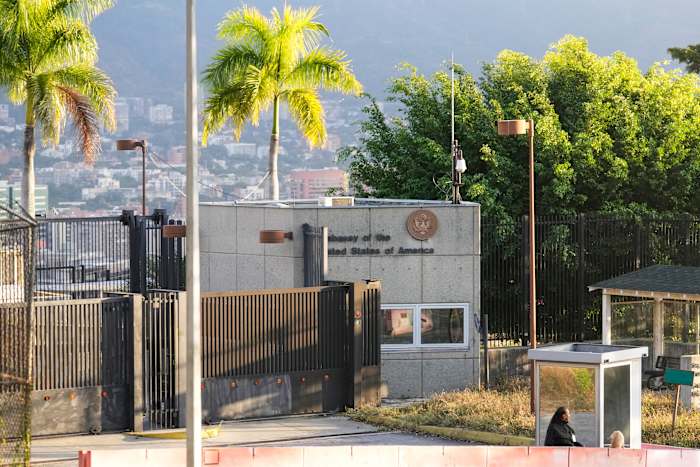
Washington is finally sending diplomats back to Caracas. It’s a move that feels surreal if you’ve followed the chaos of the last few years. After a high-stakes military intervention aimed at toppling Nicolás Maduro, the American flag is flying again in the Venezuelan capital. But don't mistake this for a simple return to normalcy. It’s a messy, pragmatic pivot that proves even the most aggressive foreign policy eventually hits the wall of reality.
The US reopens embassy in Venezuela months after military operation to remove Maduro with a clear mission. It isn't about endorsing the regime. It’s about managing the wreckage. For years, the policy was "maximum pressure." We saw sanctions, recognition of parallel governments, and eventually, the kinetic force of a military strike. None of it produced the clean democratic transition the State Department promised. Now, the diplomats are moving back into their offices to handle the fallout of a country that’s broken but still standing.
Why the Military Option Failed to Finish the Job
You can't just kick down the door of a sovereign nation and expect a functioning democracy to pop up the next day. The military operation against the Maduro administration was swift. It dismantled key command structures and forced a temporary retreat of the ruling elite. But the "day after" plan was a ghost.
Maduro’s inner circle proved more resilient than the intelligence reports suggested. They retreated to the interior, leaned on their remaining international allies, and waited for the American public's appetite for a long-term occupation to sour. It did. Fast. The US realized that holding territory in a hostile, hyper-inflationary environment was a logistical nightmare.
The decision to reopen the embassy is a quiet admission. It’s an acknowledgment that you can't influence a country if you aren't physically there. We spent months shouting from the sidelines in Bogotá or Miami. It didn't work. Being back on the ground in Caracas gives the US eyes and ears it hasn't had in years. It’s about intelligence, not just diplomacy.
Managing the Migrant Crisis from the Inside
The biggest driver for this reopening isn't oil. It’s people. The humanitarian situation in Venezuela hasn't magically fixed itself because a few missiles hit their targets. If anything, the post-operation instability made the migration crisis worse.
By reopening the consulate, the US can finally start processing visas and managing the flow of people at the source. It’s a cold, calculated move to secure the US southern border by stabilizing the situation in South America. You can't tell people to stay home if there's no official channel for them to even talk to your government.
Expect the embassy to focus heavily on:
- Establishing direct lines with local NGOs that were sidelined during the conflict.
- Coordinating food and medical aid without it being diverted by the remaining paramilitary groups.
- Tracking the influence of external players like Russia and China who rushed into the vacuum left by the initial US withdrawal.
The Oil Factor is Still the Elephant in the Room
Let's be honest. Money talks. Venezuela sits on the world’s largest proven oil reserves. During the "maximum pressure" era, we tried to starve the regime by cutting off their ability to sell crude. It hurt the people, but it didn't kill the government.
Now that the US is back in the building, the conversation shifts to energy security. With global markets in a constant state of flux, having a foot in the door of the Venezuelan oil industry is a strategic necessity. US energy giants have been itching to get back into the Orinoco Belt to repair the crumbling infrastructure. You need a functioning embassy to protect those corporate interests and ensure that if the oil starts flowing north again, the contracts are worth more than the paper they're printed on.
Navigating the Diplomatic Minefield
Reopening the doors doesn't mean the sanctions are gone. Far from it. This is a "dual-track" strategy. The State Department is keeping the thumb-screws tight on Maduro’s top brass while simultaneously offering a seat at the table for negotiations.
It’s a tightrope walk. If the US looks too friendly, it alienates the hardline opposition that risked everything during the military operation. If it stays too aggressive, the embassy becomes a target for the remaining "colectivos"—the armed pro-government groups that still control many neighborhoods.
The security detail at the newly reopened compound is likely one of the largest in the world. This isn't your typical diplomatic post. It’s a fortress. The diplomats working there aren't just filing reports; they're operating in a gray zone where the lines between war and peace are blurred.
What This Means for Regional Stability
The rest of Latin America is watching this very closely. For years, countries like Colombia, Brazil, and Peru bore the brunt of the Venezuelan collapse. They've been begging for a consistent US policy. The flip-flopping from "we’re going to invade" to "we’re opening a consulate" has left regional leaders dizzy.
By re-establishing a physical presence, the US is signaling to its neighbors that it’s committed to a long-term solution. It’s a move away from the "cowboy diplomacy" of the recent past toward something that looks more like traditional statecraft. It might not be as exciting as a military raid, but it’s a hell of a lot more sustainable.
If you’re watching this play out, don't look for a grand signing ceremony or a "mission accomplished" banner. Look for the small stuff. Watch the visa wait times. Track the number of cargo planes landing at Maiquetía airport with aid. Monitor the quiet meetings between mid-level US officials and Venezuelan technocrats. That’s where the real work is happening.
The US is back in Caracas because it has to be. The military operation proved that you can change a regime, but you can't force a recovery from 2,000 miles away. Now comes the hard part: rebuilding a relationship from the ashes of a conflict that probably could have been avoided with better diplomacy in the first place.
If you want to keep up with the specific shifts in visa policy or travel advisories, check the official State Department updates frequently. The rules are changing by the week as the ground reality evolves. Stay skeptical of the headlines claiming "peace has returned." It’s not peace. It’s a very tense, very expensive truce.