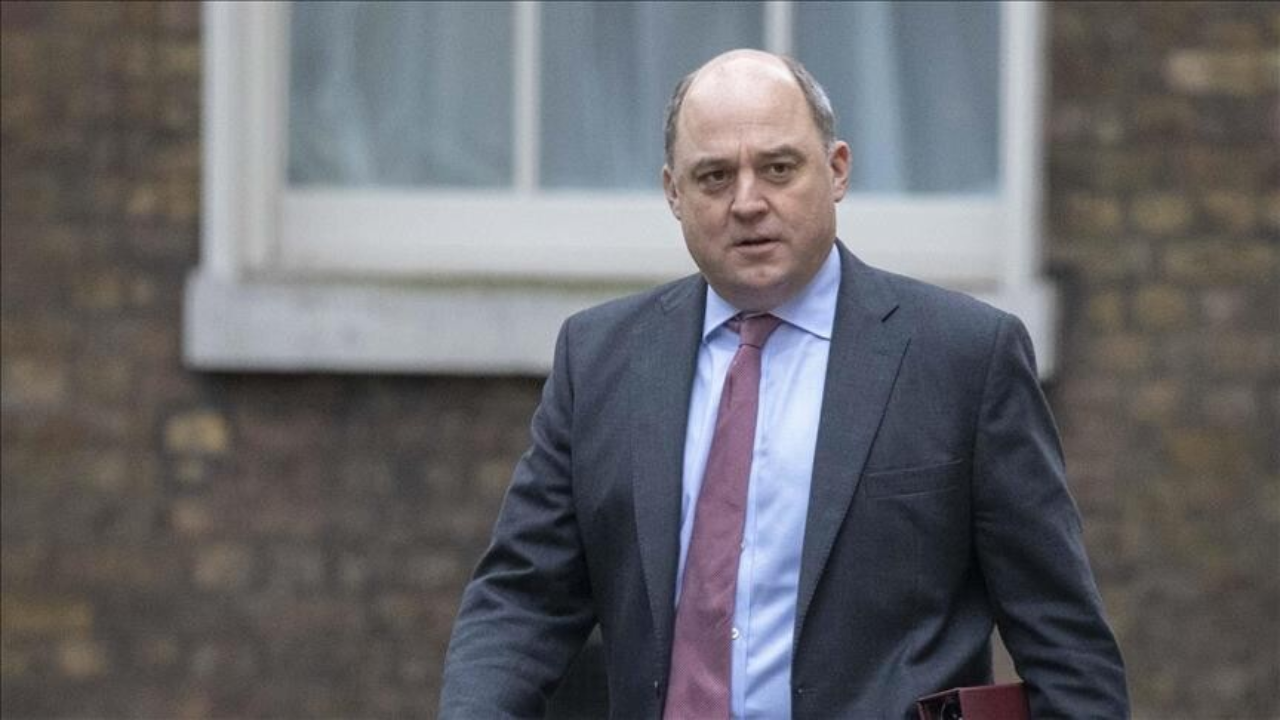
Moscow just handed Ben Wallace the best career pivot money can’t buy.
The Kremlin’s decision to put the former British Defence Secretary on a "wanted list" is being treated by the legacy media as a diplomatic escalation or a terrifying omen of shadow warfare. That is a fundamental misreading of how the new geopolitical economy functions. Meanwhile, you can find other developments here: The Taiwan Arms Sales Illusion Why Breaking Decade Old Policy Is The Only Realistic Path To Peace.
This isn't a threat. It’s a certificate of efficacy.
In the grey zone of modern conflict, your value is measured by the caliber of your enemies. By labeling Wallace a criminal, Russia has effectively validated every pound of British taxpayer money spent on NLAWs and Storm Shadow missiles during his tenure. If you aren't on a list in the 2020s, you aren't doing your job. To understand the full picture, we recommend the detailed article by TIME.
The Branding of the Wanted List
The "wanted list" is the ultimate contrarian indicator. When the Russian Interior Ministry adds a Western official to its database, it isn't expecting a knock on the door from Interpol. It’s performing for a domestic audience while inadvertently providing a high-octane endorsement for the target’s strategic legacy.
Standard reporting focuses on the "legal" implications. Let’s be real: Ben Wallace was never planning a summer getaway to Sochi. The legal reach of the Kremlin stops at the borders of its dwindling sphere of influence. For a man moving into the private sector and the international speaking circuit, this "wanted" status is a gold-standard verification of his impact on the battlefield.
Most analysts miss the secondary market here. In the corridors of power in Washington, Warsaw, and Tallinn, being "Wanted by Moscow" is better than a peerage. It’s a signal to the defense industry and global security apparatus that you didn’t just talk; you delivered.
The Failure of the "Escalation" Narrative
The consensus says this is an escalation. The reality? It’s a sign of exhaustion.
When a superpower—or a nation LARPing as one—resorts to administrative paperwork against foreign ministers who are no longer even in office, it signals a lack of kinetic or meaningful economic levers. It’s the diplomatic equivalent of shaking a fist at a cloud.
I’ve watched defense departments panic over "escalation" for decades. They worry that every move triggers a Russian response. This is the "sunk cost fallacy" of diplomacy. The escalation happened when the first tank crossed the border in February 2022. Everything since then—including these lists—is just atmospheric noise.
The real danger isn't being on the list; the danger is the Western impulse to "de-escalate" in response to it. If the UK government treats this as a serious legal hurdle rather than a point of pride, they concede the psychological high ground to a regime that uses law as a weapon of theater.
The Professionalization of Political Risk
Wallace isn't alone. From Kaja Kallas to various ICC judges, the list is growing. We are witnessing the birth of a bifurcated global legal system.
- The Rule of Law Bloc: Where evidence, due process, and cross-border cooperation actually function.
- The Narrative Bloc: Where legal systems are used to punish historical grievances and project "strength."
For an industry insider, the takeaway is clear: stop looking at these designations as barriers to entry. They are market differentiators. If you are a CEO or a public servant operating in the defense space, and Russia doesn't hate you, your shareholders should be asking why.
Why the "Wanted" Tag is a Strategic Asset
- Political Shielding: It becomes nearly impossible for domestic critics to paint Wallace as "soft" on security when an adversary wants him in handcuffs.
- Consulting Alpha: In the private equity world, "Battle-tested" is a cliche. "Sanctioned and Wanted" is a USP (Unique Selling Proposition).
- Allied Trust: It cements the UK's position as the most aggressive supporter of Ukraine, effectively shaming more hesitant European partners into maintaining their own support levels.
The Intelligence Gap
The media obsesses over the "who" and the "what." They ignore the "why now."
Adding Wallace now—months after he left the Ministry of Defence—is a delayed reaction to the supply of long-range precision weaponry. It’s an admission that the UK’s "first-mover" advantage in sending lethal aid fundamentally shifted the calculus of the war.
If the Kremlin truly believed Wallace was a spent force, they wouldn't waste the ink. They are tracking the influence he still holds within NATO circles. They are trying to pre-emptively delegitimize his potential future roles in international organizations.
It won't work. It’s actually doing his PR team’s job for them.
Stop Asking if it’s Dangerous
People keep asking: "Is Ben Wallace safe?"
It’s the wrong question. In the age of Novichok and GRU hit squads, safety was never a guarantee for anyone opposing the Kremlin. The wanted list doesn't change the physical threat profile; it only changes the formal status.
The right question is: "Why aren't more Western leaders on this list?"
The lack of names from certain other European capitals is an indictment of their passivity. If the "wanted list" is a map of who has actually hindered Russian territorial ambitions, the current list is far too short.
The Institutional Cowardice of Diplomacy
The Foreign Office will likely issue a sternly worded statement. They’ll talk about "unacceptable behavior" and "disregard for international norms."
This is a waste of breath.
The only logical response to a rival putting your former officials on a wanted list is to accelerate the very policies that got them put there in the first place. You don't negotiate over a list; you make the list irrelevant by ensuring the regime issuing it has no power to enforce it.
Ben Wallace shouldn't be looking for legal counsel. He should be framing the warrant.
In the high-stakes game of global security, you are defined by the people who want you out of the way. If the Kremlin wants you in a cell, you’ve clearly done something right for the side of the angels.
The era of polite disagreement is dead. We are in the era of administrative combat. If you're a Western leader and your name isn't on a Russian, Iranian, or Chinese watchlist yet, you aren't leading. You're just taking up space.
Stop fearing the "Wanted" tag. Start earning it.