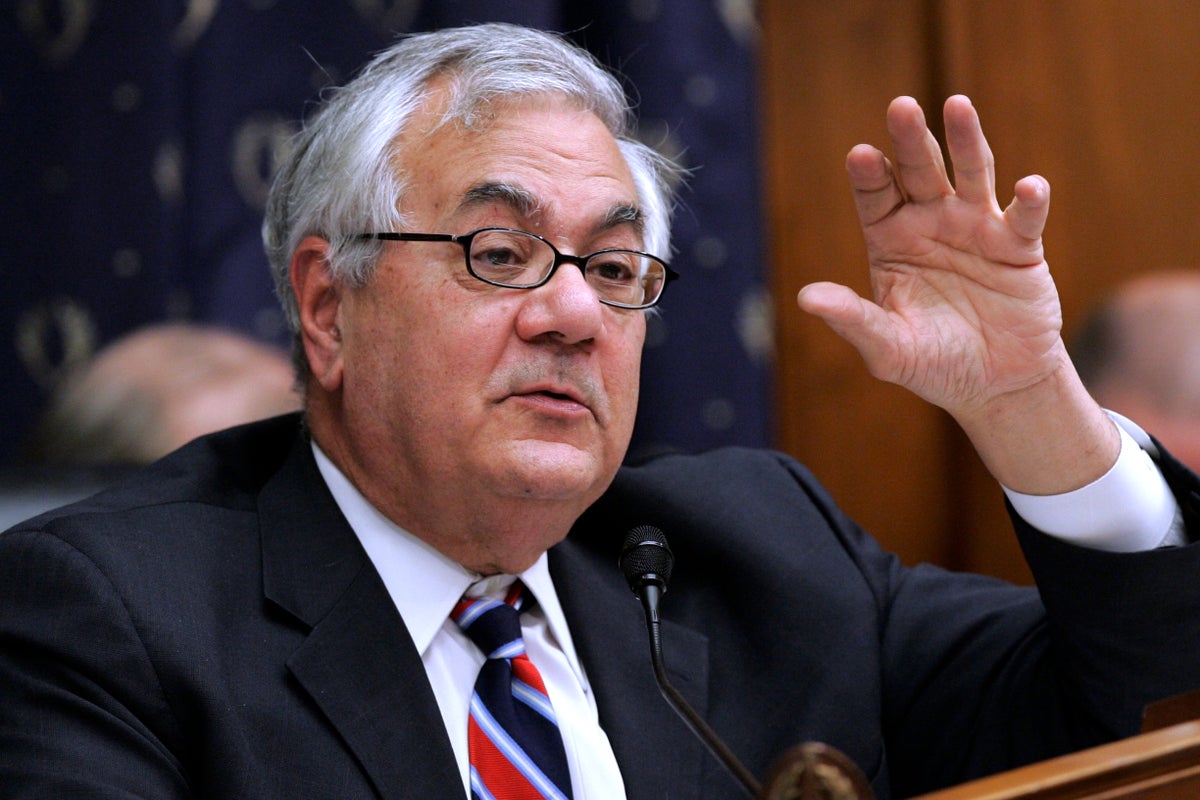
The air inside a congressional hearing room is usually thick with a very specific kind of boredom. It is a drone of rehearsed statements, bureaucratic pleasantries, and carefully managed sanitized anger. But for more than three decades, whenever the man from Massachusetts caught the microphone, that drone shattered.
Barney Frank did not speak in the measured, focus-grouped cadences of modern politics. He spoke like a machine gun firing from the hip, a rapid-fire burst of North Jersey syntax, biting wit, and intellectual ferocity. He did not suffer fools, and he certainly did not suffer hypocrites.
Now, that voice is still. At age 86, after a lifetime of public warfare and private trailblazing, the former Democratic congressman has passed away following a period of failing health.
With his departure, we lose more than just a retired lawmaker from Newton. We lose a living bridge to an era when politics was a blood sport played by people who actually knew how to draft a bill. More than that, we lose a man who forced the American government to look at a gay man and see an equal, long before the courts or the culture polls said it was safe to do so.
To understand the weight of his absence, you have to look past the dense policy sheets of the Dodd-Frank Act. You have to look at the human cost of keeping a secret in a town built on surveillance.
The Weight of the Closet in a Town of Mirrors
Imagine a Washington that feels ancient now, though it was only the late 1970s and early 1980s. It was a city where an accusation could end a career in an afternoon. For a politician, being gay wasn't just a personal detail; it was considered a terminal diagnostic condition for a public life.
Frank entered this world with a brilliant mind and a heavy burden. He was a Harvard-educated lawyer, a man deeply invested in the mechanics of housing, banking, and civil rights. Yet, he spent his early years in Congress living a bifurcated existence. By day, he was the rising star of the liberal wing, defending the vulnerable. By night, he retreated into the shadows, hyper-aware that one misstep, one whisper to the wrong reporter, would bring his world crashing down.
It is exhausting to watch your own shadow. It eats at the stomach. It sharpens the temper. Those who knew Frank back then encountered a man of immense intellect but immense friction.
Then came 1987.
The conventional wisdom of the era dictated that if a politician was caught in a scandal or outed, they slank away. They resigned. They issued a tearful statement about family and disappeared into corporate consulting.
Frank chose a different path. He chose to simply state the truth. He became the first member of Congress to voluntarily come out of the closet.
It was not a calculated political calculation. It was a survival mechanism for his own soul. He later reflected that he simply couldn't live the lie anymore. He expected the backlash to be brutal. He expected his career might be over.
Instead, something remarkable happened. His constituents in Massachusetts looked at his record, looked at his honesty, and sent him back to Washington. Again and again.
The Art of the Verbal Execution
Once the secret was gone, Frank became weaponized. Without the fear of exposure holding him back, his inherent sharpness turned into a legendary legislative shield. He did not become a symbolic figurehead who just gave speeches at rallies; he remained a master technician of the House of Representatives.
He understood that power in Washington does not belong to the loudest person in front of the television cameras. It belongs to the person who understands the rules of procedure better than their opponent.
During the heated debates over the defense budget or financial deregulation, committee rooms became theaters of intellectual combat. He used humor not to amuse, but to disarm and dismantle. When a conservative colleague argued that allowing gay people to marry would destroy the traditional institution, Frank didn’t launch into a grand philosophical lecture. He simply noted that he had been gay for a long time, and his presence had never somehow ruined anyone else's marriage.
He cut through the sanctimony of the Capitol with the precision of a surgeon. When confronted by a protester comparing healthcare reform to Nazi Germany, Frank looked at her and asked, "On what planet do you spend most of your time?"
It was rude. It was dismissive. It was exactly what the moment required. He refused to pretend that absurd arguments deserved polite consideration. In doing so, he taught a generation of liberals how to fight without losing their grip on reality.
The Architecture of the Crash
We often think of civil rights heroes and financial regulators as two completely different species of human. Frank proved they are the same thing: people who believe the system should protect ordinary citizens from predatory forces, whether those forces wear white sheets or tailored pinstripe suits.
When the global financial system began to liquefy in 2008, the country looked into an abyss of its own making. Subprime mortgages, credit default swaps, and unchecked Wall Street avarice had brought the economy to its knees. As the Chairman of the House Financial Services Committee, Frank found himself holding the steering wheel of a crashing vehicle.
The work that followed was not glamorous. It was months of grueling negotiation, reading fine print, and staring down executives who believed they were too big to fail. The resulting legislation, co-authored with Senator Chris Dodd, became the most sweeping regulatory overhaul since the Great Depression.
It wasn't perfect. No compromise born in the partisan fires of Washington ever is. The left argued it didn't go far enough to break up the mega-banks. The right screamed that it was a government stranglehold on free enterprise.
But Frank understood the vital difference between a pure ideology and a functioning law. He knew that an imperfect bill that passes and protects a consumer from a predatory loan today is worth infinitely more than a perfect bill that sits in a filing cabinet forever. He was a pragmatist who used idealism as a compass, not a straitjacket.
A Legacy Written in the Ordinary
To look back at his life from the vantage point of today is to realize how much of the landscape he helped re-engineer.
In 2012, Frank did something else that would have been unthinkable when he first arrived in Washington. He got married. He wed his longtime partner, Jim Ready, becoming the first sitting member of Congress to enter a same-sex marriage. The ceremony was officiated by the governor of Massachusetts. Members of the political establishment attended.
It was a quiet, celebratory moment, but the historical resonance was deafening. Thirty years prior, a gay man in government was considered a national security risk, a blackmail target, a pariah. By the time Frank walked out of the Capitol for the last time, he was a married elder statesman, judged by his peers not for who he loved, but for how well he held a gavel.
His retirement years did not feature a mellowing of the spirit. He remained a frequent commentator, a sharp observer of the current political fractures, often dismayed by the polarization but never losing his fundamental belief in the legislative process. He believed in government. He believed that public service, when done with intelligence and courage, could genuinely fix things that were broken.
His health began to decline in recent months, a slow fading of a physical frame that had always seemed fueled by sheer nervous energy and intellectual momentum. When the end came, it brought to a close a chapters-long American story that spanned from the repressive conformity of the mid-century to the messy, pluralistic democracy of the current era.
The halls of Congress are quieter now, occupied by a new generation that communicates in social media snippets and choreographed talking points. They could learn a lot from the ghost of the man from Newton. They could learn that courage is not the absence of fear, but the calculation that something else is more important. They could learn that a sharp wit is a better weapon than a loud grievance.
Somewhere in a Capitol hallway, the echo of a fast-talking, rumpled man in an oversized suit still lingers, telling everyone within earshot to grow up, read the rules, and get to work.