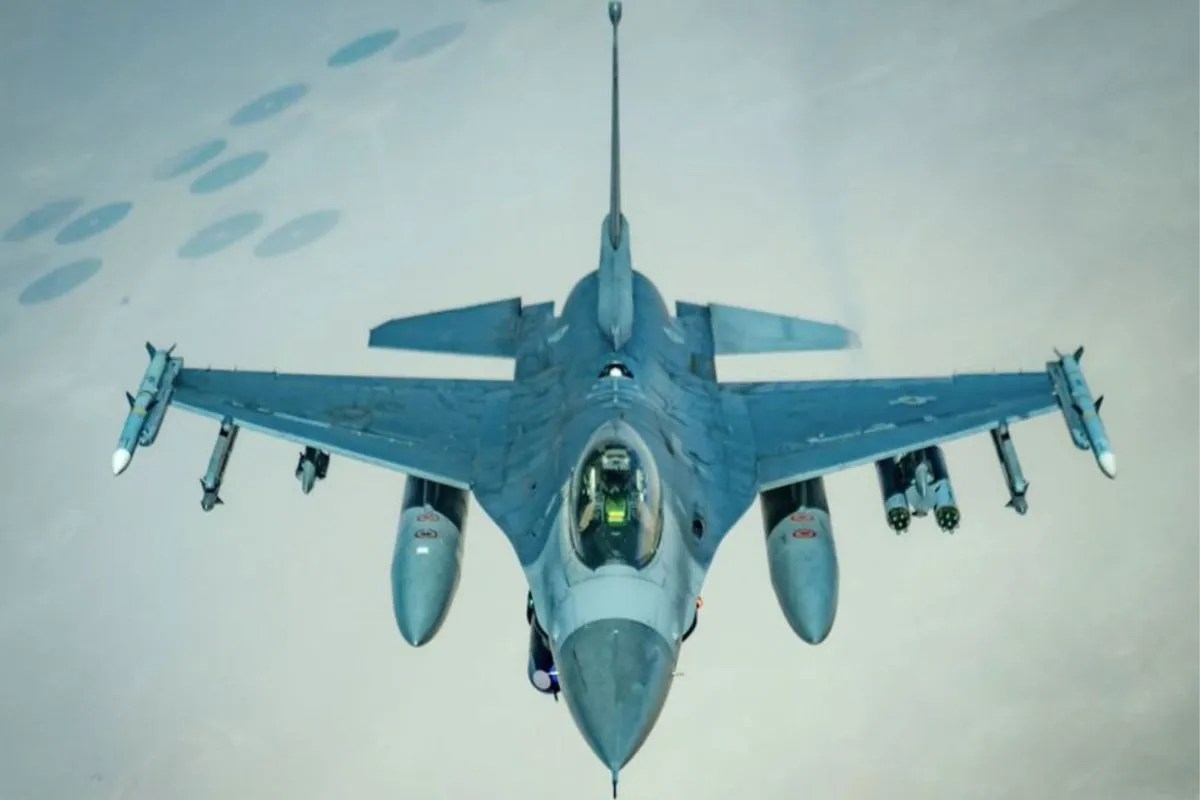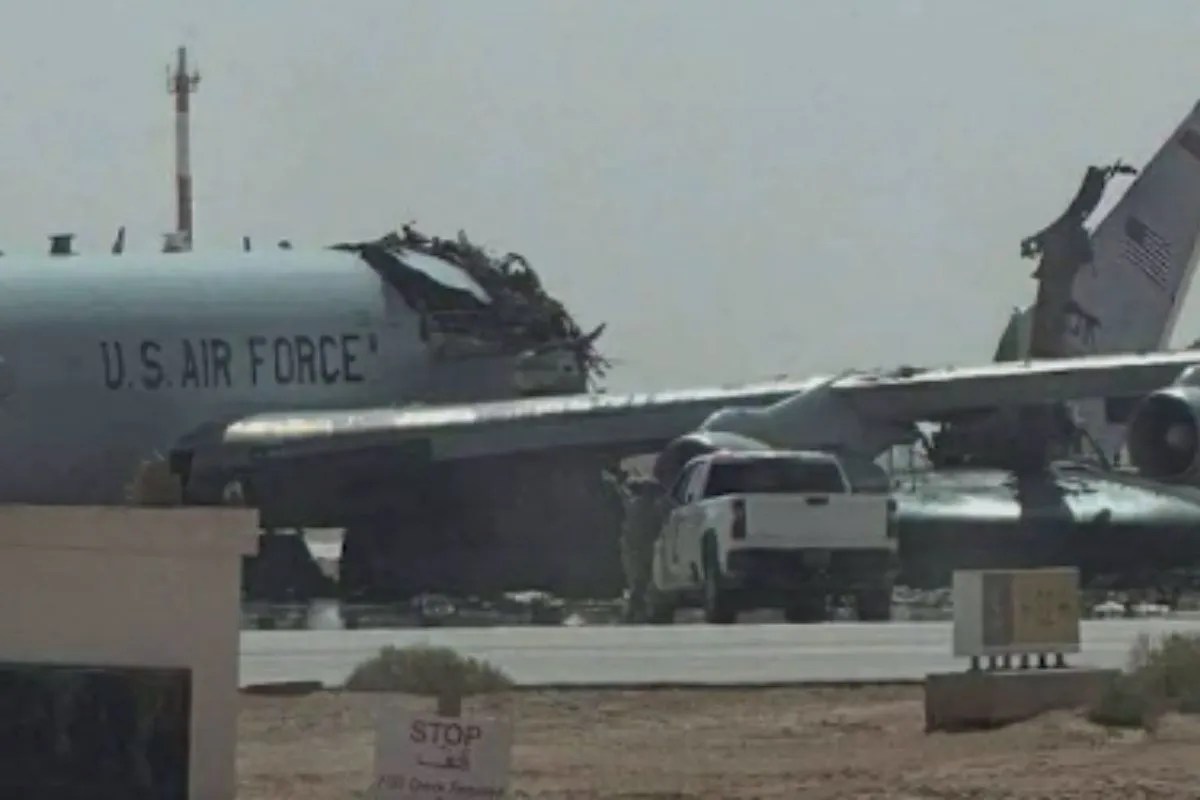
The desert air near the Saudi airbase doesn't just shimmer; it vibrates with a dry, metallic heat that tastes like copper and jet fuel. To a soldier stationed there, the sound of a drone is often nothing more than a mechanical mosquito, a nuisance of the modern age. But when that buzz is followed by the sharp, bone-rattling crack of an explosion, the atmosphere changes. The air grows heavy with the weight of geopolitical consequences.
In the early hours of a recent morning, that weight centered on a single, incredibly expensive piece of machinery. An American reconnaissance aircraft, a titan of intelligence worth roughly $700 million, became the target of a precision strike attributed to Iranian-backed forces. To the bean counters in Washington, it is a line item. To the strategists in Tehran, it is a message. To the rest of us, it is a glimpse into a new kind of shadow war where high-tech ghosts are being hunted by low-cost predators.
The Invisible Eye in the Sky
What does $700 million actually buy? It isn't just aluminum, carbon fiber, and titanium. It is a flying laboratory designed to see the world not in colors, but in signals.
Imagine standing in a stadium filled with fifty thousand people, all talking at once. Now imagine being able to pick out a single whisper from a specific seat in the nosebleed section, recording it, and pinpointing exactly where that person is sitting within centimeters. That is what this aircraft does. It vacuum-seals the electromagnetic spectrum. It listens to encrypted radio chatter, maps out radar installations, and tracks the digital heartbeat of an entire region.
When one of these planes is lost, the military loses more than a vehicle. It loses its eyes. It loses the ability to anticipate a move before the enemy even makes it. For the crew that operates such a vessel—technicians who spend ten-hour shifts staring at cascading lines of green code and spectral waterfalls—the plane is a protective shell. It is the only thing standing between them and the harsh reality of a surface-to-air missile.
The Mathematics of Asymmetric Defiance
There is a cruel irony in the economics of modern conflict. The drone or missile that likely took down this $700 million asset probably cost less than a high-end luxury SUV.
This is the nightmare of modern defense logistics. A nation can spend decades and billions of dollars perfecting a "stealth" or "high-altitude" platform, only to have it checked by a "suicide drone" built in a converted garage with off-the-shelf components. Iran has mastered this art of the cheap kill. By targeting an American asset on Saudi soil, they aren't just hitting a plane; they are testing the structural integrity of an alliance.
The Saudi airbase isn't just a patch of tarmac. It is a symbol of American reach in the Middle East. When smoke rises from its hangars, it signals to every neighbor in the region that the "umbrella" of Western protection has holes in it. It forces a terrifying question into the minds of local leaders: If the most advanced surveillance plane in the world isn't safe inside a fortified base, what is?
What Was Really Inside That Plane
Rumors always swirl after a strike of this magnitude. Was there sensitive nuclear data on board? Were there experimental sensors that the Pentagon didn't want the world to know about?
The truth is often more mundane but far more critical. The "secret" inside a $700 million reconnaissance plane isn't a physical object. It’s the software. It’s the libraries of electronic signatures—the "fingerprints" of every Russian-made radar and every Iranian missile battery in the sector. If the wreckage is scavenged, or if the data links were compromised during the attack, the enemy gains a map of how the United States hears and sees.
Think of it like a master key. If the enemy learns how your sensors work, they can learn how to become invisible to them. They can develop "spoofing" technology that makes a fleet of bombers look like a flock of birds on a screen. The loss of the airframe is a financial sting; the loss of the electronic advantage is a generational setback.
The Human Cost of Automated War
We often talk about these events as if they are games of chess played by invisible hands. But there is a human element that rarely makes the headlines.
Consider a hypothetical young sensor operator—let’s call her Sarah. She grew up in a small town in Ohio and joined the Air Force to see the world. Now, she sits in a pressurized cabin over the Saudi desert, her eyes burning from the glow of four different monitors. She isn't looking at the ground; she's looking at "pips" and "signatures."
When the alarm sounds—the "RWR" or Radar Warning Receiver—the world shrinks to a single, high-pitched tone. In that moment, the $700 million price tag doesn't matter. The geopolitical tension between Riyadh and Tehran doesn't matter. All that matters is the five-second window to deploy flares or chaff, the gut-wrenching bank of the pilot, and the hope that the technology she’s operating is smarter than the missile chasing it.
The reports say the plane was hit while on the ground or in a vulnerable low-altitude phase. If so, Sarah didn't have five seconds. She had a sudden flash of light and the terrifying realization that the "impenetrable" base was anything but.
A New Architecture of Fear
The attack marks a shift in how tension is managed in the Gulf. For years, there was an unspoken rule: you don't touch the high-value reconnaissance assets. You harass the tankers, you fly close to the drones, but you don't destroy the $700 million crown jewels.
That rule has been shredded.
By targeting this specific aircraft, the attackers are signaling a willingness to escalate beyond the "gray zone" of deniable skirmishes. They are betting that the United States is too weary of another Middle Eastern war to respond with overwhelming force. It is a high-stakes poker game where the pot is the control of the world’s most vital energy corridors.
The wreckage of the plane now sits as a charred testament to this gamble. Engineers will pick through the remains to see what can be salvaged. Intelligence officers will scramble to change frequencies and update encryption codes.
But the psychological damage is harder to repair.
Every pilot taking off from that base tonight will look at the horizon a little differently. They will wonder if the "ghost" they are flying is truly invisible, or if it is simply a very expensive target waiting for a very cheap ending. The desert remains silent, but the air is different now. It carries the smell of burnt circuits and the uncomfortable truth that in the age of the drone, even a seven hundred million dollar giant can be brought to its knees by a shadow.
The sun sets over the dunes, casting long, jagged shadows across the runway. Somewhere in the distance, a small, rhythmic buzzing begins again.