The recent surge of large-scale demonstrations in Paris supporting Iranian-backed interests and opposing US-Israeli policy is not a spontaneous eruption of public sentiment but the result of a sophisticated alignment between localized socio-political grievances and transnational digital influence operations. To understand the "Paris Clash," one must deconstruct the convergence of three distinct drivers: the physical logistics of urban mobilization, the algorithmic amplification of state-sponsored narratives, and the failure of traditional European diplomatic deterrence to manage domestic fallout from Middle Eastern conflicts. This movement represents a stress test for the French internal security apparatus and a blueprint for how non-state actors project power within the borders of Western G7 nations.
The Architecture of Urban Dissent
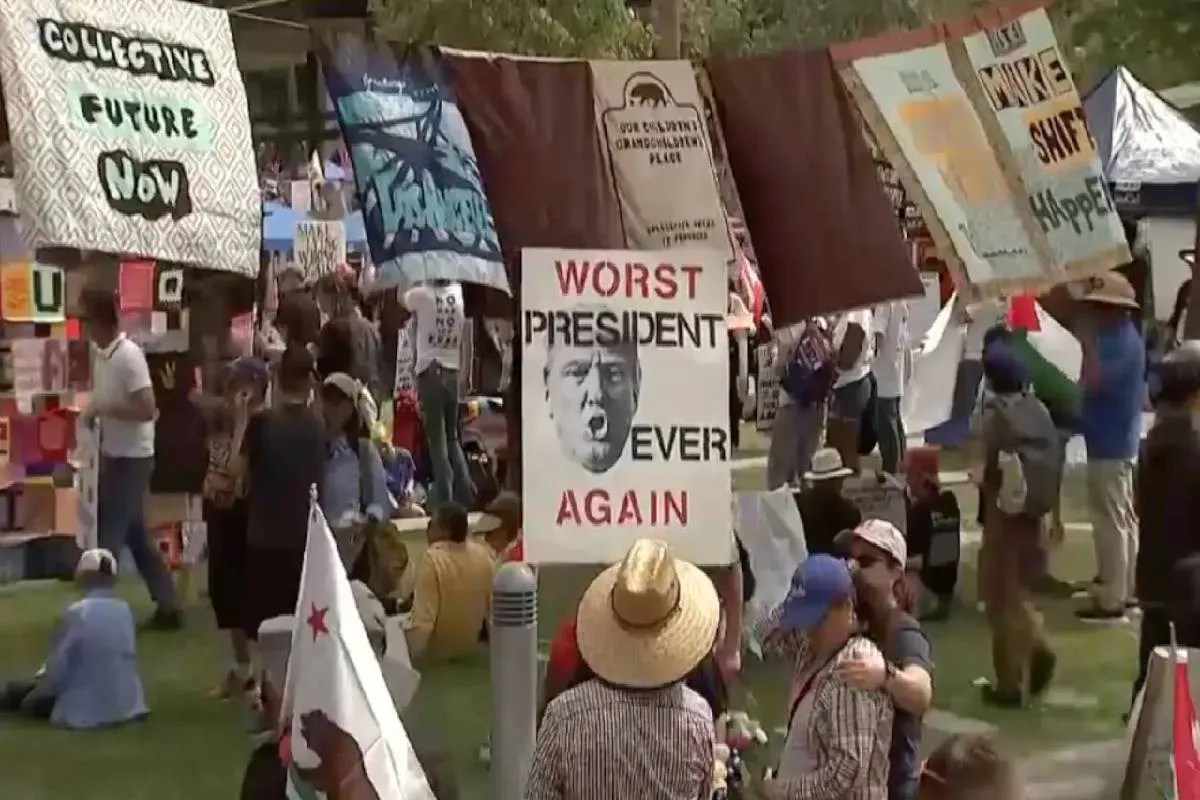
Public demonstrations in Paris operate within a highly regulated but historically volatile ecosystem. When thousands take to the streets against the United States and Israel while explicitly signaling support for Iranian-aligned entities, the phenomenon follows a "Force Multiplication" logic. This logic is built upon the following structural pillars:
- The Diaspora Linkage: Mobilization relies on a core demographic of the Middle Eastern diaspora that maintains high-fidelity connections to home-country politics. These groups act as the primary nodes for information dissemination.
- The Coalition of Externalities: Protests are rarely monolithic. Organizers successfully bridge the gap between pro-Iran geopolitical interests and local French domestic issues—such as anti-imperialist sentiment or general dissatisfaction with the Macron administration—creating a broader, more chaotic front that is harder for police to profile and contain.
- Logistical Synchronicity: The scale of these events suggests a high level of coordinated funding and transport logistics. Movement of thousands of individuals into the Place de la République or along the Boulevard Voltaire requires a centralized communication stack that bypasses traditional media filters.
Algorithmic Polarization and the Information Vacuum
The "outrage" observed in the streets is the physical manifestation of a digital feedback loop. Iranian state-affiliated media and their proxies have optimized the use of short-form video content to penetrate French digital spaces. By utilizing "Platform Agnostic Distribution," these actors ensure that narratives regarding US-Israeli "aggression" reach French youth long before official government statements can provide context or counter-narratives.
The effectiveness of this digital strategy is measured by the Conversion Rate of Engagement to Physical Presence. If a social media campaign generates 1 million impressions in the Île-de-France region and results in 10,000 physical protesters, the 1% conversion rate indicates a high level of psychological resonance. This resonance is achieved by stripping complex geopolitical history into binary "Oppressor vs. Oppressed" frameworks, which are more compatible with the current attention economy.
The Cost Function of French Neutrality
France has historically attempted to maintain a "Third Way" in Middle Eastern diplomacy, often acting as a mediator between Tehran and Washington. However, the intensity of recent protests reveals a significant "Diplomatic Friction Cost." By attempting to balance these interests, the French government creates a domestic vacuum where neither side feels fully supported, leading to increased radicalization on the fringes.
- Security Overhead: The mobilization of the CRS (Compagnies Républicaines de Securité) to manage these clashes incurs a direct fiscal cost and an indirect cost of "Police Fatigue."
- Social Cohesion Erosion: The importation of foreign conflicts into the Parisian streetscape creates a permanent state of low-level civil friction, which discourages investment in affected districts and increases political polarization.
Precise Definitions of the Actors Involved
To analyze this clash without falling into the trap of vague generalization, we must define the participants by their operational roles:
- State Proxies: Organizations or individuals receiving direct or indirect guidance from the Iranian Revolutionary Guard Corps (IRGC) to shape European public opinion.
- Ideological Fellow Travelers: Local European activists who view the anti-US/Israel stance as a proxy for their own anti-globalization or anti-capitalist agendas.
- The Disaffected Centrist: Individuals who join the protests not out of ideological purity, but as a reaction to the perceived humanitarian costs of the conflict, often swayed by the visual data (images/videos) shared within their social circles.
The intersection of these groups creates a "Hydra Effect." When French authorities crack down on the more radical elements, they risk alienating the more moderate participants, thereby expanding the grievance pool and ensuring the next protest is larger and more volatile.
Strategic Asymmetry in the Streets
The Paris protests demonstrate a masterclass in Asymmetric Political Warfare. Protesters utilize the democratic protections of the French Republic (freedom of assembly, freedom of speech) to advocate for regimes and ideologies that do not necessarily share those values. This creates a "Democratic Paradox" for the French state:
- If the state suppresses the protests, it validates the "Authoritarian" label used by organizers to recruit more followers.
- If the state allows the protests to continue unchecked, it risks the escalation of violence against Jewish institutions or US diplomatic interests, damaging its international standing and internal security.
The current "Middle Path" taken by French authorities—permitting the marches but surrounding them with heavy tactical presence—is a temporary containment strategy, not a long-term solution. It fails to address the underlying data-driven radicalization happening in the digital sphere.
The Geopolitical Signal vs. The Domestic Noise
The international community often misinterprets these protests as a shift in French foreign policy. In reality, there is a widening chasm between "Street Policy" and "Quai d’Orsay Policy." While the streets of Paris may echo with anti-US slogans, the French government continues to coordinate closely with NATO and intelligence partners.
The danger lies in the Perception Gap. If Tehran perceives the Parisian street movements as a sign that French support for sanctions or military containment is waning, they may embolden their regional proxies, leading to a miscalculation that could trigger a wider conflict. The protesters are not just expressing an opinion; they are inadvertently providing "Diplomatic Intelligence" to foreign actors looking for cracks in Western unity.
Operational Limitations of Current Containment
The French "Doctrine of Crowd Control" is built for labor strikes and domestic economic protests, not for ideological conflicts with deep religious and geopolitical roots. Standard tactics like "kettling" or the use of tear gas are ineffective against a population that views the act of protest as a form of "Resistant Identity."
The failure to categorize these events accurately—moving from "Civil Disturbance" to "Foreign-Influenced Information Operation"—means the response remains reactive. A proactive strategy would require a deep-dive into the funding mechanisms of the non-profits (Associations Loi 1901) that frequently organize these rallies, as well as a more robust counter-influence operation in the digital languages these demographics consume.
Strategic Imperatives for the Immediate Term
The evolution of the Paris Clash from a local news event to a geopolitical benchmark requires a shift in how urban unrest is analyzed. The data suggests that as long as the digital cost of influence remains low and the physical cost of protest remains manageable, these mobilizations will increase in frequency and intensity.
The French state must recalibrate its internal security framework to include:
- Real-time Digital Forensics: Identifying the origin of viral mobilization calls before they reach a critical mass.
- Financial Transparency Mandates: Requiring stricter disclosure of funding for organizations that facilitate protests centered on foreign policy.
- Counter-Narrative Infrastructure: Moving beyond static press releases to active, high-production engagement on platforms where the "Outrage Narrative" currently holds a monopoly.
The situation in Paris is a lead indicator for other European capitals. Berlin, London, and Brussels are facing similar pressures, where the local street becomes a secondary theater of war for Middle Eastern powers. The inability to decouple domestic social policy from foreign proxy wars is the primary vulnerability of the modern European state.
The next phase of this friction will likely move from broad street marches to targeted disruptions of infrastructure or digital services, as organizers realize that "Visibility" is a declining asset while "Disruption" offers higher leverage. The window for managing this through traditional policing is closing; the response must now pivot to the structural roots of the mobilization itself.
Would you like me to analyze the specific digital footprints and social media platforms most utilized by these organizers to understand their recruitment funnels?