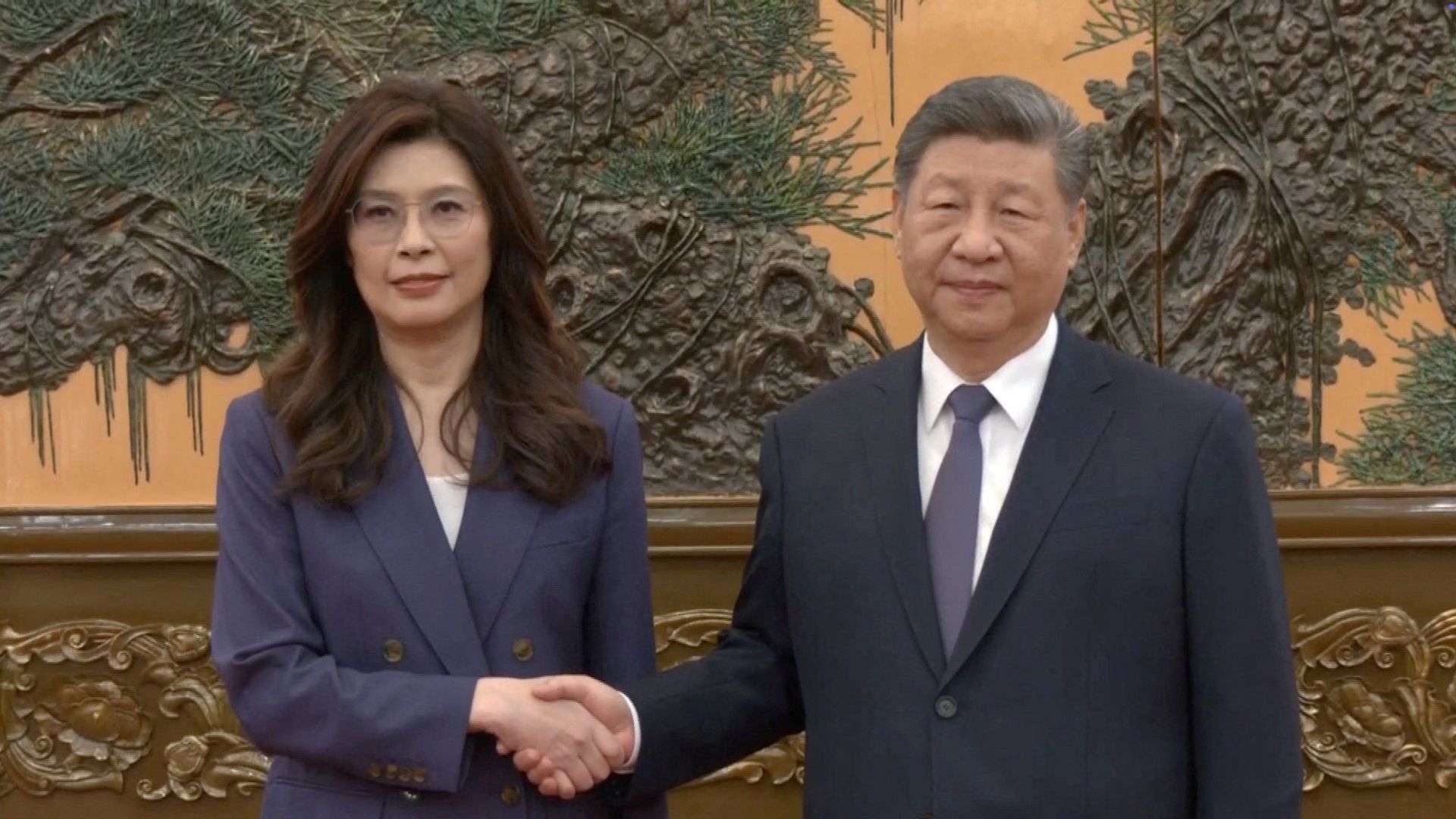
Beijing’s latest suite of "goodwill measures" toward Taiwan—unveiled following the visit of opposition figures—functions as a sophisticated exercise in economic statecraft designed to bypass the central administration in Taipei and communicate directly with sub-national actors. Rather than a shift in fundamental strategy, these measures represent a recalibration of the Pressure-Incentive Dialectic. By selectively lifting trade restrictions and proposing travel relaxations, the Chinese Communist Party (CCP) is testing a modular approach to cross-strait relations: rewarding political alignment while maintaining the structural capacity for economic coercion.
The strategy operates through three distinct vectors of influence: Sectoral Dependency, Geographic Fragmentation, and Political Signaling. Understanding the efficacy of these measures requires moving beyond the surface-level narrative of "improving ties" and instead analyzing the underlying cost-benefit calculations for both the mainland and the island’s various economic stakeholders.
The Architecture of Selective Liberalization
The recent announcement focuses on specific agricultural exports and tourism pathways. This is not a blanket lifting of sanctions, but a highly targeted deployment of Asymmetric Economic Interdependence. By focusing on products like wax apples or specific fishery exports, Beijing targets constituencies that are traditionally sensitive to market access fluctuations.
The Sectoral Dependency Vector
Beijing’s choice of trade targets follows a predictable logic of political geography. The southern regions of Taiwan, which are the primary producers of the recently restricted (and now partially reinstated) agricultural goods, are political strongholds for the Democratic Progressive Party (DPP). By creating a "conditional market access" model, the CCP attempts to generate internal friction within the Taiwanese domestic sphere.
- Market Access as a Variable: Trade is no longer treated as a constant. It is treated as a dial that can be turned based on the political identity of the exporter or the intermediary.
- Middleman Empowerment: By negotiating these measures through opposition leaders or local government heads, Beijing validates these actors as the only viable "conduits" for economic stability. This diminishes the perceived utility of the central government in Taipei.
- Supply Chain Friction: The sudden reinstatement of trade pathways requires Taiwanese producers to recalibrate their supply chains. This creates a "sunk cost" trap where producers invest in returning to the mainland market, thereby increasing their future vulnerability to renewed restrictions.
The Logic of Tourism as a Strategic Valve
The proposal to resume tourism, specifically starting with Fujian province and the Matsu islands, serves as a controlled experiment in Incremental Normalization. Tourism is a high-visibility, low-risk sector for Beijing to manipulate. Unlike high-tech manufacturing or semiconductor supply chains, the flow of people can be halted instantly without disrupting the mainland’s internal industrial base.
The Matsu-Fujian Corridor
Starting with the Matsu islands is a calculated move to test the "Small Three Links" framework. This serves two strategic purposes:
- Logistical Proof of Concept: It allows for a controlled environment to monitor the security and political implications of increased person-to-person exchange before scaling to larger hubs like Taipei or Kaohsiung.
- Economic Magnetism: By enriching the outlying islands through tourism, Beijing creates a localized economic boom that contrasts with the broader economic challenges facing the main island. This is intended to create a "demonstration effect," where other regions of Taiwan are incentivized to demand similar bilateral deals.
The limitation of this strategy lies in its scale. Tourism from Fujian to Matsu represents a microscopic fraction of Taiwan’s total GDP. The move is symbolic rather than systemic, designed to provide a narrative of progress to the mainland’s domestic audience and the Taiwanese opposition, without offering meaningful leverage over the DPP’s macro-policy.
The Cost Function of Coercive Diplomacy
Every "incentive" offered by Beijing carries an implicit cost for Taipei. The fundamental tension in cross-strait relations is the Sovereignty-Prosperity Trade-off. To accept the economic benefits offered, the Taiwanese administration must often implicitly accept a framework that undermines its claim to autonomous governance.
Mechanism of the Squeeze
Beijing employs a "salami-slicing" technique in the economic realm. By resolving small, non-essential trade disputes, it creates a sense of momentum. However, the structural issues—such as the investigation into "trade barriers" under the Economic Cooperation Framework Agreement (ECFA)—remain unresolved. This creates a persistent "Sword of Damocles" over the Taiwanese economy.
The effectiveness of this pressure is mitigated by Taiwan’s ongoing Market Diversification Strategy. Since 2016, Taiwan has aggressively pursued the New Southbound Policy, shifting trade volume toward Southeast Asia and North America. The efficacy of Beijing’s latest measures is inversely proportional to Taiwan's success in these third-party markets. If a pineapple farmer in Pingtung can sell to Japan or Singapore at a comparable price point, the "market access" carrot offered by Beijing loses its potency.
Strategic Divergence in Political Interpretation
The reaction to these measures highlights the divergent mental models in Beijing and Taipei.
- The Beijing Model: Views these measures as a benevolent "return to the status quo" conditional on the recognition of the 1992 Consensus. It assumes that economic gravity will eventually override political identity.
- The Taipei Model: Views these measures as "Grey Zone" tactics. The administration sees the lifting of bans as the cessation of an illegal act rather than a gesture of goodwill. In this view, Beijing is merely returning what it previously stole through coercive trade practices.
This mismatch in perception ensures that while individual sectors may experience relief, the underlying geopolitical tension remains unchanged. The "measures" do not address the fundamental security dilemma; they merely move the furniture within a burning house.
The Bottleneck of Technical Implementation
For these ties to "improve," there are significant technical hurdles that go unmentioned in political rhetoric. Regulatory alignment is the primary friction point.
- Sanitary and Phytosanitary (SPS) Standards: The original bans were often justified by Beijing through claims of pests or contamination. Lifting these bans requires a mutual recognition of inspection protocols, which necessitates government-to-government communication—the very thing Beijing is trying to avoid.
- Financial Settlement Systems: Increasing trade requires stable clearinghouse mechanisms. As both sides modernize their digital currency and payment systems, the lack of official cooperation creates a technical lag that hinders the "seamless" integration Beijing ostensibly desires.
- Visa and Entry Protocols: Tourism cannot resume without the coordination of civil aviation and immigration authorities. By attempting to bypass the Taipei government, Beijing creates an operational paradox: it wants the people to move, but refuses to talk to the people who control the gates.
The Data Gap in Cross-Strait Rhetoric
A rigorous analysis must acknowledge that the "improvement" of ties is often measured using flawed metrics. Analysts frequently point to the volume of trade or the number of cross-strait flights as indicators of stability. However, these are Lagging Indicators.
The Leading Indicators of cross-strait stability are found in the capital expenditure (CapEx) plans of major Taiwanese firms and the "brain drain" patterns of high-skilled labor. If Taiwanese semiconductor firms continue to diversify their manufacturing footprints into Arizona, Kumamoto, and Dresden, then the marginal "goodwill" of agricultural trade relaxations is statistically irrelevant to the long-term strategic trajectory.
Institutional Resilience and the 1992 Consensus
The demand for adherence to the 1992 Consensus remains the primary structural barrier. Beijing’s strategy is to demonstrate that the consensus is the "master key" to economic prosperity. By rewarding the Kuomintang (KMT) with trade concessions, they seek to prove to the Taiwanese electorate that the DPP’s refusal to acknowledge the consensus is the sole cause of economic hardship.
However, this logic assumes a high level of Economic Voting. Recent election cycles in Taiwan suggest that identity politics and security concerns often outweigh sectoral economic interests. The "cost of alignment" with Beijing—potentially losing democratic autonomy—is perceived by a significant portion of the population as higher than the "cost of restriction" in the agricultural or tourism sectors.
The Structural Forecast
Beijing will likely continue this "micro-liberalization" strategy through the remainder of the year. We can expect additional announcements regarding specific seafood products or smaller-scale industrial components. This will be paired with continued military signaling, creating a Hybrid Environment of economic enticement and kinetic threat.
The strategic play for the Taiwanese government is to decouple the "technical" from the "political." By treating the lifting of trade bans as a routine regulatory matter and welcoming the return of tourists without conceding the political framework, Taipei can neutralize the "signaling" value of Beijing’s moves.
The mainland's maneuver is an attempt to regain the initiative in the narrative of "peaceful development." Yet, as long as the underlying mechanism of trade is used as a disciplinary tool rather than a mutual benefit, the "improvement" in ties will remain a tactical mirage. The true measure of success for Beijing will not be the number of wax apples sold in Shanghai, but whether these concessions can arrest Taiwan's accelerating integration into the global "non-China" supply chain. Currently, the data suggests that the gravitational pull of the global market is outstripping the localized incentives offered by the mainland.
The strategic recommendation for observers is to discount the rhetoric of "thawing relations" and instead track the Diversification Coefficient of Taiwan’s top 100 exporters. As long as that coefficient rises, Beijing’s selective liberalization remains a gesture without a target.