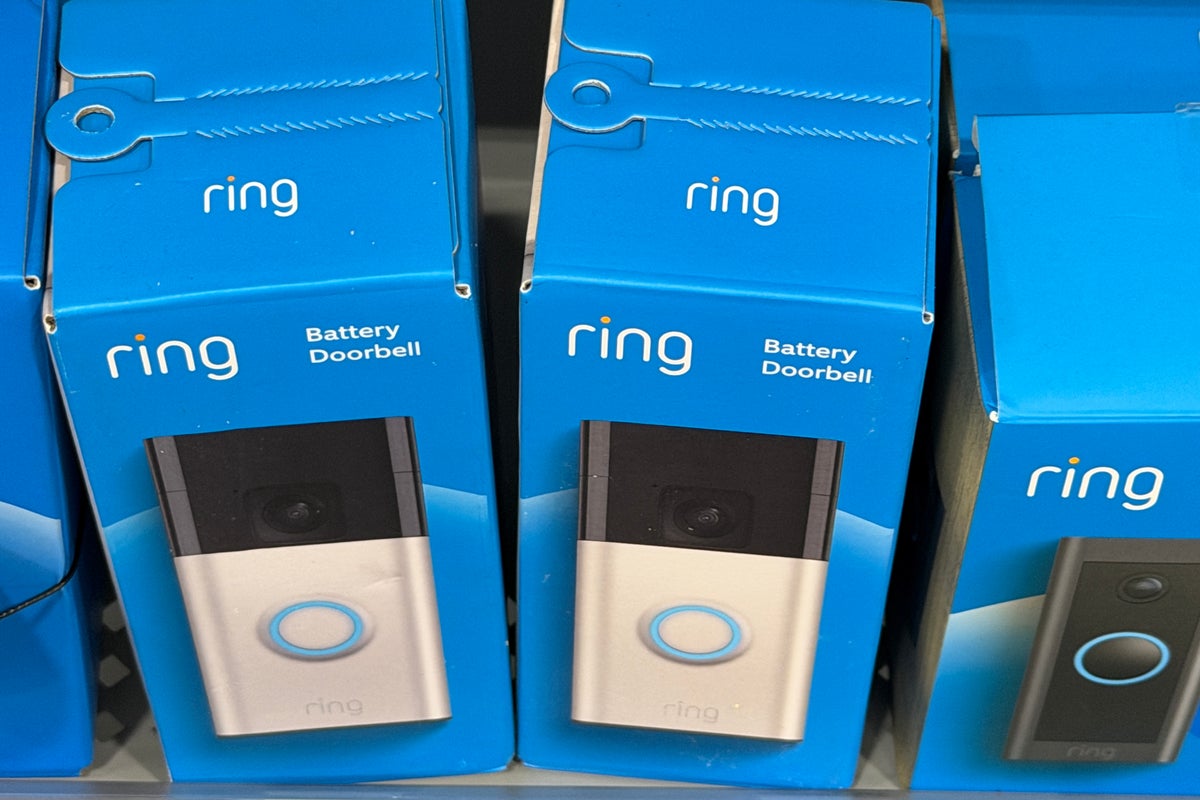
The plastic lens sits right above the doorbell. It is smaller than a glass marble, completely dark, and utterly indifferent. Most of the time, we do not even look at it. We look at the delivery driver dropping a cardboard box onto the welcome mat, or we look past it, searching the driveway for a friend’s car. We bought the little black-and-silver box for peace of mind. We bolted it to the doorframe to keep the outside world from creeping too close to our living rooms.
We forgot that lenses work both ways.
A quiet reckoning is unfolding across America, crystallized in a sweeping class-action lawsuit targeting Amazon’s Ring. The legal documents are thick, dry, and packed with dense statutory citations. But stripped of the legalese, the core accusation is simple, startling, and deeply personal. The lawsuit alleges that these neighborhood security cameras have been quietly, systematically harvesting the biometric data—the very geometry of the human face—of every single person who walks within their field of view. Neighbors. Mail carriers. Dog walkers. Children playing on the sidewalk. None of them signed a waiver. None of them gave consent.
This is not a story about a corporate slip-up or a minor digital glitch. It is a story about how the concept of public privacy was quietly dismantled, one front porch at a time.
The Face as a Keycard
Consider a hypothetical resident named Sarah. Sarah lives on a normal suburban street. She does not own a smart doorbell; she prefers an old-fashioned brass knocker. She values her privacy, keeps her social media profiles locked down, and carefully reads the terms of service on her smartphone apps.
Every morning, Sarah walks her golden retriever down her sidewalk. She passes twelve houses. Ten of those houses have a Ring camera mounted next to the front door.
As Sarah walks, she isn’t thinking about corporate surveillance. She is thinking about her grocery list. But every time she steps within a twenty-foot radius of those ten porches, a tiny sensor wakes up. A digital eye blinks. Somewhere in a massive, climate-controlled data center thousands of miles away, an algorithm analyzes the distance between Sarah’s eyes, the curve of her jawline, and the specific bridge of her nose.
To the software, Sarah is not a neighbor walking a dog. She is a unique mathematical string. A biological barcode.
The lawsuit centers on this exact mechanism: automated facial recognition. According to the plaintiffs, Amazon did not just build a tool to let people see who was knocking at their door. They built an interconnected, crowdsourced surveillance dragnet that maps the physical geometry of the public without their knowledge.
When we change a password, we replace a string of numbers. If a database is hacked, we get a new credit card in the mail. But you cannot change your face. Once a biometric blueprint is captured, categorized, and stored in a corporate database, that identifier is gone forever. It becomes a permanent digital signature, floating in the ether, vulnerable to whatever the future holds.
The Legal Fault Lines
The shockwave of this lawsuit did not emerge from a vacuum. It found its footing in states with strict biometric privacy laws, most notably Illinois and its Biometric Information Privacy Act. The law is uncompromising. It states that companies cannot collect, capture, or store a person's biometric identifiers—like fingerprints or facial geometry—without explicit, written consent.
Amazon’s defense has historically relied on the idea that the users, not the company, operate the cameras. They argue that the individual homeowner chooses where to point the lens.
But the legal challenge cuts straight through that defense. The lawsuit argues that the heavy lifting—the actual scanning, the algorithmic processing, the structural mapping of the human face—happens on Amazon’s servers, using Amazon’s proprietary technology. The homeowner does not write the code that identifies a human face from a swaying tree branch. Amazon does. The homeowner does not store the massive troves of biometric data. Amazon does.
Think of it as a vast digital net cast over our neighborhoods. The homeowners bought the rope, but the corporation owns the net, pulls the strings, and keeps whatever it catches.
This creates a bizarre, unprecedented social dynamic. By trying to secure our own front doors, we have accidentally turned our homes into outposts for a corporate data harvest. We became the unpaid sentries. We paid eighty dollars for the privilege of mounting a camera that tracks our neighbors’ teenage kids coming home from school.
The Slow Erosion of the Sidewalk
There was a time when stepping out onto a public street meant entering a zone of shared anonymity. You were surrounded by people, yes, but you were fundamentally unnoticed. You could walk down the block with a tear stained face after a tough phone call. You could stumble slightly on an uneven piece of pavement. You could hold hands with someone you weren't ready to introduce to the world yet.
That anonymity was a buffer. It was the psychological oxygen that allowed us to live freely in public spaces.
The integration of facial recognition into consumer doorbells changes the very chemistry of the neighborhood walk. When every porch is an active data collection node, the public square ceases to be public. It becomes a corporate laboratory.
Let us be completely honest with ourselves: we let this happen because it was convenient. We loved the idea of knowing exactly when the Amazon prime delivery arrived. We loved the feeling of control that came with looking at our phones and seeing our porch in high-definition clarity. The technology felt like a warm blanket.
We ignored the cold reality of the trade-off. We looked at the convenience and blinded ourselves to the infrastructure being built beneath it.
The lawsuit alleges that the facial recognition features were designed to do more than just notify you of a package. The systems can create "face templates," allowing the software to recognize frequent visitors over time. It can distinguish between a stranger and a regular delivery driver. It can build a behavioral map of your street.
Who gets access to that map? That is the question that keeps privacy advocates awake at night.
We already know that law enforcement agencies across the country have formed tight partnerships with smart doorbell networks, frequently requesting footage to assist in investigations. It sounds noble in theory. Everyone wants to catch a thief. But when those video files are paired with facial recognition algorithms, a tool built for neighborhood safety transforms into a centralized, unregulated police state surveillance tool. A tool funded entirely by the citizens being watched.
The Architecture of Trust
It is terrifyingly difficult to prove a negative. How do you prove the harm of a camera that scanned your face but didn't trigger an alarm? How do you quantify the loss of a privacy you didn't realize was being taken from you until it was already gone?
The legal battle over this biometric data is not just about a single company's terms of service. It is a referendum on the future of our physical spaces. If the courts decide that companies have the right to harvest the biometric signatures of anyone who walks past a private home, then the boundary between the private self and the corporate asset dissolves completely.
Imagine walking through a world where every surface is quietly reading you. Not just your face, but your gate, your posture, your expressions. The local grocery store scans your eyes to authorize a purchase. The billboard on the highway adjusts its advertisement based on the demographic mapped from your driver’s side window. The doorbell at your friend’s apartment logs your arrival time into a database you will never see.
This is not science fiction. The technology exists today. The only thing holding it back is the fragile barrier of the law and the lingering, fading expectation of human privacy.
The lawsuit against Ring is a crack in that barrier. It forces us to look directly into the tiny glass marble on the doorframe and ask ourselves what we are actually buying when we purchase "security."
The sun sets on Sarah's suburban street. The streetlights flicker to life, casting long, dramatic shadows across the asphalt. Sarah finishes her walk and turns back toward her house. As she passes the third house from the corner, a tiny blue ring of light illuminates on the doorframe. It hums with a faint, imperceptible energy. It does not blink. It does not wave. It simply records, translates, and remembers.