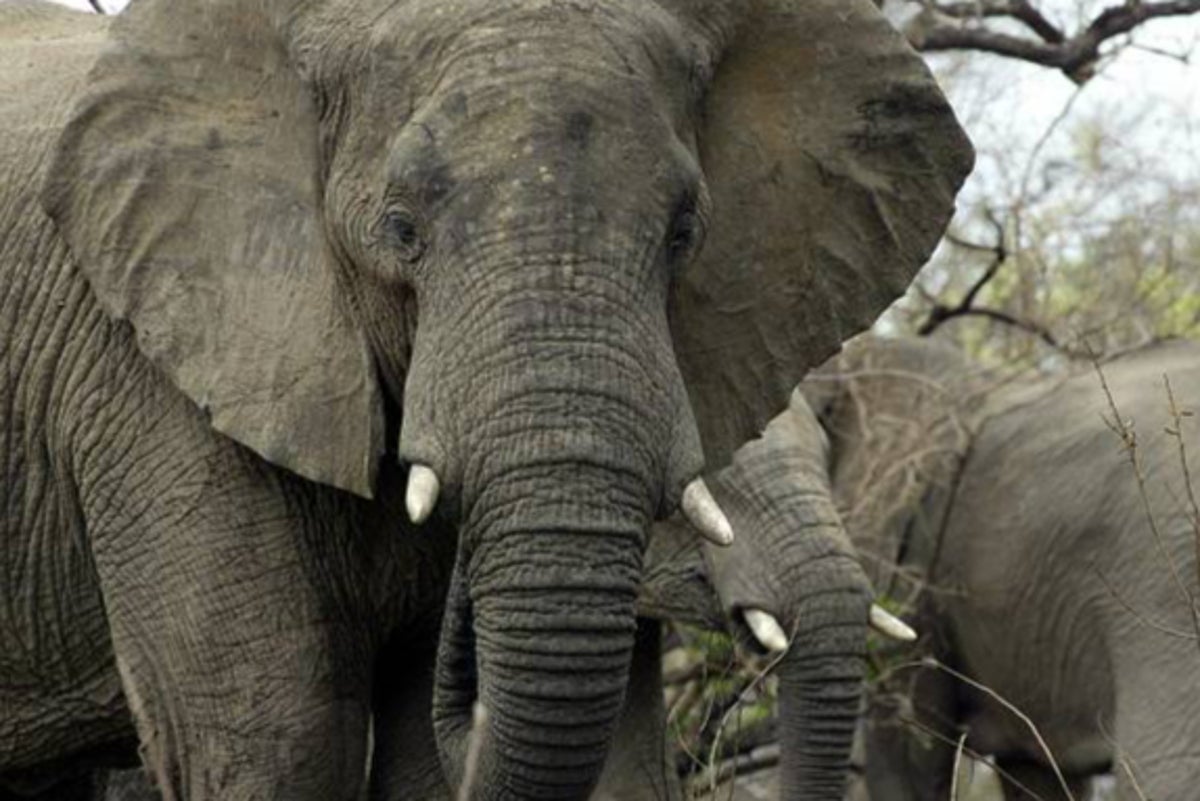
Activists are taking a prominent zoo to court, claiming its three South African elephants are suffering from clinical depression. The lawsuit relies on a predictable cocktail of emotional appeals, heartbreaking imagery, and the lazy assumption that a quiet elephant is a broken one. It makes for fantastic headlines. It also makes for atrocious biology.
The narrative driving this legal battle is simple: captivity equals misery, and any behavior short of constant, cinematic exuberance is proof of psychological trauma. This is a classic case of anthropomorphism run amok, wrapped in a legal trench coat. We are projecting human existential dread onto animals that operate on an entirely different evolutionary wavelength.
If you want to actually protect these animals, you need to look past the emotional theater and understand the hard mechanics of megafauna welfare.
The Flawed Premise of Animal Psychopathology
The core argument of the lawsuit hinges on observing "lethargy" and "stereotypic behavior"—like rhythmic swaying—as definitive proof of clinical depression. This is where the consensus falls apart under genuine scrutiny.
Depression is a highly specific, human neurochemical and psychological diagnosis. Applying it to an eight-ton pachyderm based on visual observation isn't just a stretch; it is a category error.
Swaying and repetitive motions, often labeled as stereotypies, are frequently weaponized by activists as the smoking gun of abuse. I have spent years analyzing animal welfare data, and the reality is far more nuanced. Stereotypic behavior is not a snapshot of an animal’s current mental state. It is often a historical scar—a habit formed in poor conditions decades ago, perhaps in an old-school traveling circus, that persists even when the animal is currently thriving in a world-class facility.
To claim an elephant is depressed because it sways is like claiming a rescued military veteran has an active trauma response because they still instinctively check for exits in a room. It is a legacy behavior, not an ongoing crisis.
Furthermore, lethargy is routinely confused with energy conservation. In the wild, South African elephants spend up to 18 hours a day foraging, not because they love the hustle, but because they have to. They are eating machines designed to process massive quantities of low-nutrient fiber. When a zoo provides nutritionally complete meals without the need to trek twenty miles across a drought-stricken savanna, the elephant does something entirely logical: it rests.
A motionless elephant isn't necessarily grieving; it might just be full.
The Reality of Wild Living vs. Controlled Habitats
Let us dismantle the romantic myth of the wild. The alternative presented by activists is always an idealized, pristine Eden.
Imagine a scenario where these three elephants are released into a protected reserve in South Africa tomorrow. They do not step into a Disney movie. They step into a brutal, climate-stressed ecosystem where they must compete with established herds for dwindling water resources. They face the constant threat of poaching, agonizing deaths from dental degradation in old age, and exposure to endemic diseases like anthrax.
World-class modern zoos act as genetic lifeboats and research hubs. Organizations like the Association of Zoos and Aquariums (AZA) enforce welfare standards that are often stricter than municipal laws. These standards dictate everything from microclimate control to complex behavioral enrichment programs.
Am I saying captivity is perfect? Absolutely not. Space is a constraint that no engineering marvel can fully eliminate. Massive animals require massive ranges, and urban footprints are inherently limited. But the trade-off is undeniable: guaranteed nutrition, advanced veterinary care, and total protection from apex predators and poachers.
When activists sue to disrupt this ecosystem, they are not offering a viable alternative. They are chasing a philosophical purity test at the expense of the animals' physical security.
The Danger of Courtroom Science
When we allow judges and juries to determine the emotional state of non-human species, we set a catastrophic precedent for conservation.
Lawsuits like this rely on expert witnesses who are often chosen for their ideological alignment rather than their peer-reviewed contributions to cognitive ethology. True experts—the field biologists and zoo nutritionists who actually study these animals without an activist agenda—know that measuring animal welfare requires objective metrics, not vibes.
We measure welfare through cortisol tracking, immune system monitoring, and reproductive success. If these three South African elephants have stable baseline cortisol levels, healthy weights, and show interest in their environment during enrichment activities, the claim of "depression" evaporates. Yet, emotional narratives consistently outpace data in the court of public opinion.
If the courts rule that subjective assessments of animal boredom are enough to shutter exhibits, the funding model for global conservation collapses. Zoos generate billions of dollars that directly fund in-situ conservation projects in Africa and Asia. They inspire the public to care about species they will never see in the wild. Shut down the exhibits based on flawed psychological theories, and you starve the frontline conservation efforts of the resources they need to protect wild populations from actual extinction.
Stop projecting your own office-cubicle burnout onto three South African elephants who are simply enjoying a afternoon nap. The legal system is built for human rights and human wrongs. Keep it out of the savannas, and keep it out of the habitats of the animals we are trying to save.