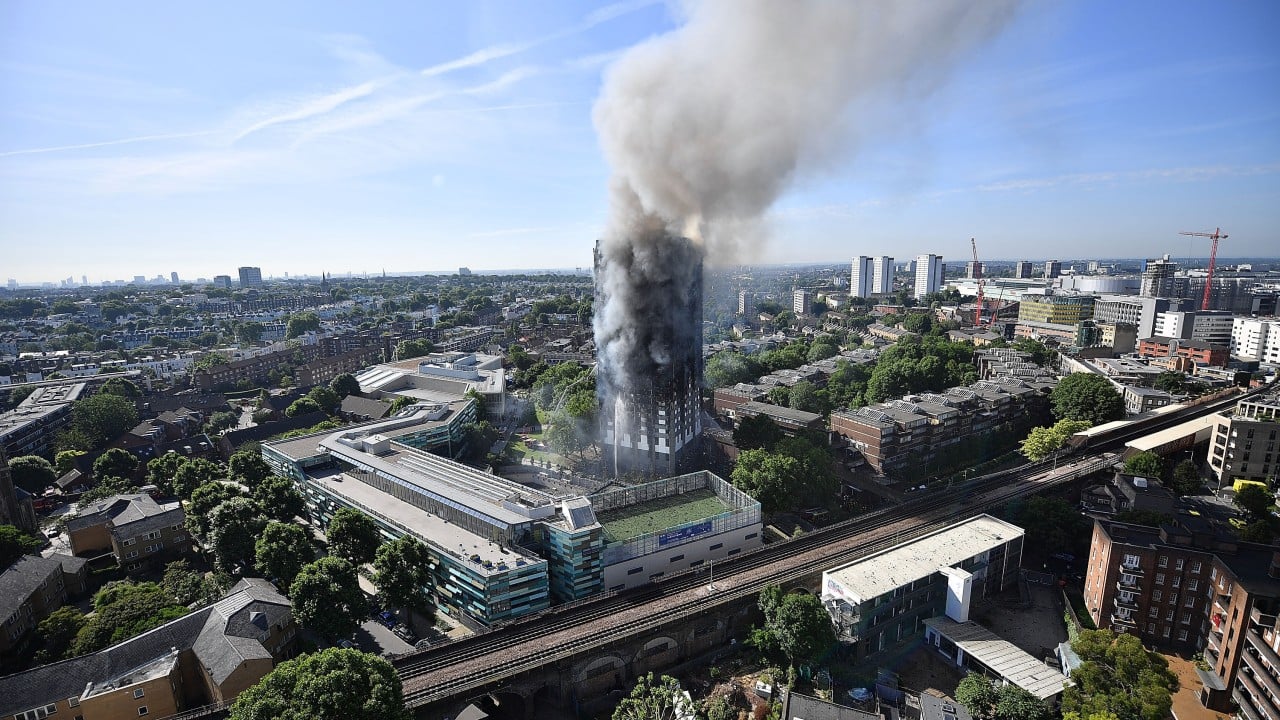
Dozens of individuals and corporate entities face potential criminal charges over the 2017 Grenfell Tower fire, yet the path to actual prosecutions remains mired in unprecedented legal complexity. More than seven years after the West London blaze claimed 72 lives, the Metropolitan Police and the Crown Prosecution Service are navigating a mountain of evidence that slows the wheels of justice. Survivors and bereaved families are left waiting as authorities assemble cases that must withstand the scrutiny of corporate defense teams. The delay highlights a systemic issue in accountability, where corporate structures and buck-passing obscure individual criminal liability.
The final report of the public inquiry painted a devastating portrait of institutional failure, dishonesty, and complacency. It revealed how a chain of decisions, driven by cost-cutting and regulatory manipulation, turned a residential high-rise into a death trap. But translating the findings of a public inquiry into criminal convictions is an entirely different challenge. The inquiry operated under rules where testimony could not be used to self-incriminate, meaning detectives must independently build their evidentiary foundations from scratch.
The Corporate Shield and the Blame Game
A central obstacle to swift prosecution is the distributed nature of responsibility across multiple private firms and public bodies. The refurbishment of Grenfell Tower involved a complex web of contractors, subcontractors, architects, and material manufacturers. When every entity points the finger at another, establishing individual criminal intent or gross negligence becomes a legal nightmare.
Under English law, prosecuting a corporation for manslaughter historically required identifying a "controlling mind"—a specific senior executive whose personal negligence led to the deaths. The Corporate Manslaughter and Corporate Homicide Act 2007 was supposed to fix this by focusing on how an organization's activities are managed or organized. Yet, applying this to a sprawling network of separate companies, each responsible for a different element of the building's facade, creates immense friction for prosecutors.
Consider the manufacturers of the combustible cladding and insulation materials. The inquiry found that certain companies deliberately misrepresented fire safety test results to market their products for use on high-rise buildings. Prosecutors must prove that these misrepresentations directly caused the specific fatalities at Grenfell. Defense attorneys will argue that the ultimate responsibility lay with the architects who specified the materials, or the building control officers who approved the installation. This fragmentation of duty serves as a highly effective legal shield.
The Failure of Regulatory Oversight
The local authority, the Royal Borough of Kensington and Chelsea, alongside its tenant management organisation, managed the building. They owed a clear duty of care to the residents. For years, tenants warned about inadequate fire escapes, faulty door closers, and the lack of a centralized fire alarm system. These warnings were routinely dismissed or treated as nuisances.
To secure convictions for gross negligence manslaughter against individuals within these organizations, the prosecution must clear a exceptionally high bar. They must demonstrate that a defendant’s conduct fell so far below what could reasonably be expected that it amounted to a criminal omission. It is not enough to show incompetence or bureaucratic inertia. The state must prove a flagrant disregard for human life.
Investigating an Industrial Scale Crime Scene
The Metropolitan Police investigation, known as Operation Northby, is one of the largest and most complex non-terrorism investigations in British history. Detectives have collected millions of documents, seized physical evidence from the scarred remains of the tower, and interviewed thousands of witnesses. The scale alone creates a timeline that tests the patience of a community demanding justice.
+-----------------------------------------------------------------+
|               The Evidentiary Pipeline                          |
+-----------------------------------------------------------------+
| 1. Public Inquiry Findings (Inadmissible as direct criminal     |
|    evidence due to self-incrimination protections)             |
+-----------------------------------------------------------------+
| 2. Independent Police Verification (Re-interviewing witnesses,  |
|    independent forensic testing of materials)                   |
+-----------------------------------------------------------------+
| 3. Crown Prosecution Service Review (Applying the dual test:   |
|    evidentiary sufficiency and public interest)                 |
+-----------------------------------------------------------------+
Every piece of evidence must be meticulously cataloged and verified. If a single link in the chain of custody is flawed, a corporate defense team will exploit it to throw out crucial testimony. This meticulousness feels like indifference to those who lost their families, but rushing a flawed case to court risks high-profile acquittals that would permanently deny accountability.
The Friction Between Truth and Punishment
Public inquiries are designed to establish the facts quickly to prevent future disasters. Criminal investigations are designed to punish wrongdoing. These two goals are frequently in conflict.
Because witnesses at the Grenfell inquiry were granted immunity from their oral evidence being used against them in criminal proceedings, detectives cannot simply present the transcripts to a jury. They must find alternative routes to the same facts. If an executive admitted to cutting corners during the inquiry, the police must find emails, internal memos, or financial records that prove the same point independently. This duplication of effort takes years.
The Shadow of Corporate Manslaughter
The UK legal system rarely sends high-ranking corporate executives to prison for systemic safety failures. More often, companies face financial penalties. For multinational corporations with deep pockets, a multi-million-pound fine is an operational cost, easily absorbed without disrupting the business model or impacting the liberty of decision-makers.
Typical Outcomes in Corporate Negligence Cases:
* Large corporations face substantial fines but rarely dissolution.
* Individual executives often escape personal liability by citing distributed decision-making.
* Small subcontractors are more vulnerable to prosecution than parent manufacturers.
This reality frustrates expectations of justice. If the Grenfell prosecutions yield only corporate fines and a handful of convictions for minor regulatory offenses, it will signal that the legal framework is inadequate for handling modern corporate negligence. The demand from the public is for individual accountability—for the people who signed off on dangerous materials to face prison sentences.
The Global Impact of UK Material Standards
The implications of these potential charges extend far beyond the borders of West London. The products used on Grenfell Tower were manufactured by multinational corporations and sold worldwide. A successful prosecution targeting the fraudulent marketing of building materials would send shockwaves through the global construction industry.
For decades, international manufacturers have relied on ambiguous local regulations to sell cheaper, less fire-resistant materials. If British prosecutors manage to hold executives criminally liable for misleading testing regimes, it will force a massive reassessment of corporate liability across Europe and North America. It establishes a precedent that hiding behind ambiguous wording in a technical data sheet cannot shield a manufacturer from manslaughter charges when those materials inevitably fail.
A Fractured Trust in the Legal Process
For the survivors, the protracted timeline is a form of ongoing trauma. They see individuals who made critical decisions continuing their careers, while the community remains displaced and scarred. The delay erodes trust in the state's willingness to prosecute its own institutions and powerful corporate entities.
The state faces a delicate balancing act. Moving too quickly guarantees a collapsed trial and no convictions at all. Moving too slowly creates the impression of a deliberate establishment cover-up, designed to let memories fade and public anger cool. The Crown Prosecution Service must decide whether to pursue a broad, sweeping case involving dozens of defendants, or focus on a few highly winnable cases against key figures.
Focusing on a small group might deliver definitive convictions, but it leaves many who contributed to the disaster unpunished. A massive, multi-defendant trial risks overwhelming a jury and fracturing into a chaotic series of appeals.
The upcoming decisions by the Crown Prosecution Service will test the fundamental principle that the law applies equally to all, regardless of corporate power or political influence. The legal arguments will be dry, technical, and protracted, but the core issue remains simple: seventy-two people died in their homes because profit and bureaucratic convenience were prioritized over human life. The legal system must now prove it possesses the tools and the will to handle that reality.