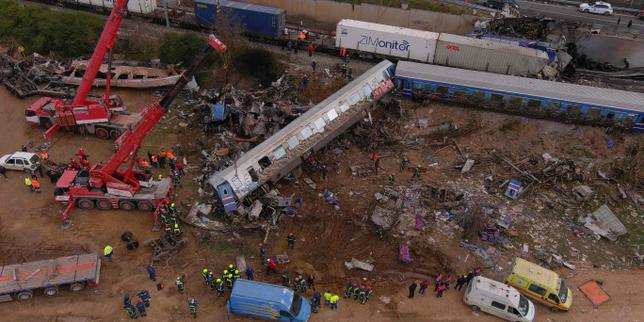
The trial for the deadliest rail disaster in Greek history did not just stall because of shouting matches in a Larisa courtroom. It collapsed under the weight of a systemic refusal to confront why 57 people, mostly students, were incinerated on February 28, 2023. While the immediate cause of the postponement was a group of lawyers demanding a larger venue and better access for victims' families, the underlying crisis is much darker. Greece is attempting to prosecute a 21st-century catastrophe using 19th-century legal maneuvers and a fractured digital infrastructure that never actually worked.
The collision between a high-speed passenger train and a freight convoy on the Athens-Thessaloniki line was not an accident. It was a mathematical certainty. For years, the European Union poured hundreds of millions of euros into Greek rail "modernization." Yet, on the night of the crash, the remote surveillance and signaling systems meant to prevent such head-on collisions were dark. The station master at Larisa was operating with little more than a paper log and a radio.
The Myth of the Lone Human Error
The official narrative pushed by political figures in the immediate aftermath of the crash focused almost exclusively on the station master. They painted a picture of a single, poorly trained individual who made a catastrophic mistake. This is a convenient fiction. In complex industrial systems, "human error" is usually the last link in a chain of mechanical and institutional failures.
The real story lies in the ETCS (European Train Control System). This technology is designed to automatically stop a train if it bypasses a red signal or enters a track occupied by another vehicle. Had ETCS been operational on the Tempi stretch, the crash would have been impossible. The system would have overridden the station master’s manual error in milliseconds.
Instead, the investigation has peeled back layers of "Contract 717." This 2014 agreement was intended to restore the signaling and remote control systems across the Greek rail network. Ten years later, the project was a ghost. Money disappeared into a void of subcontractors, legal disputes, and bureaucratic inertia. By focusing the trial on the station master and a handful of local officials, the judiciary risks ignoring the white-collar negligence that left the tracks blind.
Evidence Tampering and the Concrete Shroud
One of the most explosive elements fueling the tension in the courtroom is the "erasing" of the crash site. Within days of the collision, the Greek government ordered the site to be leveled. Heavy machinery moved in, removed tons of topsoil, and covered the area with gravel and concrete.
This was done before independent investigators could fully examine the wreckage for chemical traces. Why the rush? Families of the victims have long suspected that the freight train was carrying undeclared, illegal solvents like xylene. This would explain the massive fireball that erupted upon impact—a blast far more intense than what would be expected from standard locomotive fuel.
The decision to pave over a crime scene is unheard of in international aviation or rail investigations. By doing so, the state effectively destroyed physical evidence that could have proven the freight train was a rolling bomb. The current trial faces an uphill battle because the primary "witness"—the earth itself—has been silenced.
A Judicial System at a Breaking Point
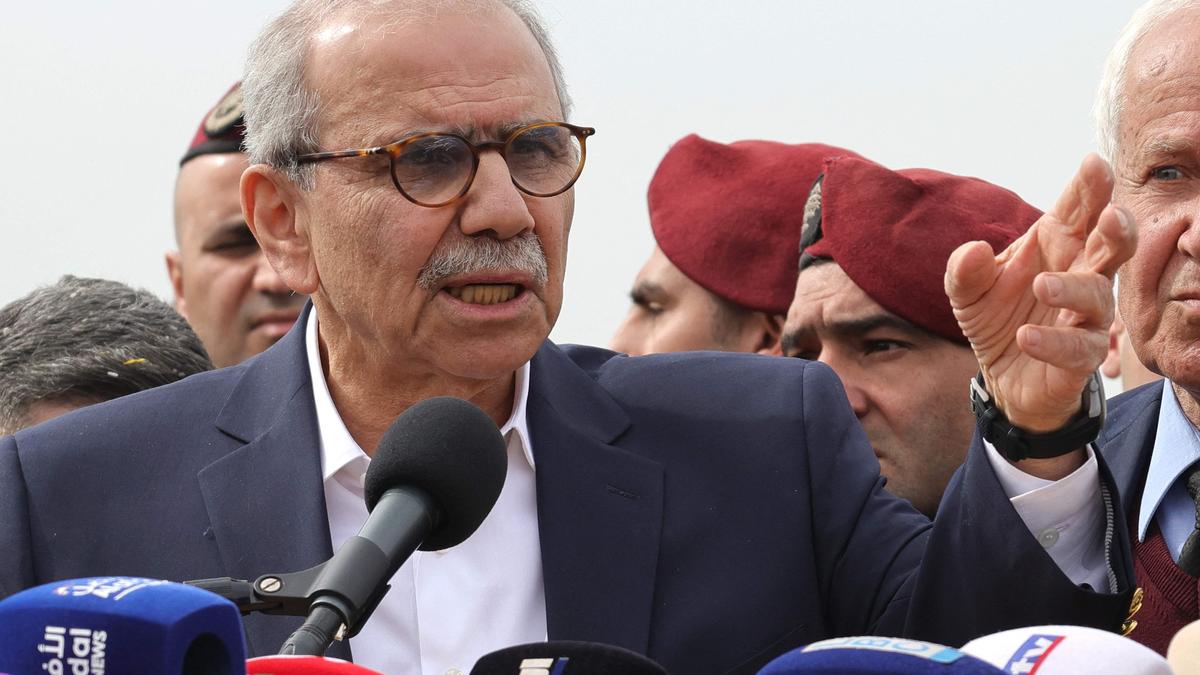
Greece’s legal framework is notoriously slow, but the Tempi trial is under a unique kind of pressure. The government is trying to balance the public’s demand for blood with the need to protect the political establishment. This tension boiled over in the courtroom when lawyers for the victims’ families realized the space provided could not even accommodate the basic logistical needs of such a massive case.
The postponement isn't a mere delay. It is a symptom of a state that is unprepared to look in the mirror. There are more than 30 defendants, ranging from low-level rail employees to former executives of Hellenic Train and OSE (the infrastructure provider). However, the conspicuous absence of high-ranking political figures from the indictment list is what caused the most fury among the spectators.
Under Greek law, ministers often enjoy a level of immunity that requires a specific parliamentary procedure to break. The parliamentary inquiry into Tempi, held earlier this year, ended in a predictable partisan stalemate. The majority cleared the former Transport Minister of criminal responsibility, despite evidence that he had been warned multiple times about the lack of safety systems.
The Cost of Digital Decay
The technical failure at Tempi is a warning for the rest of Europe. It shows what happens when a country buys high-tech equipment but fails to maintain the human and institutional infrastructure to run it. The signaling system wasn't just broken; it was cannibalized. Parts were stolen for scrap metal, and maintenance contracts were ignored.
The tragedy also exposes the limits of privatization. When the Greek railway's operations were sold to Italy’s Ferrovie dello Stato Italiane, the responsibility for the tracks stayed with the Greek state-owned OSE. This split created a lethal accountability gap. The operator blamed the infrastructure, and the infrastructure provider blamed the operator. In the middle were 57 people who thought they were buying a ticket to their future.
Beyond the Courtroom Walls
If the trial eventually resumes in a larger hall, the legal outcome will still likely fall short of true justice. A conviction for a station master or a technician is a footnote. True accountability would require an overhaul of how the Greek state handles public works and a total transparency regarding the "717" contracts.
The families of the "Tempi 57" are not just fighting for a verdict; they are fighting against a culture of silence. They have taken their case to the European Parliament, bypassing the domestic blockade. They are demanding that the EU investigate how its funds were used—or misused—to create a death trap.
The trial is currently scheduled to reconvene in several weeks. But until the court addresses the missing chemical evidence and the political negligence that preceded the "human error," any verdict will be seen as a cover-up. The tension in that room wasn't just about chairs and microphones. It was the sound of a society refusing to let a tragedy be buried under a layer of fresh concrete.
Every day the trial is delayed, the memory of the fire at Tempi fades a little more for the public, but the rot in the system remains. The tracks are still there. The signaling is still questionable in many sectors. And the people responsible for the "why" are still sitting in offices, not docks.
Watch the next hearing closely. If the venue changes but the scope of the investigation remains narrow, the "tension" will move from the courtroom to the streets.
Request a full breakdown of the "Contract 717" forensic audit to see exactly where the safety funds were diverted.