The expiration of the ceasefire between the Pakistani state and the Tehrik-i-Taliban Pakistan (TTP) represents a structural failure in regional security architecture rather than a simple diplomatic breakdown. The current volatility is a direct result of an asymmetric friction model where the Taliban-led administration in Kabul acts as a strategic buffer for militant proxies while Islamabad attempts to maintain internal stability through a series of diminishing returns. To understand the trajectory of this conflict, one must analyze the decoupling of the Afghan Taliban’s interests from Pakistan’s domestic security requirements and the resulting breakdown of the bilateral "Strategic Depth" doctrine.
The Triad of Insurgency Persistence
The resurgence of militant activity following the truce's end is driven by three distinct logistical and political variables. These variables create a self-sustaining cycle of violence that traditional counter-insurgency (COIN) operations struggle to disrupt. If you liked this piece, you should read: this related article.
- Sanctuary Externalities: The transition of the Afghan Taliban from an insurgent force to a governing body has provided the TTP with a "sovereign shield." Under this framework, the TTP utilizes Afghan territory for recruitment, training, and medical recovery, effectively placing their command structure beyond the kinetic reach of Pakistani conventional forces without risking a direct interstate skirmish.
- Asset Liquidation and Proliferation: The withdrawal of NATO forces left a vacuum of advanced small arms and night-vision equipment. This "gear migration" has upgraded the TTP’s tactical lethality, allowing them to engage in high-precision ambushes against Frontier Corps outposts with a technical proficiency previously reserved for elite state actors.
- Ideological Overlap: There is no functional daylight between the foundational theology of the Afghan Taliban and the TTP. Expecting the former to militarily suppress the latter ignores the "Brotherhood of the Trench" sentiment that governs their internal politics.
The Economic Constraints of Kinetic Escalation
Pakistan’s vow to "eradicate terrorism" faces a hard ceiling imposed by fiscal reality. Military operations are not merely matters of political will; they are functions of GDP.
The cost-per-day of a full-scale offensive in the mountainous North Waziristan or Khyber regions involves massive expenditures in fuel, munitions, and the subsequent "Relief and Rehabilitation" of Internally Displaced Persons (IDPs). With Pakistan’s foreign exchange reserves under constant pressure and inflation metrics constraining the federal budget, the state cannot afford a repeat of large-scale operations like Zarb-e-Azb (2014) or Rah-e-Nijat (2009). For another look on this event, check out the recent update from The Guardian.
Instead, the state is forced into a Reactive Defense Posture. This creates a tactical bottleneck:
- Static Defense Risks: Manning thousands of small border forts makes soldiers "sitting ducks" for mobile sniper units.
- Intelligence Gaps: Without a physical presence in the local communities of the erstwhile FATA (Federally Administered Tribal Areas), the state loses the human intelligence (HUMINT) necessary to preempt "lone wolf" or small-cell IED attacks in urban centers like Peshawar or Quetta.
The Failure of the Negotiated Settlement Model
The lapse of the truce exposes the inherent flaw in negotiating with non-state actors who do not recognize the Westphalian sovereignty of the state. The TTP’s demands—specifically the reversal of the FATA merger and the enforcement of their specific legal interpretations—are zero-sum.
For the Pakistani state, granting these concessions would mean ceding territorial integrity and constitutional authority. For the TTP, anything less than these concessions is viewed as a tactical pause to regroup. The negotiation phase was characterized by "Information Asymmetry," where the TTP used the cessation of hostilities to infiltrate operatives back into the valley districts, while the state remained bound by the public optics of seeking peace.
The Durand Line as a Point of Friction
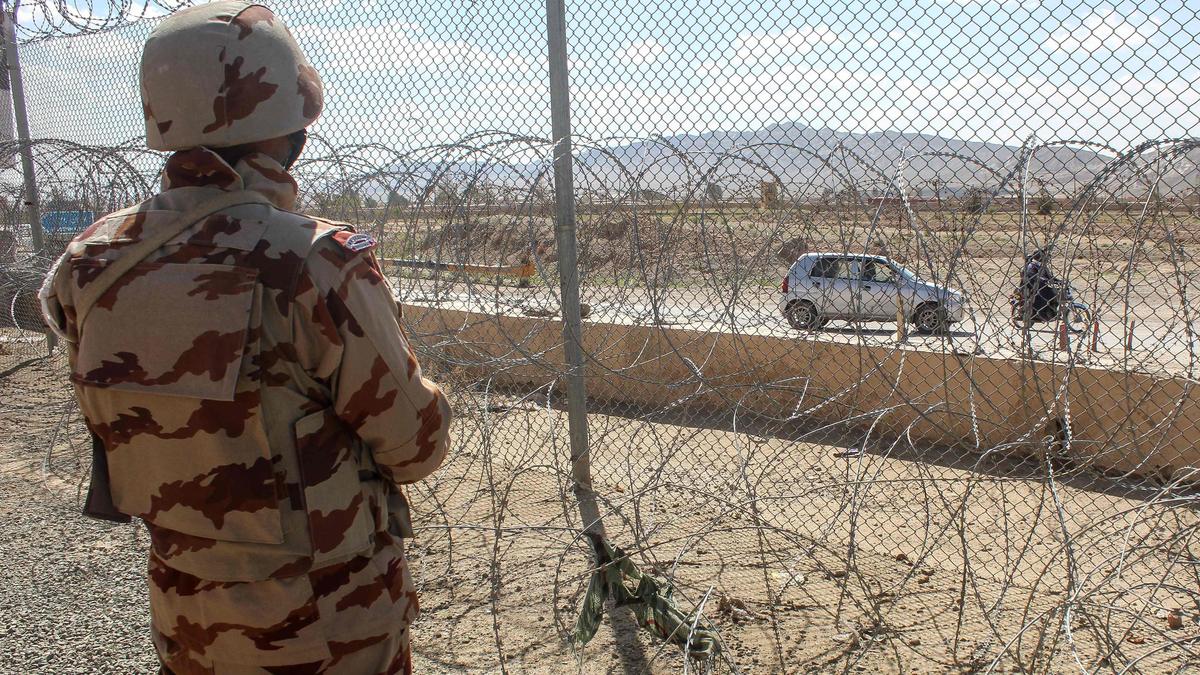
The physical fencing of the 2,640km border was intended to be a silver bullet for "Infiltration Management." However, the fence is a physical solution to a political problem. The Afghan Taliban have repeatedly contested the legitimacy of the Durand Line, leading to direct fire exchanges between the two professional militaries.
This creates a Double-Front Dilemma:
- The Internal Front: Dealing with TTP cells in the urban and tribal belts.
- The Border Front: Managing the hostility of a neighboring government that refuses to acknowledge the international boundary.
The second limitation of the fence is its maintenance. In high-altitude terrain, the fence is susceptible to environmental degradation and manual breaching. Without an integrated sensor net—which requires significant capital investment—the fence is merely a delay mechanism rather than a denial mechanism.
Tactical Evolution: The Rise of Targeted Assassinations
As large-scale military operations become cost-prohibitive, the state has shifted toward a strategy of "Neutralization via Attrition." This involves targeted strikes against TTP leadership figures residing in Afghanistan. While effective in the short term by creating leadership vacuums, this strategy creates a "Hydra Effect."
When a commander is eliminated, the decentralized nature of the TTP allows for rapid replacement by younger, more radicalized deputies who are less inclined toward future negotiations. This creates a more volatile and less predictable adversary.
Strategic Forecast: The Shift to Counter-Terrorism (CT) over COIN
The era of massive infantry-led Counter-Insurgency (COIN) in the region is ending, superseded by a high-intensity Counter-Terrorism (CT) model. This shift is necessitated by the urban shift of the conflict. The TTP and its affiliates, such as the Islamic State-Khorasan (IS-K), have moved their target sets from remote military outposts to high-value "soft targets" in cities.
The state’s counter-strategy must now pivot to:
- Financial Interdiction: Tracking the informal "Hawala" networks that fund militant salaries and explosive procurement.
- Cyber-Surveillance: Monitoring the encrypted communication channels (Telegram, Signal) that have replaced traditional radio comms.
- Regional Multi-lateralism: Attempting to use Chinese economic influence as a lever to force Kabul into policing its borders more effectively.
The persistence of the threat suggests that "eradication" is an aspirational term rather than a realistic short-term outcome. The objective is likely the "Management of Violence"—reducing the frequency and lethality of attacks to a level that does not threaten the fundamental stability of the state or its economic corridors.
The most viable strategic move for the Pakistani security establishment is the implementation of a Zone-Based Security Protocol. This involves hardening the urban centers of Punjab and Sindh while maintaining a "High-Friction Buffer" in the border provinces. This accepts a baseline of volatility in the periphery to protect the economic heartland. Any attempt to achieve a total military victory in the current fiscal and regional climate will likely result in overstretch and a further degradation of the state’s internal authority.