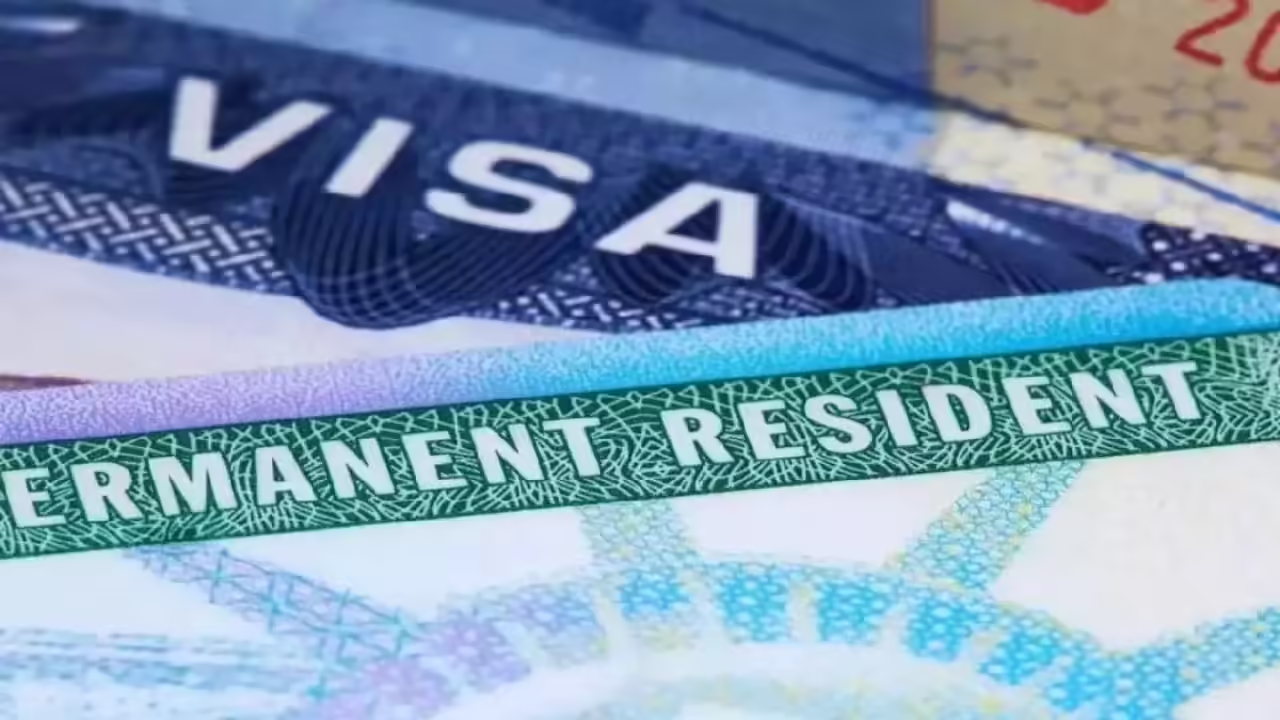
The path to a Green Card used to be a matter of bureaucratic endurance, financial stability, and a clean criminal record. That era has ended. In a quiet but seismic shift at the Department of Homeland Security, the U.S. government has effectively introduced an ideological purity test for permanent residency. If you have ever used your voice—online or on the street—to criticize the State of Israel, you may have just forfeited your future in the United States.
Internal training materials recently leaked from U.S. Citizenship and Immigration Services (USCIS) reveal a new directive for the "Homeland Defenders" staffing the agency. Officers are now instructed to treat "anti-American views" and "anti-Israel sentiment" as overwhelmingly negative factors that can justify the denial of a Green Card. This isn't about clearing a high bar for terrorism or violent intent. It is about a digital paper trail. A single social media post demanding an end to "Israeli terror" or a photo from a campus protest is now sufficient grounds for an officer to refer an applicant for "ideological vetting."
The administration’s logic is blunt: living in America is a privilege, not a right, and that privilege is now reserved for those whose political alignment matches the executive branch’s definition of a "good" immigrant.
The Algorithmic Dragnet
The mechanism for this crackdown isn't just a few eagle-eyed officers. It is a massive, AI-driven screening operation. Under the "extreme vetting" protocols restored in 2025, the government has integrated social media scanning tools into the standard Green Card application process. When an applicant submits Form I-485, they are effectively handing over their digital life to a system designed to flag specific keywords and political hashtags.
These tools look for more than just overt threats. They are programmed to identify "anti-American ideologies," a term so broad it has become a catch-all for dissent. Specifically, the new guidelines highlight:
- Social Media Activity: Posts that call for the boycott of Israel or use maps that do not include Israel's current borders.
- Protest Participation: Involvement in campus demonstrations, specifically those that occurred after October 7, 2023.
- Organizational Ties: Membership in groups that advocate for Palestinian rights, even if those groups are legally registered in the U.S.
The efficiency of this system is terrifying. In the last year alone, Green Card approvals have plummeted by nearly 50 percent. This isn't because of a lack of applicants; it is because the "disqualification" bucket has grown to include anyone with a loud political conscience.
The Death of the First Amendment for Non-Citizens
For decades, the legal consensus held that while the government has broad power over borders, it cannot punish people for speech that would be protected for a citizen. That consensus is being shredded in real-time.
A federal judge in Boston recently ruled that the administration violated the Constitution by targeting non-citizens for deportation based solely on their pro-Palestinian advocacy. Judge William Young described the policy as "ideological deportation" and a "betrayal of American values." He noted that the administration had essentially created a "thought police" to silence opposition to its foreign policy.
Yet, the administration remains undeterred. White House spokespeople argue these measures are about "national security" and "protecting American culture." By framing political speech as a security threat, they bypass traditional free speech protections. They are betting that by the time these cases wind through the Supreme Court, the "undesirables" will have already been purged or intimidated into silence.
The Cost of Silence
The atmosphere in immigrant communities is one of pervasive fear. High-skilled workers on H-1B visas, doctors on O-1 visas, and students on F-1 visas—people who have built lives here for a decade—are suddenly scrubbing their social media accounts. They are deleting old photos, leaving WhatsApp groups, and declining to sign petitions.
This is the "chilling effect" in its most literal form. When your legal status is tied to your silence, the marketplace of ideas becomes a gated community. We are moving toward an immigration system that prioritizes compliance over talent.
Critics argue this policy is a strategic error. By alienating the global talent pool over political litmus tests, the U.S. risks a "reverse brain drain." If a software engineer from Bangalore or a surgeon from Amman feels they cannot express a political opinion without risking their residency, they will take their skills to London, Berlin, or Toronto.
Defining the Anti-American Label
What exactly constitutes an "anti-American view"? According to the new USCIS training manuals, it includes "desecrating the American flag" or promoting "antisemitic ideologies." While few would defend genuine antisemitism, the government's definition has conveniently merged it with any criticism of the Israeli government's military actions.
One example in the training manual shows a mock social media post reading "Stop Israeli Terror in Palestine." Under the new rules, this post is categorized as "supporting antisemitic terrorism." There is no room for nuance, no distinction between criticizing a state’s policy and hating a people.
This blurring of lines is intentional. It creates a legal gray zone where the government can deny residency to almost anyone they find politically inconvenient. If you aren't 100 percent in line with the current administration’s geopolitical priorities, you are, by definition, "anti-American."
The Infrastructure of Exclusion
This isn't a temporary glitch or a rogue policy. It is the new infrastructure of the American immigration system. The "Homeland Defender" initiative has rebranded the role of the immigration officer from a civil servant to a cultural sentry. Job postings now explicitly call for candidates who want to "defend your culture."
This shift ensures that even if the administration changes, the institutional culture of USCIS has been fundamentally altered. The files being built today—the "ideological dossiers" on hundreds of thousands of applicants—will remain in the system for decades.
The message to the world is clear. We want your labor, we want your investment, and we want your taxes. But we do not want your opinions. If you want a Green Card, you must first leave your conscience at the border.
Check your digital footprint. Every like, every share, and every "attend" click on a Facebook event is now a permanent part of your immigration file. In the new America, silence is the only safe residency requirement.