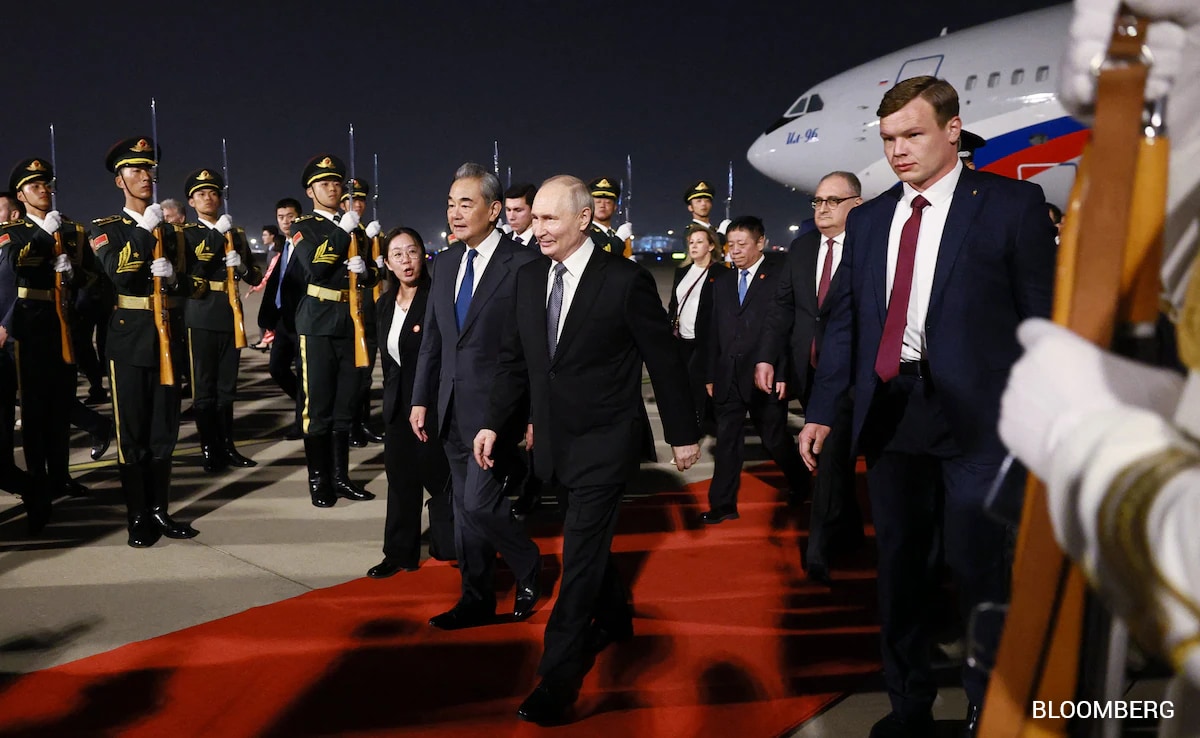
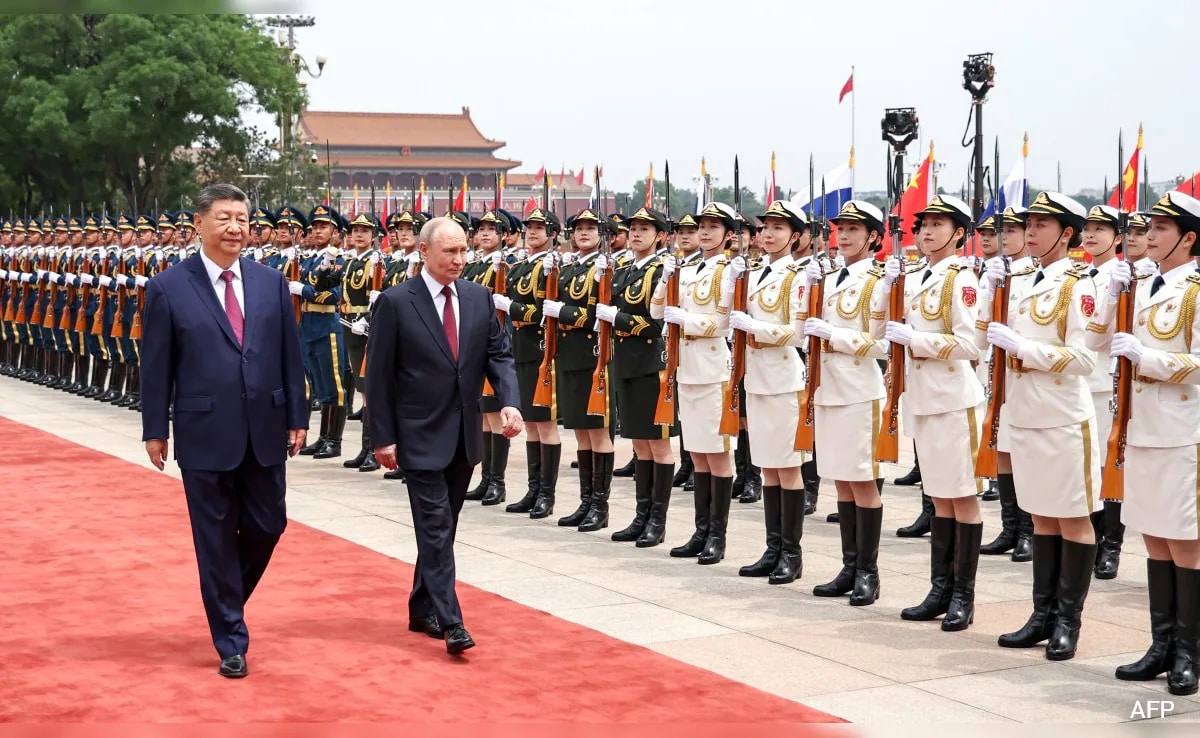
The prevailing narrative of a tripolar global order misinterprets superficial diplomatic theater as balanced leverage. Beijing's recent high-level engagements—juxtaposing a strategic summit with US President Donald Trump against a concurrent state visit from Russian President Vladimir Putin—reveal that China is not navigating a delicate balancing act. Instead, it is operating as the central clearinghouse of global geopolitical risk. By exploiting the structural deficits of both an overextended Western superpower and a sanction-bound Russian economy, Chinese President Xi Jinping executes a strategy of dual asymmetry, extracting economic and institutional concessions from both sides while retaining maximum freedom of maneuver.
Understanding this dynamic requires abandoning the rhetorical framing of "alliances" and "friendships." Geopolitical alignment is better understood as a market transaction dictated by comparative vulnerabilities. Beijing's current position relies on a calculated arbitrage of the strategic imperatives driving Washington and Moscow. Meanwhile, you can read similar stories here: The Normalization of the Noon Flashbang.
The Strategic Balance Sheet: Quantifying the Arbitrage
To understand how Beijing holds the structural advantage, the competing pressures on the three powers can be broken down into specific domestic and international variables.
The United States: Transactional Diplomacy and Institutional De-escalation
Washington’s strategic posture is defined by a desire to rapidly resolve complex, multi-theater entanglements in favor of direct, bilateral negotiations. This creates an opening for Beijing to trade nominal diplomatic alignment for structural concessions. During recent bilateral talks, American focus zeroed in on securing joint cooperation against international multilateral bodies, such as the International Criminal Court (ICC), framing these institutions as mechanisms of "lawfare" that threaten sovereign autonomy. To explore the bigger picture, we recommend the excellent report by USA Today.
By engaging with Washington on these terms, Beijing achieves a critical objective: the fragmentation of Western-led multilateral legal frameworks. This weakens the very institutions that could otherwise be used to constrain future Chinese actions in the Indo-Pacific. The cost to Beijing for this concession is zero, while the return is a direct reduction in international institutional pressure.
The Russian Federation: Complete Economic Asymmetry
Moscow’s strategic positioning is entirely constrained by its systemic economic isolation from Western markets. The "no-limits" partnership announced in 2022 has evolved into a highly unequal buyer-supplier dynamic. Russia enters negotiations with an urgent need to sustain cross-border capital flows and secure alternative buyers for its stranded energy assets.
| Strategic Variable | United States Imperative | Russian Federation Imperative | China's Arbitrage Mechanism |
|---|---|---|---|
| Primary Objective | Dismantle multilateral constraints; secure swift, transactional bilateral wins. | Establish long-term capital channels; bypass Western-led sanctions regimes. | Offers tactical institutional alignment while securing concessions on trade and technology access. |
| Energy Dynamics | Focus on domestic production and insulating Western supply chains from supply shocks. | Redirect stranded European gas volumes eastward via new infrastructure. | Demands steep price discounts on current imports while delaying capital commitments on major infrastructure. |
| Systemic Risk Factor | High domestic political pressure to deliver immediate economic outcomes. | Accelerating state fiscal strain and total dependency on Chinese supply chains. | Complete control over the timeline and economic terms of bilateral agreements. |
The Mechanism of Selective Disclosures: Managing the Kremlin
A striking example of Beijing's strategic dominance lies in its information-management strategy. Reports indicating that Xi explicitly told Trump that Putin could ultimately "regret" launching the war in Ukraine serve a precise structural purpose.
This disclosure was not a diplomatic gaffe; it was a calibrated signal released precisely as Putin arrived in Beijing for a high-profile state visit.
[Beijing's Strategic Disclosures]
       │
       ├─► To Washington: Signals tactical autonomy from Moscow
       │   └─ Benefit: Lowers trade/tariff pressure from the US
       │
       └─► To Moscow: Highlights Russia's lack of alternative partners
           └─ Benefit: Forces Russian concessions on energy pricing & tech transfers
This deliberate leak alters the bargaining environment through two distinct mechanisms:
- The Western De-escalation Signal: By signaling internal skepticism regarding Russia’s long-term military viability, Beijing lowers the political temperature with Washington. It positions China not as an ideological co-belligerent with Russia, but as a pragmatic, stabilizing force. This limits the justification for broader Western secondary sanctions against Chinese financial institutions.
- The Leverage Multiplier over Moscow: The timing of the leak directly undercuts Putin’s negotiating position upon arrival in Beijing. By demonstrating to the Kremlin that its internal strategic vulnerabilities are being discussed with Washington, Beijing reinforces Russia's lack of alternative partners. This maximizes China's leverage in negotiations over raw material pricing, technology transfers, and military-industrial supply chains.
The Energy Monopsony: The Power of Siberia 2 Bottleneck
The structural imbalance between Beijing and Moscow is most visible in the ongoing negotiations over the Power of Siberia 2 (PS2) pipeline. Designed to redirect 50 billion cubic meters of natural gas annually from Russia’s Yamal peninsula away from lost European markets toward northern China, the project remains stalled due to a stark divergence in economic priorities.
Russia requires an immediate commitment to construction to secure long-term capital inflows and validate its pivot to Asia. China, conversely, faces no urgent supply deficit. Beijing has successfully diversified its energy mix through long-term liquefied natural gas (LNG) contracts with Qatar and Central Asian pipeline networks.
This creates a classic monopsony, where a single buyer dictates terms to a desperate seller. Beijing's strategy relies on two main demands:
- Sub-Market Pricing: China demands that gas delivered via PS2 be priced close to heavily subsidized domestic Russian rates, rather than global market benchmarks.
- Capital Offloading: Beijing is resisting financing the pipeline's construction costs, forcing Russia to shoulder the capital expenditure while facing severe budgetary constraints at home.
By delaying the project, Beijing extracts steep discounts on existing crude oil and pipeline gas imports while forcing Russia to accept the long-term risk of a single-buyer infrastructure asset.
Structural Vulnerabilities in the Chinese Arbitrage Model
While Beijing currently holds the advantage, its dual-asymmetry strategy faces real structural limitations that prevent it from being a foolproof solution.
The Secondary Sanctions Threshold
China's banking system remains deeply integrated into the SWIFT financial network. While cross-border trade with Russia in Renminbi (RMB) has surged, Chinese state-owned banks regularly restrict or delay transactions with Russian entities to avoid triggering US secondary sanctions. Beijing's leverage over Moscow depends on maintaining this economic lifeline, but actually using it fully risks cutting China off from Western consumer markets, which remain the foundation of its manufacturing sector.
The Risk of Russian State Instability
Beijing benefits from a weakened, compliant Russia that provides cheap commodities and strategic depth. However, an outright fiscal collapse or internal political crisis in Russia would create a massive security vacuum along China's northern border. This forces Beijing to continually calibrate its economic pressure—providing just enough support to keep the Russian state functional, but not enough to allow Moscow to regain strategic independence.
The Strategic Path Forward
Rather than seeking a formal alliance with either Washington or Moscow, Beijing will continue to treat both relationships as transactional options. The optimal play for Chinese statecraft over the next eighteen months is to codify these asymmetrical advantages into binding economic and institutional arrangements before Western political cycles or Russian domestic instability alter the current dynamics.
The immediate priorities for this strategy are clear:
- Enforce Pricing Terms on Strategic Resources: Beijing will maintain its refusal to sign the Power of Siberia 2 agreement until Moscow accepts sub-market pricing and absorbs the construction costs. Russia's growing fiscal constraints mean its negotiating leverage will only decrease the longer the war continues.
- Trade Tactical Diplomatic Cooperation for Market Access: China will continue to offer Washington superficial bilateral wins, such as cooperating on institutional criticisms of multilateral courts or participating in short-term ceasefires, in exchange for targeted rollbacks of tech-sector export controls and tariffs.
- Secure Long-Term Technological and Territorial Access: Beijing will use Russia's growing economic dependence to demand greater access to sensitive technologies—such as advanced submarine quieting and missile-defense systems—alongside expanded logistical access to the Northern Sea Route and critical infrastructure in the Russian Far East.
By maintaining this dual asymmetry, Beijing avoids the costs of direct global conflict while ensuring that both the United States and Russia must continuously pay a premium to secure China's neutrality.
For a closer look at the diplomatic dynamics and imagery surrounding these high-level summits, the video IN FULL: Trump and Putin Exchange Smiles, Handshakes, and Brief Limo Conversation in Alaska | APT shows the highly publicized, personal style of diplomacy that Beijing systematically factors into its strategic calculus.