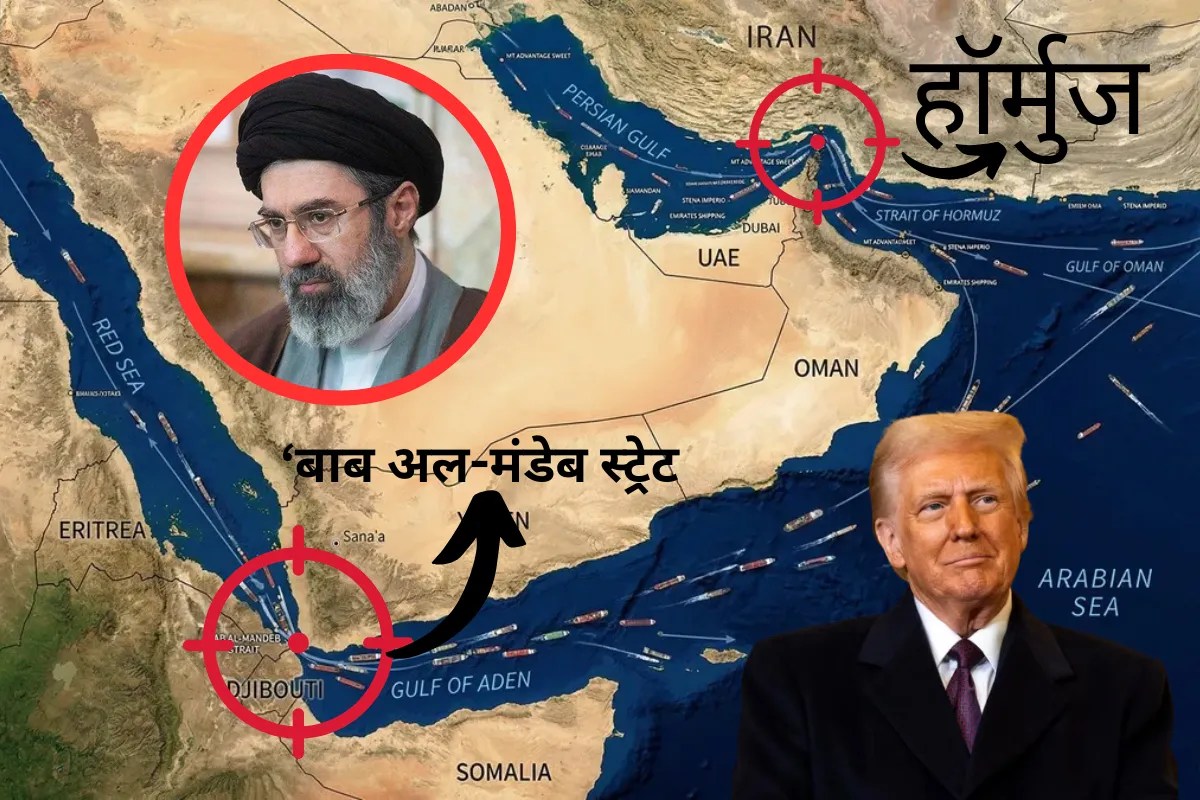
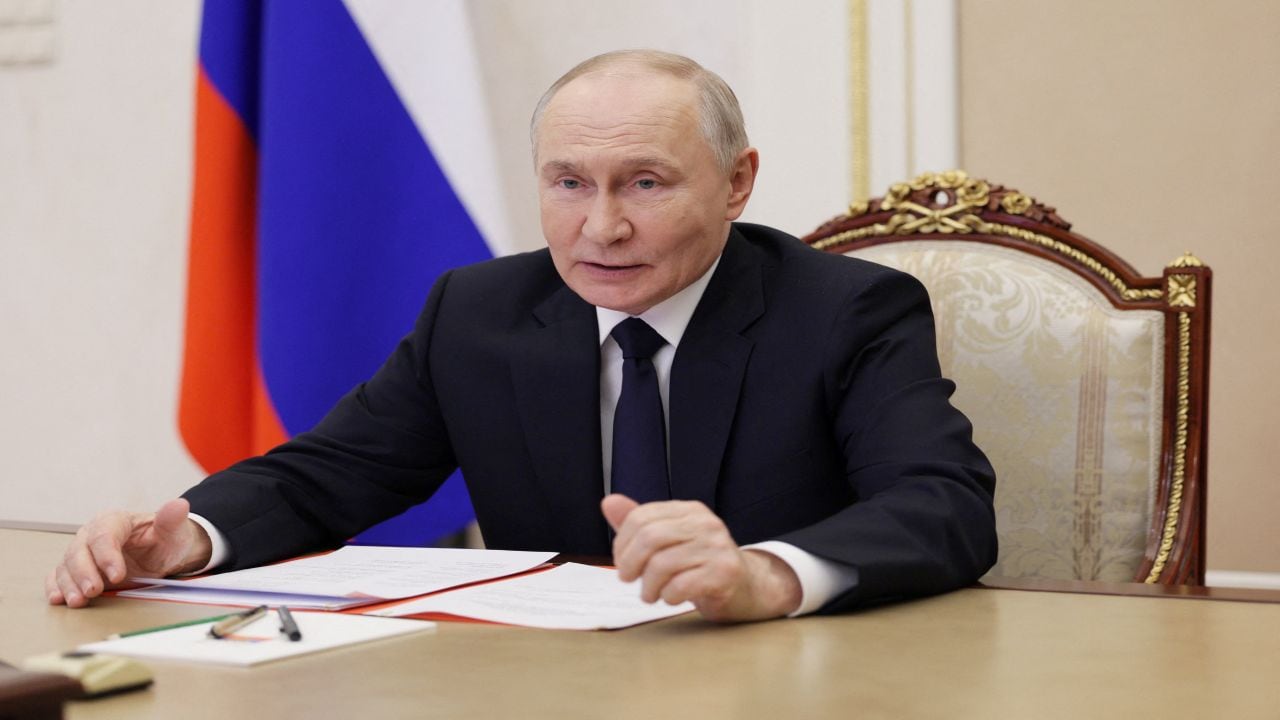
The current pause in US military strikes against Tehran does not reflect a diplomatic breakthrough, but rather a calculated interplay of asymmetric leverage between Washington, Beijing, and regional powers. While standard political narratives treat bilateral verbal assurances—such as Chinese President Xi Jinping’s pledge to President Donald Trump not to arm Iran—as definitive geopolitical milestones, a structural analysis of the current conflict reveals a far more volatile calculus. The stability of the current, fraying ceasefire rests upon a tri-lateral leverage equation where military brinkmanship, energy security dependencies, and structural bottlenecks dictate the limits of each state's strategic maneuverability.
The core vulnerability of the current US position lies in an optimization problem: balancing the strategic imperative of preventing Iranian nuclear breakout against the immense economic friction caused by the closure of the Strait of Hormuz. Since the initiation of joint US-Israeli kinetic operations on February 28, which fundamentally altered the Iranian command structure, the international system has absorbed a severe supply-side energy shock. By examining the operational mechanics of this crisis, we can isolate the real economic and military drivers that verbal assurances frequently obscure.
The Three Pillars of the Sino-Iranian Strategic Dependency
To understand the validity of any Chinese commitment to withhold military hardware from Iran, one must model the structural utility Tehran provides to Beijing. This utility is not ideological; it is defined by three distinct strategic vectors.
- The Energy Discount Arbitrage: China relies on Iranian crude to insulate its industrial base from global price shocks. Because Iranian exports bypass traditional financial channels due to systemic sanctions, Beijing purchases this volume at a structural discount, using non-dollar denominated clearing systems. Xi's explicit acknowledgment that China wishes to maintain its oil purchases underscores that Beijing treats energy flow as a non-negotiable domestic economic input.
- The Maritime Chokepoint Hedge: The effective closure of the Strait of Hormuz, through which approximately 20% of global petroleum liquids transit, imposes a disproportionate cost function on East Asian economies. While the United States has achieved net energy independence via domestic shale plays, China remains structurally short on crude oil. Beijing’s diplomatic offers to assist in "reopening" the strait are motivated by a logistical imperative to eliminate this supply-chain bottleneck.
- The Asymmetric Friction Vector: For Beijing, a localized, high-intensity conflict involving the United States in the Middle East serves as an effective mechanism to deplete American strategic depth, munition stockpiles, and political capital. This depletion directly reduces the US capacity to execute its planned pivot toward the Indo-Pacific theater.
This tri-lateral framework reveals why a binary "promise" not to supply military equipment is an insufficient metric of alliance behavior. Even if Beijing restricts the transfer of finished, end-item weapon systems, the secondary flow of dual-use industrial components, microelectronics, and satellite telemetry remains highly fungible and technically difficult to interdict.
The Cost Function of the Hormuz Blockade
The primary mechanism driving the current diplomatic pause is the escalating economic penalty associated with prolonged maritime disruption. The closure of the Strait of Hormuz has shifted the global energy supply curve inward, triggering a regressive tax on global manufacturing.
$$C_{\text{global}} = f(\Delta P_{\text{crude}}, T_{\text{disruption}}, R_{\text{maritime}})$$
Where the total cost ($C_{\text{global}}$) is a function of the crude oil price premium ($\Delta P_{\text{crude}}$), the duration of the transit corridor closure ($T_{\text{disruption}}$), and the surge in maritime insurance risk premiums ($R_{\text{maritime}}$).
The domestic political pressure generated by this cost function creates a structural bottleneck for US policymakers. Gulf Cooperation Council (GCC) states—specifically Saudi Arabia, the United Arab Emirates, and Qatar—are physically exposed to Iranian retaliatory architectures, including low-altitude cruise missiles and unmanned aerial vehicle swarms. The recent strike near the UAE’s nuclear infrastructure illustrates this vulnerability. Consequently, the request by regional partners to delay the US kinetic package originally scheduled for mid-May was not driven by diplomatic optimism, but by a defensive need to de-escalate target profiles before an inevitable counter-strike occurs.
The Structural Limits of Verbal Assurances
Relying on direct leader-to-leader commitments assumes that political intent can override structural state interests. In competitive international systems, this assumption frequently fails due to the verification problem.
The US legislative branch has already noted a divergence between executive rhetoric and intelligence assessments, with the House Armed Services Committee highlighting active material cooperation between external powers and Iranian defense networks during the initial phases of the war. This institutional friction points to a deeper systemic reality:
- Enforcement Asymmetry: The United States lacks the monitoring architecture required to verify Chinese compliance regarding dual-use technology transfers within mainland China's domestic supply chains.
- The Taiwan Interdependency: Beijing systematically links cooperation on Middle Eastern security architectures to US concessions regarding the sovereignty and militarization of Taiwan. Xi’s explicit warning regarding potential "clashes and conflicts" over Taipei demonstrates that China views the Iranian crisis not as an isolated issue, but as a secondary theater to be leveraged for primary regional objectives in the South China Sea.
- The Threat of New Fronts: Tehran's military leadership has explicitly warned of a transition toward unconventional, multi-theater gray-zone operations if US strikes resume. This includes threatening sovereign fees and administrative blockades on undersea fiber-optic data cables transiting the Persian Gulf, a move designed to scale the crisis from a localized energy disruption to a systemic global telecommunications failure.
Strategic Recommendation for Escalation Management
Given these structural constraints, the United States cannot achieve its strategic objective—the verified denuclearization or permanent containment of the Iranian regime—through brief, episodic kinetic interventions alternating with unverified diplomatic pauses.
The optimal strategic play requires moving away from short-term deadlines toward a continuous containment framework. The United States must formalize a clear, multi-lateral maritime security tariff on non-compliant actors while decoupling its Middle Eastern counter-proliferation objectives from its broader Indo-Pacific posture. Rather than accepting verbal guarantees regarding arms flows, Washington must establish explicit, actionable economic penalties tied directly to verified state-level transfers of dual-use technology. If the current ceasefire breaks down, the primary operational focus should not merely be punishing the regime in Tehran, but systematically degrading the economic networks and logistics corridors that allow external state actors to profit from the instability.
The geopolitical dynamics of trade and maritime security routes are further detailed in this Analysis of Global Maritime Chokepoints, which provides critical geographic context regarding the strategic vulnerabilities of global energy supply lines during regional conflicts.